



AI Infrastructure Funding Pullback Signals Slower AI Tool Adoption for E-Commerce Sellers
- Nvidia cuts OpenAI data center funding by 52% ($250B to $120B), delaying AI infrastructure expansion and slowing AI tool availability for sellers through 2026-2027













Overview
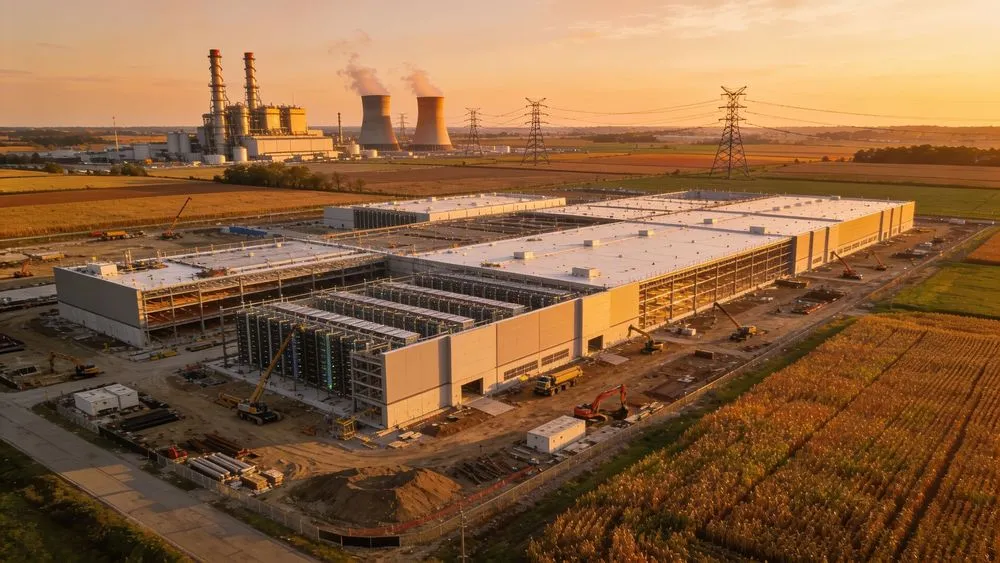
Nvidia's dramatic 52% reduction in funding commitments to OpenAI's Ohio data center project—from $250 billion to less than $120 billion—signals a critical inflection point in AI infrastructure financing that will directly impact e-commerce sellers' access to affordable AI tools. Announced August 14, 2026, this pullback reflects investor concerns about Nvidia's balance sheet exposure and OpenAI's unprofitability despite its $85 billion valuation. The phased approach means the 10-gigawatt Ohio facility will now be built incrementally rather than at full scale, extending timelines by 18-24 months and delaying the compute capacity needed to power next-generation AI applications for sellers.
For e-commerce sellers, this funding reduction translates directly into delayed access to affordable AI-powered tools for product research, pricing optimization, and customer service automation. The infrastructure bottleneck means AI SaaS pricing will remain elevated through 2026-2027, as compute costs stay high. Sellers relying on AI for competitive advantage—particularly those using dynamic pricing, inventory forecasting, and automated listing optimization—will face higher subscription costs ($50-200/month premium) and slower feature rollouts. Small sellers (under $500K annual revenue) will be most impacted, as they lack capital to absorb premium AI tool pricing. The phased infrastructure approach also means regional disparities: US-based sellers will access improved AI tools 6-12 months before international sellers, creating a competitive moat for domestic operations.
The broader implication: AI infrastructure financing constraints will force consolidation in the AI SaaS market for e-commerce. Nvidia's partnership with six major financial institutions to mobilize $500 billion in third-party capital suggests the company is shifting from direct funding to financing platforms, meaning smaller AI startups targeting sellers will struggle to secure compute resources. This creates a 12-18 month window where sellers should prioritize: (1) locking in current AI tool subscriptions before price increases, (2) building internal data analysis capabilities to reduce AI tool dependency, and (3) identifying which AI applications deliver highest ROI (pricing optimization typically shows 8-15% margin improvement vs. customer service automation at 3-5% efficiency gains). Sellers should monitor Nvidia's quarterly earnings for updates on compute financing platform adoption rates—if third-party capital mobilization lags, AI tool costs could spike 25-40% by Q4 2026.
Questions 7
What should sellers do immediately to prepare for AI tool cost increases?
Sellers should take three immediate actions: (1) Audit current AI tool usage and calculate ROI by application—prioritize tools delivering 8%+ margin improvement or 10%+ efficiency gains, (2) Lock in annual contracts for high-ROI tools before September 2026 to avoid price increases, and (3) Identify which AI functions can be replaced with internal capabilities or lower-cost alternatives. The news indicates Nvidia is shifting to third-party financing platforms rather than direct funding, meaning smaller AI startups will struggle to secure compute resources—consolidation in the AI SaaS market is likely. Sellers should also monitor Nvidia's quarterly earnings for updates on compute financing platform adoption rates; if third-party capital mobilization lags, AI tool costs could spike 25-40% by Q4 2026.
How does this funding shift impact sellers in different regions differently?
The Ohio data center project's phased approach creates regional disparities in AI tool availability and pricing. US-based sellers will access improved AI infrastructure 6-12 months before international sellers, as the facility is located in Ohio and will prioritize domestic compute allocation. This means US sellers can access lower-cost AI tools 6-12 months earlier than EU, Asia Pacific, or Latin American sellers. International sellers should expect 20-30% higher AI tool costs through 2027 due to cross-border compute routing and latency premiums. Sellers in Asia Pacific and EU markets should consider building internal data analysis capabilities or partnering with regional AI providers to reduce dependency on US-based infrastructure.