



Rising Treasury Yields Hit 20-Year High | Critical Financing Impact for Cross-Border Sellers
- 30-year Treasury yields surge to 5.26%, increasing inventory financing costs 150-300 basis points for e-commerce sellers seeking working capital

Overview
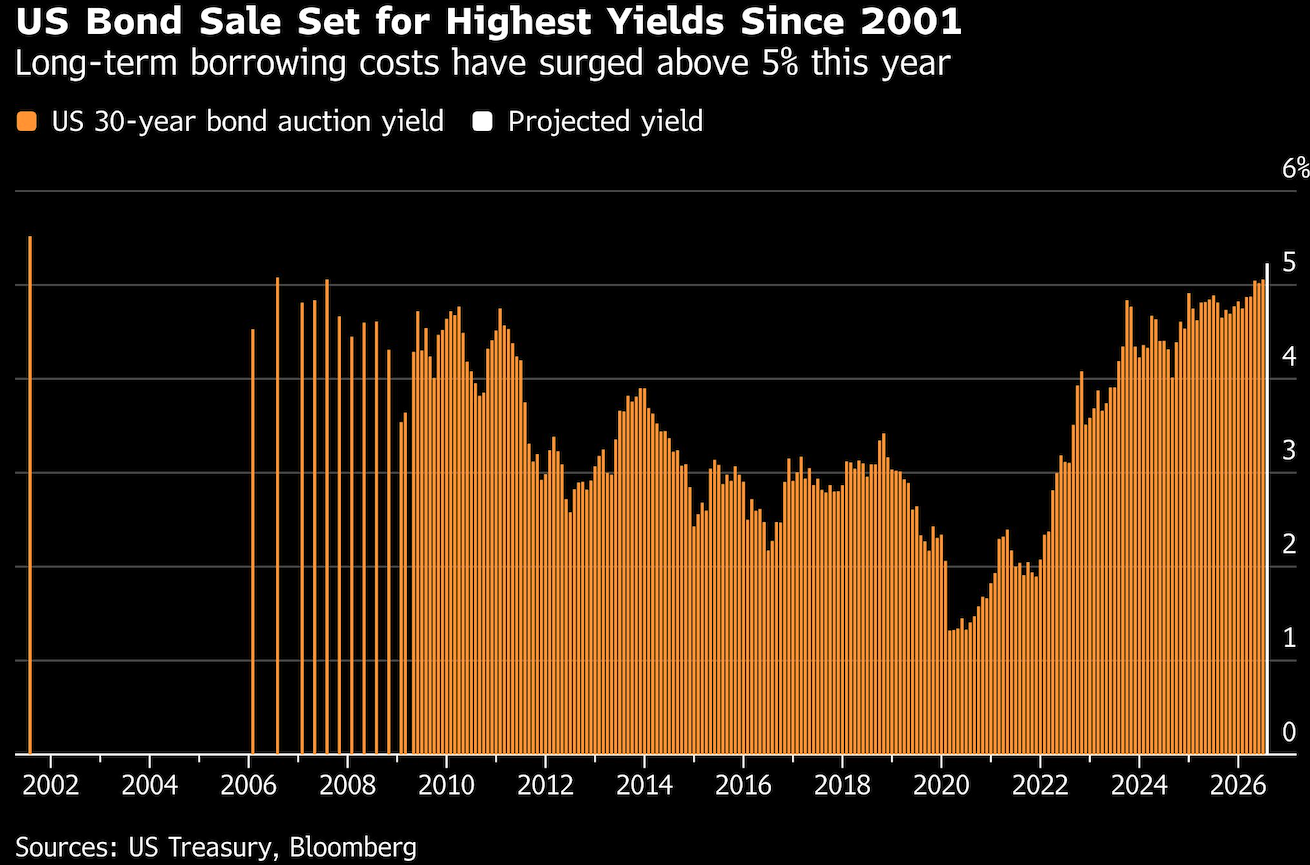
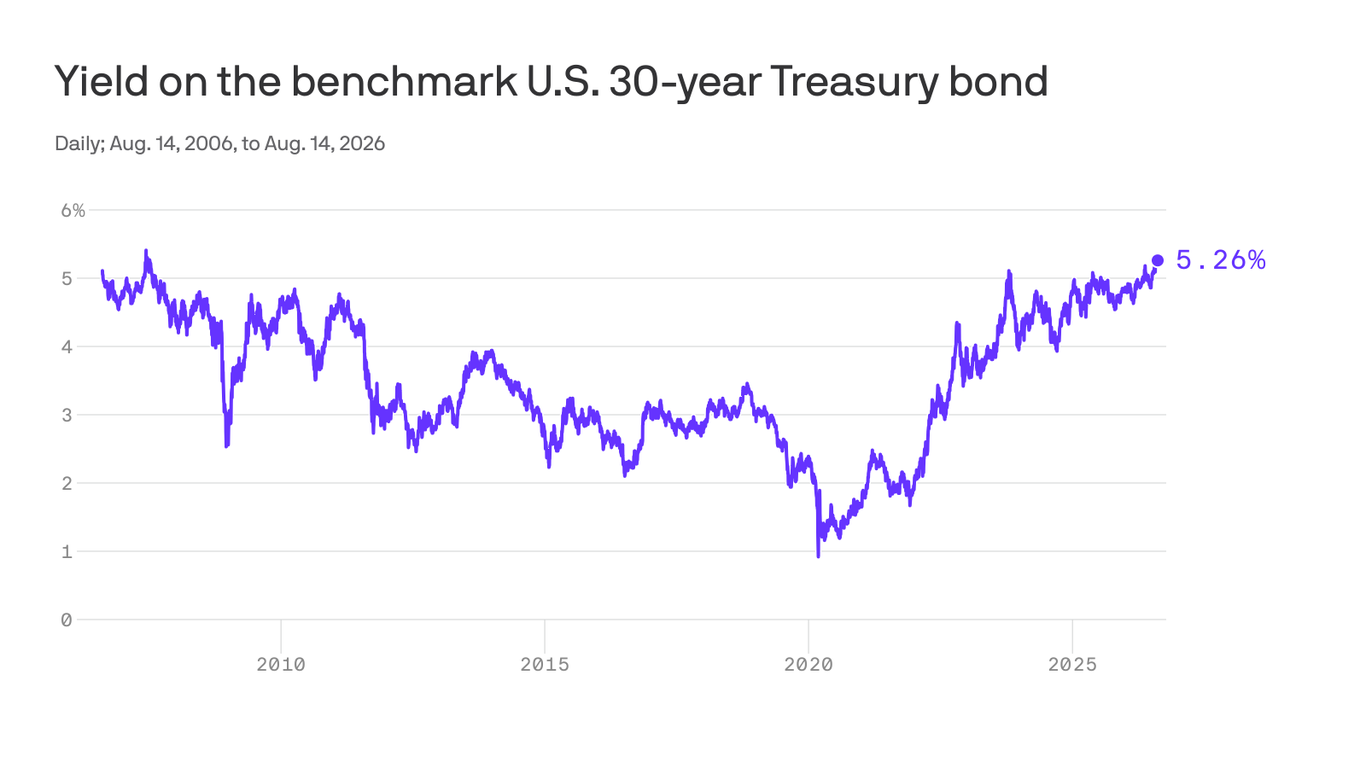
U.S. Treasury yields have reached their highest levels in nearly two decades, with the 30-year bond yield climbing to 5.26% as of last week—the highest since June 2007. This represents a critical financing headwind for cross-border e-commerce sellers who depend on working capital loans, inventory financing, and business expansion credit. The Congressional Budget Office raised its 2025 annual budget deficit projection to $2.1 trillion ($200 billion higher than February estimates), intensifying government borrowing competition. Simultaneously, major technology companies are issuing substantial corporate bonds to fund AI data center expansion, further competing for investor capital and pushing yields higher. Federal Reserve Chairman Kevin Warsh's stated opposition to forward guidance has created an "uncertainty premium" in bond yields—Mark Cabana from BofA Global Research emphasizes that "there is literally a price to be paid for the lack of guidance." This policy uncertainty is driving volatility across the yield curve, making it harder for sellers to lock in predictable financing rates.
For cross-border e-commerce sellers, elevated Treasury yields directly translate to higher borrowing costs across all financing products. Business loans, inventory financing lines of credit, and working capital facilities all reference Treasury yields as baseline rates. A seller financing $500K in inventory at current rates faces an additional $7,500-$15,000 in annual interest costs compared to 12 months ago. Smaller sellers (those financing $50-100K) experience proportionally higher pain due to credit risk premiums added by lenders. The ripple effects extend to consumer demand: as mortgage and auto loan rates rise, household purchasing power for discretionary goods (electronics, home goods, apparel) declines. Barclays analyst Anshul Pradhan projects that worsening fiscal conditions will maintain elevated long-term yields through 2025. This creates a dual squeeze—sellers face higher financing costs while consumer demand softens, compressing margins on both sides of the cash cycle.
The financing environment is becoming increasingly challenging for growth-stage sellers. Sellers seeking capital for inventory expansion, 3PL network buildout, or platform diversification now face APR rates 150-300 basis points higher than Q4 2024 levels. Invoice factoring rates have climbed to 2.5-3.5% monthly (30-42% annualized), while traditional bank lines of credit now price at prime + 4-6% (currently 10.5-12.5%). This creates immediate pressure on working capital optimization and forces sellers to choose between slower inventory turnover or accepting tighter margins. The uncertainty surrounding Fed policy (Chair Warsh's rejection of forward guidance) adds a volatility premium that makes long-term financing planning difficult. Sellers cannot confidently lock in rates, creating timing risk for major inventory purchases or expansion initiatives.
Questions 8
What financing alternatives should I consider given the higher Treasury yields?
With traditional bank financing now pricing at 10.5-12.5% APR, sellers should evaluate alternative capital sources: (1) **Invoice factoring** at 2.5-3.5% monthly (30-42% annualized) for immediate cash conversion if you have B2B or wholesale customers; (2) **Merchant cash advances** at 1.2-1.5% daily rates (438-547% annualized) for short-term working capital gaps; (3) **Revenue-based financing** at 3-8% of monthly revenue (typically 36-96% annualized) for sellers with consistent cash flow; (4) **Supplier financing/extended payment terms** (negotiate 60-90 day terms instead of 30 days to reduce working capital needs). The Congressional Budget Office's $2.1 trillion deficit projection suggests rates will remain elevated, making it critical to lock in the best available terms now rather than waiting for rate relief that may not materialize.
How do rising Treasury yields directly impact my inventory financing costs?
Rising Treasury yields increase the baseline cost of all business lending. A seller financing $500K in inventory at the current 5.26% 30-year Treasury rate faces approximately $7,500-$15,000 in additional annual interest costs compared to 12 months ago. Most inventory financing lines of credit price at Treasury + 3-5%, meaning your effective rate has climbed from ~6.5% to 8.5-10.5% depending on your credit profile. This directly compresses working capital efficiency—you're paying more to hold the same inventory for the same duration. Smaller sellers (financing $50-100K) experience even higher relative pain due to credit risk premiums lenders add. Lock in fixed-rate financing immediately if you're planning Q1-Q2 inventory purchases, as rates may continue climbing if the fiscal deficit remains elevated.