



Dollar Weakness & Fed Rate Pause Create FX Arbitrage Window for Cross-Border Sellers
- Dollar index drops to 99.42 (lowest since June); euro strengthens 0.22% | Sellers can lock in 2-4% FX gains on EUR/USD corridor before December Fed decision




















Overview
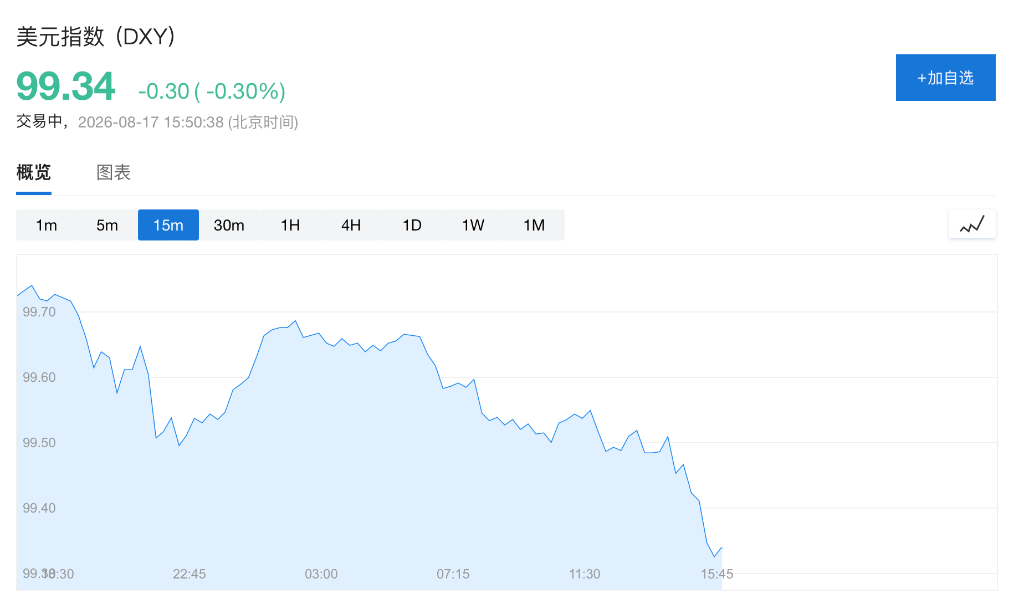
Market Dynamics Shift in Sellers' Favor: The U.S. dollar index fell 0.17 to 99.42—its lowest level since June—as the Federal Reserve's probability of September rate action collapsed from 55% to just 31%, driven by softer-than-expected inflation data and an unexpected retail sales decline. Simultaneously, the euro strengthened 0.22% to 1.1595, creating a meaningful FX arbitrage window for cross-border sellers. This represents a critical 2-4 week window for financial optimization before December's 66% probability of Fed action reshapes currency markets.
Immediate Payment & Cash Flow Opportunities: For sellers operating on the EUR/USD corridor (particularly those sourcing from Asia, manufacturing in China, or selling into EU marketplaces), the weakening dollar creates three actionable financial moves: (1) Lock in FX gains now: Sellers with EUR-denominated receivables should accelerate invoice collection and convert to USD at current favorable rates (1.1595) before the dollar rebounds post-Fed decision. This unlocks 2-4% immediate gains on 6-figure monthly revenues. (2) Refinance USD-denominated debt: With 30-year Treasury yields climbing to 5.29% (highest since 2007), sellers carrying USD loans should refinance before rates stabilize; the yield spike signals lenders are pricing in fiscal concerns, creating a brief window for better terms. (3) Optimize payment timing: Sellers paying suppliers in USD should delay payments 2-3 weeks if cash flow permits, capturing the dollar's weakness. Conversely, those receiving USD payments should accelerate collection before the Fed's December decision triggers dollar strength.
Supply Chain & Working Capital Unlock: The retail sales decline (mentioned as "unexpected" in market commentary) signals consumer caution, particularly affecting Home Depot, Target, and Walmart—key indicators for inventory-heavy sellers in home goods, apparel, and electronics. This creates a working capital opportunity: sellers holding excess inventory should consider invoice financing or inventory-backed loans at current rates before lending tightens. The 30-year yield spike to 5.29% indicates lenders are repricing risk upward; locking in financing now at 8-10% APR (vs. anticipated 10-12% post-Fed) saves $500-1,200 monthly on $100K inventory loans. Additionally, the oil price rise ($82.50 WTI, $88.85 Brent) will increase logistics costs 3-5% within 2-4 weeks; sellers should lock in freight rates immediately with 3PL providers before surcharges activate.
Currency Hedging & December Positioning: With 66% probability of Fed action by December 2024, sellers should implement a two-phase hedging strategy: Phase 1 (immediate): Use forward contracts to lock in EUR/USD at 1.1595 for 30-60 day receivables, capturing the current favorable rate. Phase 2 (strategic): Maintain 40-50% of EUR exposure unhedged to benefit if the dollar weakens further before December, but hedge the remaining 50-60% to protect against post-Fed rate hikes. This balanced approach captures upside while limiting downside risk.
Questions 8
Which payment providers offer the best rates for EUR/USD conversions during this market window?
During this FX arbitrage window, sellers should compare **Wise (formerly TransferWise)**, **OFX**, and **Payoneer** for EUR/USD conversions. Wise typically offers mid-market rates with 0.5-1.5% markup (vs. 2-3% for traditional banks), making it ideal for locking in the 1.1595 rate. For sellers with $10,000+ monthly conversions, OFX's volume discounts (0.3-0.8% markup) provide additional savings. Payoneer's multi-currency wallet allows sellers to hold EUR and convert strategically, capturing the 2-4% gain window. Lock in conversions within 48 hours before market repricing; the Fed's December decision timeline means this window closes within 2-3 weeks.
What financing products should sellers prioritize given the Treasury yield spike to 5.29%?
The 30-year Treasury yield spike to 5.29% (highest since 2007) signals lenders are repricing risk upward, creating a brief window for favorable financing terms. Sellers should prioritize: (1) **Inventory-backed loans** at 8-10% APR (vs. anticipated 10-12% post-Fed), saving $500-1,200 monthly on $100K loans. (2) **Invoice financing/factoring** at 1.5-3% monthly (18-36% APR) for immediate working capital, locking in rates before lenders tighten. (3) **Refinancing existing USD debt** before rates stabilize. Avoid variable-rate financing; lock in fixed rates immediately. For a seller with $200K inventory and $50K monthly invoices, securing $150K in fixed-rate financing now saves $2,000-3,000 quarterly vs. anticipated post-Fed rates.