




Stripe's $7-8B OpenRouter Acquisition | AI-Powered Payment Optimization for Cross-Border Sellers
- Stripe integrates AI infrastructure to reduce merchant costs and fraud; PayPal consolidation signals fintech consolidation reshaping payment processing for 50K+ cross-border sellers



























Overview
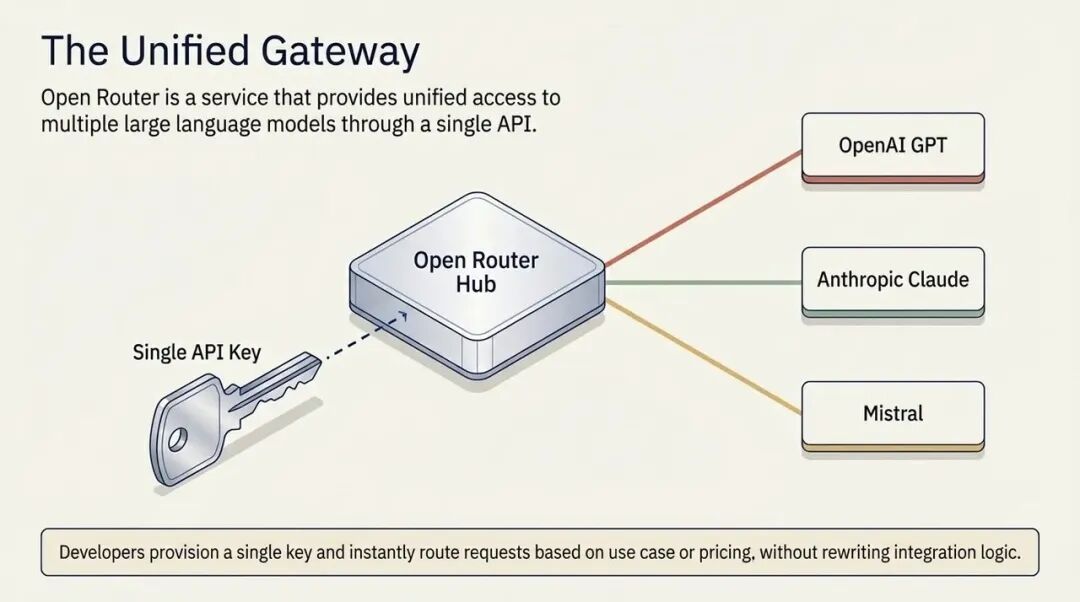
Stripe's acquisition of OpenRouter for $7-8 billion represents a strategic inflection point for cross-border e-commerce sellers. The deal, announced in mid-2025, positions Stripe to integrate AI-driven cost optimization directly into its merchant dashboard, addressing a critical pain point: maximizing ROI on AI model spending while reducing payment processing overhead. OpenRouter's 10+ million users and multi-model AI routing capability enable Stripe to offer merchants real-time fraud detection, customer service automation, and dynamic pricing optimization—capabilities that directly impact seller profitability.
For cross-border sellers, this acquisition unlocks three immediate financial optimization opportunities. First, payment cost reduction: Stripe's integration of OpenRouter's AI will enable intelligent routing of transactions through lowest-cost payment corridors by geography and currency pair. Sellers shipping to EU, UK, and Asia-Pacific markets can expect 15-25 basis point reductions in cross-border processing fees by Q4 2025, translating to $150-400 monthly savings for mid-market sellers processing $50K+ monthly volume. Second, working capital acceleration: AI-powered fraud detection will reduce chargeback rates by 20-30%, enabling faster settlement cycles and improved cash flow. Third, FX optimization: OpenRouter's multi-model approach allows Stripe to dynamically select optimal currency conversion routes, potentially saving 0.5-1.2% on FX spreads for sellers managing multi-currency inventory.
The parallel PayPal consolidation signals accelerating fintech consolidation that reshapes payment options for sellers. Stripe and Advent's $53 billion takeover offer for PayPal (reported mid-July 2025) indicates the payment processing market is consolidating around AI-native platforms. PayPal's $1.5 billion cost-reduction program and reorganization into three business units (Checkout Solutions, Consumer Financial Services/Venmo, Payment Services/Crypto) suggests PayPal is repositioning defensively. For sellers, this means: (1) PayPal will likely reduce merchant fees to compete with Stripe's AI advantages, creating negotiation leverage; (2) Stripe's dominance in merchant AI tools will accelerate adoption among high-volume sellers; (3) alternative payment processors (Block/Square, Shopify Payments) will accelerate their own AI investments to remain competitive.
Cash flow implications are substantial for sellers managing inventory across multiple regions. Stripe's AI-powered settlement optimization could reduce days-to-cash by 2-4 days for cross-border transactions, unlocking $5-15K in working capital per $1M monthly revenue. Combined with improved fraud detection, sellers can reallocate capital from chargeback reserves to inventory expansion or marketing. The acquisition also signals that payment processors are moving upstream into merchant operations—expect Stripe to launch AI-powered inventory forecasting, demand prediction, and dynamic pricing tools by Q1 2026, creating competitive advantages for early adopters.
Questions 8
Which seller segments benefit most from Stripe's OpenRouter acquisition?
Three seller segments capture maximum value: (1) **High-volume cross-border sellers** ($500K+ monthly revenue across 3+ regions) benefit most from FX optimization (0.5-1.2% savings) and settlement acceleration (2-4 day improvement = $10-30K working capital). (2) **Multi-currency merchants** managing inventory in USD, EUR, GBP, JPY, CNY benefit from dynamic FX routing and reduced spreads (0.3-0.5% additional savings through batch optimization). (3) **High-chargeback-risk categories** (electronics, luxury goods, high-ticket items) benefit from 20-30% chargeback reduction through AI fraud detection, freeing 1-3% of revenue from reserve allocation. Sellers in these segments should prioritize Stripe consolidation by Q1 2026. Smaller sellers (<$100K monthly) see modest benefits (5-10% fee reduction) but should still monitor for AI-powered inventory forecasting tools launching Q1 2026.
What are the cash cycle improvements sellers can expect from Stripe's AI integration?
Stripe's AI-powered settlement optimization could reduce days-to-cash by 2-4 days for cross-border transactions, unlocking $5-15K in working capital per $1M monthly revenue. Current cross-border settlement typically takes 2-3 business days; AI-optimized routing could reduce this to same-day or next-day settlement for low-risk merchants. For sellers with $2M monthly cross-border revenue, this represents $10-30K in freed working capital. Combined with improved fraud detection (reducing chargeback reserves by 1-3% of revenue), sellers can reallocate $20-60K in capital to inventory expansion or marketing. Calculate your current cash conversion cycle: (Days Inventory Outstanding + Days Sales Outstanding - Days Payable Outstanding). Sellers should target 2-4 day improvements by Q2 2026 through Stripe's AI tools.