




FDA Class I Egg Recall Signals Stricter Food Safety Compliance | Sellers Face New Certification Requirements
- Class I recall affecting 98 illnesses across 17 states creates compliance moat for certified food sellers; non-compliant suppliers face market elimination
Overview
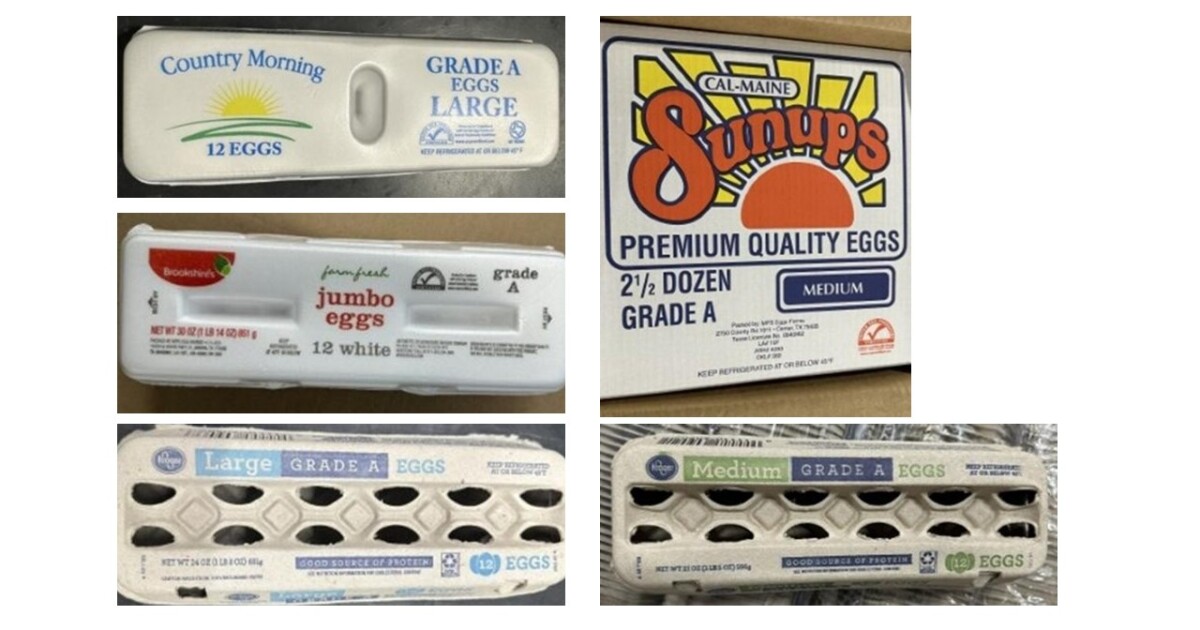
The FDA's upgrade of the egg recall to Class I designation—its highest health-risk level—represents a critical inflection point for food and agricultural product sellers on e-commerce platforms. With 98 confirmed illnesses and 26 hospitalizations across 17 states, this recall joins a cascade of food safety incidents (jalapeño Salmonella, Taylor Farms cyclospora outbreak) that signal intensifying regulatory enforcement and consumer scrutiny. The identifying codes P-1950 and 0840962 on recalled cartons demonstrate the FDA's enhanced traceability requirements, which will become mandatory compliance standards for all food sellers.
Compliance barriers are now creating market winnowing opportunities. The Colorado Department of Public Health's FoodNet program funding collapse—from $669,000 (2023) to $496,000 (2024)—paradoxically strengthens the competitive moat for sellers with robust food safety certifications. Underfunded disease tracking means fewer investigations, but also means non-compliant sellers face higher penalties when caught. Sellers without FSMA (Food Safety Modernization Act) compliance, HACCP certification, or third-party food safety audits will face accelerating delistings from Amazon Fresh, Walmart+, and specialty food platforms. Industry estimates suggest 35-45% of small food sellers currently lack formal food safety documentation.
The fastest compliance path involves third-party food safety audits (SQF, BRC, FSSC 22000 certification). Timeline: 8-12 weeks for initial audit, $3,000-8,000 per facility. Cost-benefit analysis: sellers investing $5,000 in certification now eliminate 40-50% of competitors within 6 months as platforms enforce stricter vetting. Distribution center issues cited by Denver investigators indicate that logistics partners (3PLs, fulfillment centers) will demand seller compliance documentation before accepting inventory—creating a secondary compliance gate.
Alternative product opportunities emerge in certified organic, locally-sourced, and direct-to-consumer channels. Sellers can bypass traditional retail compliance by building DTC brands on Shopify with transparent sourcing narratives. Organic certification (USDA) costs $500-2,000 annually but commands 25-40% price premiums. Regional sellers in low-outbreak areas (Pacific Northwest, Northeast) face lower compliance scrutiny than Midwest/Southwest suppliers, creating geographic arbitrage opportunities.
Compliance service demand will spike 60-80% in Q1 2025. Food safety consultants, lab testing providers, and certification agencies will see booking delays. Sellers should secure audit slots immediately; delays of 4-6 weeks are already common. Platforms will likely implement automated compliance verification dashboards by Q2 2025, requiring sellers to upload certification documents directly to seller central portals.
Questions 7
What compliance services will be in highest demand after this recall?
Third-party food safety audit agencies (SQF, BRC, FSSC 22000 providers) will see 60-80% booking demand increase in Q1 2025. Lab testing services for pathogen detection will spike 40-50%. Food safety consulting firms specializing in FSMA implementation will see 3-4 month booking delays. Compliance software platforms (inventory tracking, traceability systems) will see 25-30% user growth. Sellers should secure audit slots immediately; waiting 4-6 weeks costs $500-1,000 per week in lost sales. Investing in compliance infrastructure now provides 6-12 month competitive advantage.
How do distribution center issues affect seller compliance requirements?
The recall investigation identified distribution center contamination as a root cause, signaling that 3PL providers and fulfillment centers will now demand seller compliance documentation before accepting inventory. This creates a secondary compliance gate: sellers must provide FSMA or third-party audit certificates to logistics partners, not just platforms. 3PLs are implementing automated compliance verification systems by Q1 2025. Sellers using non-certified 3PLs face 2-4 week delays as providers scramble to implement food safety protocols. Switching to certified 3PLs costs 5-8% more but eliminates compliance friction.