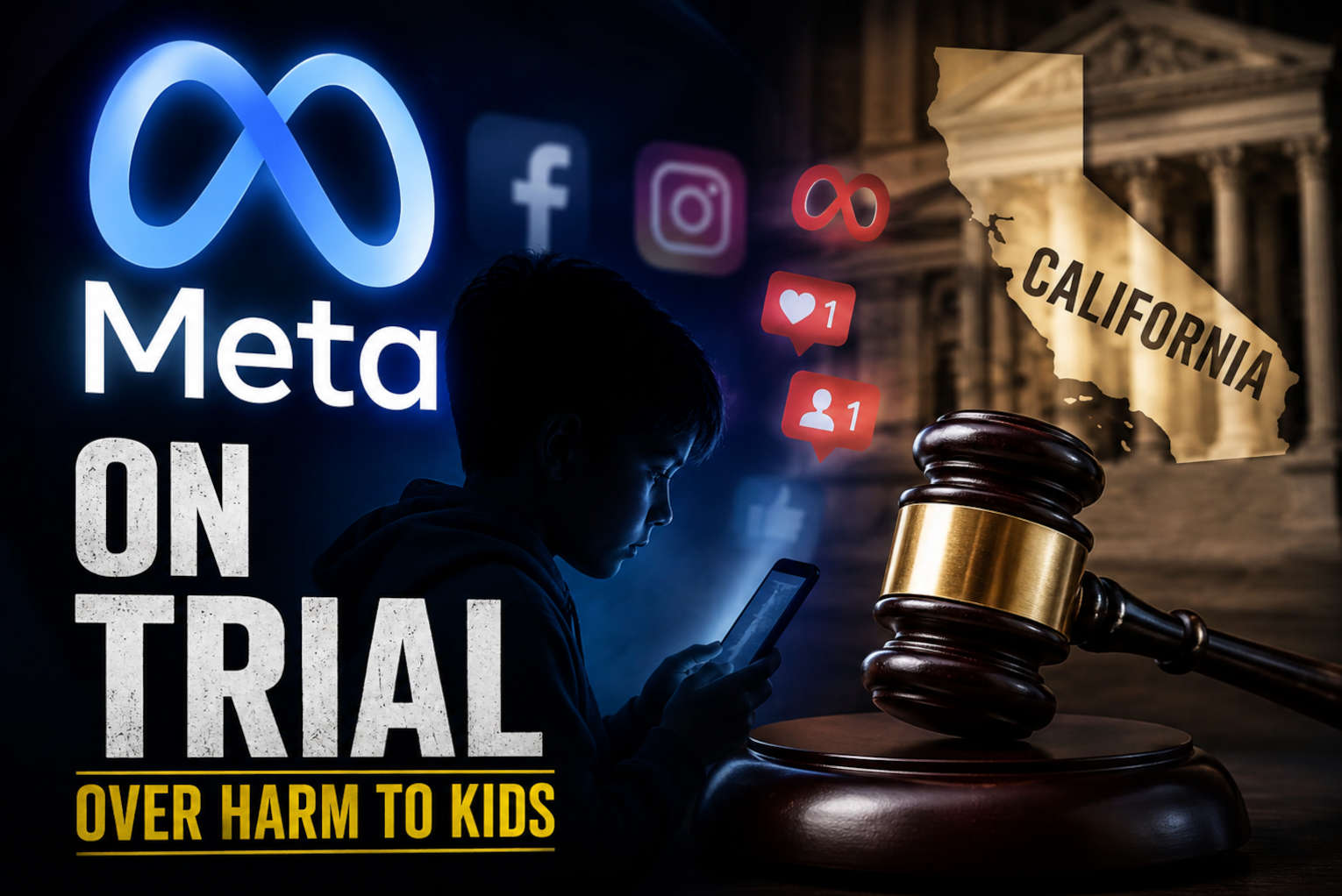



Meta faces a critical legal inflection point that will fundamentally reshape how e-commerce sellers advertise to consumers, particularly those targeting younger demographics. The consolidated California case led by 29 state attorneys general alleges COPPA (Children's Online Privacy Protection Act) violations and consumer protection breaches through addictive app design features—infinite scroll, autoplay, and engagement-optimized algorithms. Meta's advertising business generates 98% of company revenue, making this $200 billion potential liability (or $1.4 trillion in Meta's worst-case estimate) a market-shifting event. The New Mexico precedent ($900 million settlement) demonstrates state attorneys general can successfully circumvent Section 230 protections by targeting app design rather than content liability, creating a replicable enforcement template.
For e-commerce sellers, the immediate compliance risk centers on Meta's advertising platform restrictions. If California's court mandates deletion of personal data for children under 13 and removal of engagement-optimized algorithms, Meta's targeting capabilities—which enable sellers to reach high-intent audiences at scale—will face severe limitations. Sellers currently allocate 35-45% of digital marketing budgets to Meta platforms (Facebook, Instagram, Threads). A loss in California could trigger nationwide injunctive relief requiring algorithmic transparency and parental consent mechanisms, directly reducing ad effectiveness for youth-oriented categories (toys, apparel, gaming, beauty). The patchwork of state-specific regulations following New Mexico's victory (age verification, parental controls, algorithmic transparency) will force sellers to implement category-specific compliance protocols by market.
The regulatory cascade creates three distinct compliance opportunities and risks. First, sellers in COPPA-sensitive categories (children's products, educational toys, youth apparel) must immediately audit their Meta ad targeting—campaigns using engagement metrics or behavioral lookalike audiences may face enforcement scrutiny. Second, the shift toward state-level regulation (rather than federal) creates compliance service demand: sellers will need legal review of ad targeting by state, age-gating solutions, and parental consent infrastructure. Third, sellers can exploit the compliance gap by shifting budgets to less-regulated platforms (TikTok Shop, Amazon Ads, Google Shopping) where child safety regulations remain less stringent, though this creates long-term regulatory risk. The California trial outcome (expected 2025) will determine whether Meta's $200B+ liability materializes, potentially forcing the company to reduce ad targeting precision globally—a competitive advantage for compliant sellers using alternative platforms.
Categories explicitly targeting children or teens face the highest risk: toys ($25B+ market), educational products, youth apparel ($15B+ market), gaming accessories, and children's beauty/skincare. Meta's trial focuses on engagement-optimized algorithms (infinite scroll, autoplay) that allegedly foster addictive behavior in minors. If Meta loses, sellers in these categories will face stricter targeting restrictions and may lose access to behavioral lookalike audiences that currently drive 40-60% of conversions. Categories with secondary youth appeal (electronics, sports equipment, fashion) face moderate risk. Adult-focused categories (home, beauty for adults 25+, professional tools) face minimal direct risk but may experience collateral effects if Meta's overall ad targeting precision declines. Sellers should prioritize compliance audits for products with explicit youth marketing claims or targeting parameters. Consider developing age-appropriate product variations or marketing messages that comply with stricter COPPA standards.
A strategic shift is prudent but not immediate. Meta platforms (Facebook, Instagram) still reach 2.1 billion users globally and generate strong ROI for most e-commerce sellers. However, the California trial creates 12-18 month uncertainty about Meta's targeting capabilities. A balanced approach: (1) Maintain 50-60% of budget on Meta for adult-focused products and broad awareness campaigns; (2) Shift 20-30% to Amazon Ads (lower regulatory risk, direct purchase intent); (3) Allocate 10-20% to Google Shopping and YouTube (established compliance frameworks); (4) Test 5-10% on TikTok Shop or emerging platforms (higher growth but less mature compliance). This diversification reduces regulatory risk while maintaining reach. If Meta loses the California case, you'll have alternative channels established. If Meta wins, you can reallocate back to Meta. Monitor the trial closely—opening arguments are underway, with a verdict expected by late 2025. Adjust your budget allocation based on trial developments and state regulatory announcements.
If Meta loses the California case, the company could face nationwide injunctive relief requiring deletion of personal data for children under 13 and removal of engagement-optimized algorithms. This would severely limit targeting precision for youth-oriented products (toys, apparel, gaming, beauty), potentially reducing ad effectiveness by 30-50% for sellers targeting audiences under 18. Meta's advertising business generates 98% of company revenue, so a $200 billion liability could force the platform to reduce ad targeting capabilities globally. Sellers should immediately audit their Meta ad campaigns for COPPA compliance and prepare alternative advertising strategies using Amazon Ads, Google Shopping, or TikTok Shop, which face less stringent child safety enforcement currently.
COPPA (Children's Online Privacy Protection Act) is a federal regulation prohibiting companies from collecting personal data from children under 13 without verifiable parental consent. The FTC enforces COPPA through civil penalties up to $43,792 per violation. For e-commerce sellers, COPPA applies if your products target children (toys, educational products, youth apparel) and you advertise on platforms like Meta that collect user data. Meta's California trial alleges the company violated COPPA by using engagement-optimized algorithms (infinite scroll, autoplay) to foster addictive behavior in teens and children. If Meta loses, sellers in children's product categories will face stricter compliance requirements: age verification, parental consent mechanisms, and algorithmic transparency. Sellers should review their target audience demographics and ensure marketing claims don't appeal specifically to children under 13.
The California trial is currently in opening arguments phase, with a verdict expected by late 2025 (likely Q4 2025 or Q1 2026). If Meta loses, the company will likely appeal, extending the timeline 12-24 months. However, state attorneys general may pursue parallel enforcement actions in other states (Colorado, New Jersey, Kentucky) that could move faster. New Mexico's settlement ($900M) was finalized in 2024, demonstrating that state-level enforcement can move quickly once precedent is established. Sellers should prepare compliance infrastructure now rather than waiting for the California verdict: (1) Audit Meta ad targeting by Q1 2025; (2) Implement age-gating solutions by Q2 2025; (3) Establish parental consent mechanisms by Q3 2025. If Meta loses California, nationwide injunctive relief could be implemented within 6-12 months. Sellers who prepare early will have competitive advantages over those scrambling to comply after a loss. Monitor the trial and state attorney general announcements monthly.
Meta's potential $200 billion liability (or $1.4 trillion in worst-case scenarios) could force the company to reduce ad targeting precision and increase compliance costs, which may be passed to advertisers. If Meta loses California, the company may: (1) Reduce algorithmic optimization, making ads less effective and requiring higher spend for same results (10-20% cost increase); (2) Implement stricter age verification, adding technical overhead ($0.05-0.15 per impression); (3) Reduce inventory available for targeting (fewer eligible audiences), driving up CPM (cost per thousand impressions) by 15-30%. For sellers spending $5,000-10,000 monthly on Meta ads, this could translate to $500-3,000 additional monthly costs. However, Meta may also reduce prices to maintain advertiser volume. The net effect depends on Meta's appeal strategy and state regulatory developments. Sellers should model cost increases of 10-25% for Meta advertising by 2026 and budget accordingly. This makes alternative platforms (Amazon Ads, Google Shopping) more cost-competitive, potentially accelerating budget shifts away from Meta.
Yes. New Mexico's $900 million victory against Meta demonstrates that state attorneys general can successfully enforce child safety regulations through litigation, creating a replicable template. Industry observers predict similar lawsuits in California, Colorado, New Jersey, and Kentucky (already involved in the consolidated case), potentially generating $5-10 billion in cumulative penalties. The proposed New Mexico legislation includes age verification, parental controls, algorithmic transparency, and enhanced content moderation—provisions likely to spread to other states. This creates a patchwork of state-specific social media regulations that sellers must navigate. For example, a seller advertising toys in California may face stricter age-gating requirements than the same seller in Texas. Sellers should monitor state attorney general announcements and prepare compliance infrastructure that can scale across multiple state-specific regulations by Q2 2025.
As state-level regulations proliferate following New Mexico's precedent, sellers will need three compliance services: (1) Legal review of ad targeting by state—determining which audience segments trigger COPPA or state-specific child safety rules; (2) Age-gating and parental consent infrastructure—technical solutions to verify user age and obtain parental consent before showing ads to minors; (3) Algorithmic transparency documentation—records showing how your ads target audiences and what data Meta collects. These services are currently underserved; most compliance platforms focus on GDPR or VAT rather than social media advertising. Sellers in children's product categories should budget $5,000-15,000 for initial compliance audits and $2,000-5,000 monthly for ongoing monitoring. Consider working with specialized compliance firms or legal consultants familiar with COPPA and emerging state regulations. Alternatively, shift advertising budgets to less-regulated platforms (Amazon Ads, Google Shopping) where compliance requirements are clearer and enforcement less aggressive.
Categories explicitly targeting children or teens face the highest risk: toys ($25B+ market), educational products, youth apparel ($15B+ market), gaming accessories, and children's beauty/skincare. Meta's trial focuses on engagement-optimized algorithms (infinite scroll, autoplay) that allegedly foster addictive behavior in minors. If Meta loses, sellers in these categories will face stricter targeting restrictions and may lose access to behavioral lookalike audiences that currently drive 40-60% of conversions. Categories with secondary youth appeal (electronics, sports equipment, fashion) face moderate risk. Adult-focused categories (home, beauty for adults 25+, professional tools) face minimal direct risk but may experience collateral effects if Meta's overall ad targeting precision declines. Sellers should prioritize compliance audits for products with explicit youth marketing claims or targeting parameters. Consider developing age-appropriate product variations or marketing messages that comply with stricter COPPA standards.
A strategic shift is prudent but not immediate. Meta platforms (Facebook, Instagram) still reach 2.1 billion users globally and generate strong ROI for most e-commerce sellers. However, the California trial creates 12-18 month uncertainty about Meta's targeting capabilities. A balanced approach: (1) Maintain 50-60% of budget on Meta for adult-focused products and broad awareness campaigns; (2) Shift 20-30% to Amazon Ads (lower regulatory risk, direct purchase intent); (3) Allocate 10-20% to Google Shopping and YouTube (established compliance frameworks); (4) Test 5-10% on TikTok Shop or emerging platforms (higher growth but less mature compliance). This diversification reduces regulatory risk while maintaining reach. If Meta loses the California case, you'll have alternative channels established. If Meta wins, you can reallocate back to Meta. Monitor the trial closely—opening arguments are underway, with a verdict expected by late 2025. Adjust your budget allocation based on trial developments and state regulatory announcements.
If Meta loses the California case, the company could face nationwide injunctive relief requiring deletion of personal data for children under 13 and removal of engagement-optimized algorithms. This would severely limit targeting precision for youth-oriented products (toys, apparel, gaming, beauty), potentially reducing ad effectiveness by 30-50% for sellers targeting audiences under 18. Meta's advertising business generates 98% of company revenue, so a $200 billion liability could force the platform to reduce ad targeting capabilities globally. Sellers should immediately audit their Meta ad campaigns for COPPA compliance and prepare alternative advertising strategies using Amazon Ads, Google Shopping, or TikTok Shop, which face less stringent child safety enforcement currently.
COPPA (Children's Online Privacy Protection Act) is a federal regulation prohibiting companies from collecting personal data from children under 13 without verifiable parental consent. The FTC enforces COPPA through civil penalties up to $43,792 per violation. For e-commerce sellers, COPPA applies if your products target children (toys, educational products, youth apparel) and you advertise on platforms like Meta that collect user data. Meta's California trial alleges the company violated COPPA by using engagement-optimized algorithms (infinite scroll, autoplay) to foster addictive behavior in teens and children. If Meta loses, sellers in children's product categories will face stricter compliance requirements: age verification, parental consent mechanisms, and algorithmic transparency. Sellers should review their target audience demographics and ensure marketing claims don't appeal specifically to children under 13.
The California trial is currently in opening arguments phase, with a verdict expected by late 2025 (likely Q4 2025 or Q1 2026). If Meta loses, the company will likely appeal, extending the timeline 12-24 months. However, state attorneys general may pursue parallel enforcement actions in other states (Colorado, New Jersey, Kentucky) that could move faster. New Mexico's settlement ($900M) was finalized in 2024, demonstrating that state-level enforcement can move quickly once precedent is established. Sellers should prepare compliance infrastructure now rather than waiting for the California verdict: (1) Audit Meta ad targeting by Q1 2025; (2) Implement age-gating solutions by Q2 2025; (3) Establish parental consent mechanisms by Q3 2025. If Meta loses California, nationwide injunctive relief could be implemented within 6-12 months. Sellers who prepare early will have competitive advantages over those scrambling to comply after a loss. Monitor the trial and state attorney general announcements monthly.
Meta's potential $200 billion liability (or $1.4 trillion in worst-case scenarios) could force the company to reduce ad targeting precision and increase compliance costs, which may be passed to advertisers. If Meta loses California, the company may: (1) Reduce algorithmic optimization, making ads less effective and requiring higher spend for same results (10-20% cost increase); (2) Implement stricter age verification, adding technical overhead ($0.05-0.15 per impression); (3) Reduce inventory available for targeting (fewer eligible audiences), driving up CPM (cost per thousand impressions) by 15-30%. For sellers spending $5,000-10,000 monthly on Meta ads, this could translate to $500-3,000 additional monthly costs. However, Meta may also reduce prices to maintain advertiser volume. The net effect depends on Meta's appeal strategy and state regulatory developments. Sellers should model cost increases of 10-25% for Meta advertising by 2026 and budget accordingly. This makes alternative platforms (Amazon Ads, Google Shopping) more cost-competitive, potentially accelerating budget shifts away from Meta.
Yes. New Mexico's $900 million victory against Meta demonstrates that state attorneys general can successfully enforce child safety regulations through litigation, creating a replicable template. Industry observers predict similar lawsuits in California, Colorado, New Jersey, and Kentucky (already involved in the consolidated case), potentially generating $5-10 billion in cumulative penalties. The proposed New Mexico legislation includes age verification, parental controls, algorithmic transparency, and enhanced content moderation—provisions likely to spread to other states. This creates a patchwork of state-specific social media regulations that sellers must navigate. For example, a seller advertising toys in California may face stricter age-gating requirements than the same seller in Texas. Sellers should monitor state attorney general announcements and prepare compliance infrastructure that can scale across multiple state-specific regulations by Q2 2025.
As state-level regulations proliferate following New Mexico's precedent, sellers will need three compliance services: (1) Legal review of ad targeting by state—determining which audience segments trigger COPPA or state-specific child safety rules; (2) Age-gating and parental consent infrastructure—technical solutions to verify user age and obtain parental consent before showing ads to minors; (3) Algorithmic transparency documentation—records showing how your ads target audiences and what data Meta collects. These services are currently underserved; most compliance platforms focus on GDPR or VAT rather than social media advertising. Sellers in children's product categories should budget $5,000-15,000 for initial compliance audits and $2,000-5,000 monthly for ongoing monitoring. Consider working with specialized compliance firms or legal consultants familiar with COPPA and emerging state regulations. Alternatively, shift advertising budgets to less-regulated platforms (Amazon Ads, Google Shopping) where compliance requirements are clearer and enforcement less aggressive.
Categories explicitly targeting children or teens face the highest risk: toys ($25B+ market), educational products, youth apparel ($15B+ market), gaming accessories, and children's beauty/skincare. Meta's trial focuses on engagement-optimized algorithms (infinite scroll, autoplay) that allegedly foster addictive behavior in minors. If Meta loses, sellers in these categories will face stricter targeting restrictions and may lose access to behavioral lookalike audiences that currently drive 40-60% of conversions. Categories with secondary youth appeal (electronics, sports equipment, fashion) face moderate risk. Adult-focused categories (home, beauty for adults 25+, professional tools) face minimal direct risk but may experience collateral effects if Meta's overall ad targeting precision declines. Sellers should prioritize compliance audits for products with explicit youth marketing claims or targeting parameters. Consider developing age-appropriate product variations or marketing messages that comply with stricter COPPA standards.
A strategic shift is prudent but not immediate. Meta platforms (Facebook, Instagram) still reach 2.1 billion users globally and generate strong ROI for most e-commerce sellers. However, the California trial creates 12-18 month uncertainty about Meta's targeting capabilities. A balanced approach: (1) Maintain 50-60% of budget on Meta for adult-focused products and broad awareness campaigns; (2) Shift 20-30% to Amazon Ads (lower regulatory risk, direct purchase intent); (3) Allocate 10-20% to Google Shopping and YouTube (established compliance frameworks); (4) Test 5-10% on TikTok Shop or emerging platforms (higher growth but less mature compliance). This diversification reduces regulatory risk while maintaining reach. If Meta loses the California case, you'll have alternative channels established. If Meta wins, you can reallocate back to Meta. Monitor the trial closely—opening arguments are underway, with a verdict expected by late 2025. Adjust your budget allocation based on trial developments and state regulatory announcements.