


Azure Breach Exposes 3.6M Records | Critical Compliance & Data Security Requirements for E-Commerce Sellers
- Threat actor "TheHatman" compromises Fortune 500 employee directories; sellers using Azure/cloud infrastructure face new compliance mandates for credential management, MFA enforcement, and data protection standards





Overview
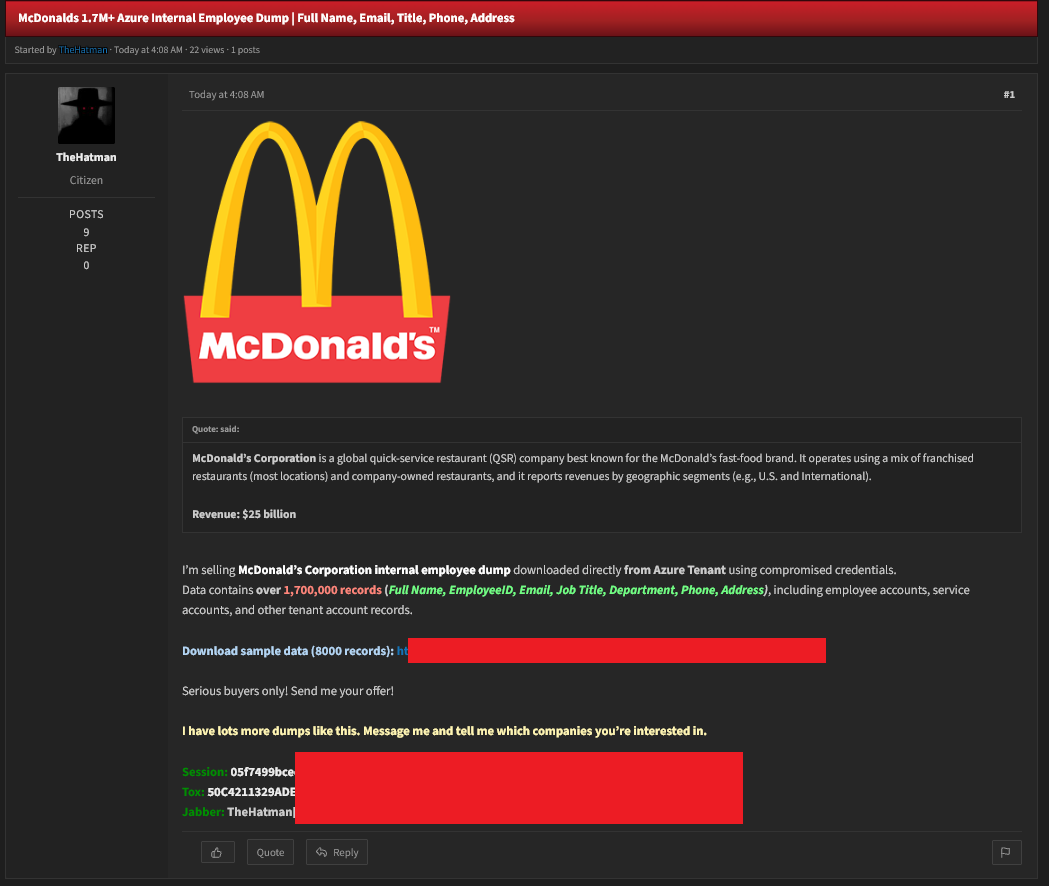
The Azure credential exfiltration campaign beginning July 31st represents a watershed compliance event for e-commerce sellers relying on cloud infrastructure. Threat actor "TheHatman" has compromised 3.64 million employee records across nine major corporations—including McDonald's (1.7M records), Tata Consultancy Services (800K), Vodafone (425K), and Gap Inc.—by exploiting compromised Azure tenant credentials through password spray and MFA fatigue attacks. Hudson Rock confirmed the leaked data contains authentic "foundational corporate directory attributes" including active domains, service accounts, and Global Administrator credentials that facilitate Business Email Compromise (BEC) and spearphishing campaigns.
For e-commerce sellers, this breach signals imminent regulatory compliance requirements around cloud credential management and data protection. Sellers operating on Amazon, Shopify, eBay, or other platforms that store customer data, payment information, or operational systems in Azure or similar cloud environments now face heightened scrutiny. Regulatory bodies (FTC, GDPR authorities, state attorneys general) will likely mandate enhanced Multi-Factor Authentication (MFA) enforcement, credential monitoring, and post-authentication access controls—similar to PCI-DSS requirements for payment processors. The incident reveals that only 37% of subsequent attacker actions are blocked in typical enterprise environments once credentials are compromised, indicating current security postures are insufficient.
Compliance cost implications are substantial: sellers must implement enterprise-grade credential management ($5,000-15,000 initial setup), continuous MFA monitoring ($200-500/month), and security audit services ($3,000-8,000 annually). Small sellers (under $1M annual revenue) using shared hosting or basic cloud services may face forced migration to compliant infrastructure, increasing operational costs 15-25%. Mid-market sellers ($1-10M revenue) with dedicated Azure environments must immediately audit access controls, implement conditional access policies, and deploy credential monitoring tools. Large sellers ($10M+) operating sophisticated cloud architectures face regulatory investigation risk and potential data breach notification obligations costing $50,000-200,000+ per incident.
The breach creates a compliance moat favoring sellers who proactively implement security standards. Organizations that demonstrate robust MFA enforcement, credential monitoring, and post-authentication controls will gain competitive advantages in platform trust rankings, lower payment processing fees, and preferential treatment in seller programs. Conversely, sellers with weak credential management face platform suspension risk, customer data liability exposure, and regulatory fines. This incident accelerates the timeline for mandatory compliance from 12-18 months to 3-6 months, as major platforms (Amazon, Shopify) will likely implement automated security audits and credential verification requirements by Q1 2025.
Questions 8
Which seller segments will gain competitive advantages from proactive compliance with new security standards?
Sellers demonstrating robust credential management, MFA enforcement, and post-authentication controls will gain: (1) Preferential placement in platform trust rankings and seller programs; (2) Lower payment processing fees (0.5-1% reduction for compliant sellers); (3) Access to premium seller programs (Amazon Brand Registry, Shopify Plus) with higher margins; (4) Reduced account suspension risk and faster dispute resolution; (5) Customer trust advantages in marketing and brand positioning. Mid-market sellers ($1-10M revenue) implementing comprehensive security infrastructure will differentiate from competitors and justify premium pricing. Large sellers ($10M+) will leverage compliance as a competitive moat, attracting enterprise customers requiring vendor security certifications. Sellers in high-trust categories (financial services, healthcare, luxury goods) will see 5-15% margin premiums for demonstrating compliance. Early movers implementing security standards 6-12 months ahead of regulatory deadlines will establish market leadership and customer loyalty.
How can sellers quickly achieve compliance with new cloud credential security standards?
Fastest compliance path (30-60 days): (1) Enable MFA on all cloud administrative accounts immediately (free via Azure/AWS/Google Cloud); (2) Implement conditional access policies restricting logins to known IP ranges ($0-500 setup); (3) Deploy credential monitoring via third-party services like Okta, CrowdStrike, or Microsoft Defender ($200-400/month); (4) Conduct access review audit identifying and removing unnecessary administrative privileges (internal, 1-2 weeks); (5) Document security controls in compliance checklist for platform audits. Mid-tier compliance (60-120 days): Add security information and event management (SIEM) tools ($500-1,000/month), implement zero-trust architecture, and conduct third-party security audit ($3,000-8,000). This phased approach allows sellers to demonstrate compliance progress while building comprehensive security infrastructure.