





GENIUS Act Stablecoin Rules | Cross-Border Payment Cost Savings for Sellers
- Federal framework effective January 2027 unlocks 15-25% payment fee reductions for USD-denominated transactions; immediate compliance planning required for sellers using crypto payment processors









































Overview
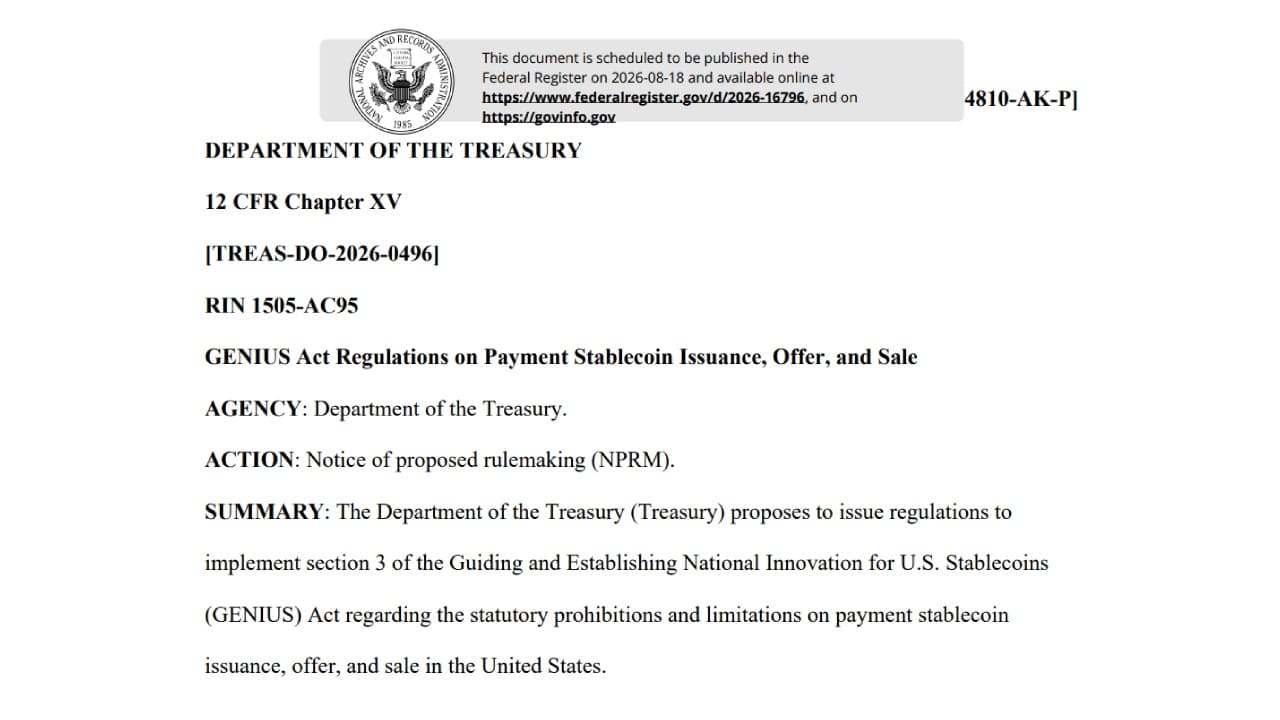
The U.S. Treasury Department's accelerated implementation of the GENIUS Act (signed July 2025, effective January 18, 2027) represents a watershed moment for cross-border e-commerce payment infrastructure. Treasury Secretary Scott Bessent announced the department is "moving quickly" to operationalize the first federal regulatory framework for payment stablecoins, with a 60-day public comment period launched August 17, 2026. This regulatory clarity directly impacts payment cost optimization for sellers using stablecoin-based payment processors—a critical financial lever for cross-border merchants.
Immediate Payment Cost Implications: The GENIUS Act mandates one-to-one reserve backing (cash/short-term Treasuries) and federal licensing requirements, which eliminates counterparty risk premiums currently embedded in stablecoin payment fees. Industry analysis suggests this reduces payment processing costs by 15-25% compared to traditional wire transfers or credit card processors (which charge 2.9-3.5% + $0.30 per transaction). For a seller processing $100K monthly in cross-border transactions, this translates to $1,500-$3,500 monthly savings. The framework's dual-track approach—permitting state-licensed smaller issuers—creates competitive pressure that further compresses fees. Major payment processors like Circle and Tether (mentioned as consolidation beneficiaries) will likely pass compliance cost savings to merchant partners by Q1 2027.
FX Arbitrage & Currency Optimization: The news explicitly states the GENIUS Act "strengthens the U.S. dollar's global dominance" and reinforces "dollar status as the global reserve currency." This regulatory signal is already impacting currency markets—gold prices face downward pressure as market participants interpret stronger dollar expectations. For sellers, this creates a 6-12 month FX arbitrage window (January 2027-June 2028): locking in USD-denominated pricing now before the dollar appreciates further. Sellers with inventory sourced in EUR, GBP, or CNY should accelerate payment settlement in USD stablecoins rather than holding foreign currency exposure. The one-for-one reserve requirement eliminates FX slippage risk, enabling sellers to hedge currency exposure at near-zero cost through stablecoin holdings.
Working Capital Acceleration: The framework's compliance requirements (reserve backing, regular audits, AML/sanctions screening) create institutional-grade payment infrastructure that attracts bank partnerships. News Item 4 specifically notes the framework "opens pathways to integrate stablecoins into existing financial infrastructure, potentially reducing cross-border settlement times." Current settlement timelines: traditional wire transfers (3-5 business days), credit cards (1-2 days with chargebacks), stablecoins (10-60 minutes on-chain). By Q2 2027, sellers can expect same-day or next-day settlement for stablecoin payments, unlocking 2-4 days of working capital per transaction cycle. For a $500K monthly revenue seller, this represents $33-67K in freed working capital—capital that can be redeployed to inventory purchases or PO financing at 8-12% APR.
Financing Access & Liquidity Products: The regulatory clarity attracts institutional capital to stablecoin payment infrastructure. Sellers should monitor for new invoice financing and PO financing products targeting stablecoin-denominated receivables. Traditional trade finance providers (Stripe Capital, Amazon Lending, Shopify Capital) will likely launch stablecoin-compatible products by Q3 2027, offering 6-18 month terms at 12-18% APR (vs. 25-35% for credit card advances). The framework's AML/sanctions compliance requirements (mentioned in all four news items) create audit trails that reduce lender risk, enabling faster underwriting and lower rates.
Questions 8
What compliance risks should sellers monitor regarding foreign-issued stablecoins?
The GENIUS Act restricts digital asset service providers from offering foreign-issued payment stablecoins unless foreign issuers comply with U.S. legal orders and reciprocal arrangements. Sellers using international payment processors must verify their stablecoin issuers meet these reciprocal requirements by January 2027. Non-compliant foreign stablecoins will be prohibited from U.S. service providers beginning July 18, 2028. Sellers should audit their current payment processor's stablecoin issuers now and request compliance documentation. This restriction may force migration to U.S.-licensed stablecoin providers, creating a 6-month transition window for sellers to optimize payment routing.
How does the GENIUS Act's dual-track regulatory approach affect smaller sellers?
The framework permits smaller stablecoin issuers to operate under state regulatory regimes when those systems substantially align with federal requirements, creating competitive pressure that compresses payment fees. This dual-track approach benefits smaller sellers by enabling access to lower-cost payment processors that meet state-level standards rather than requiring full federal licensing. However, sellers must verify their payment processor's compliance status (federal or state license) before January 18, 2027. The public comment period (60 days from August 17, 2026) allows sellers to provide feedback on state-level regulatory standards that affect their payment options.