



Rising Bond Yields Squeeze E-Commerce Seller Margins | Financing Costs Up 15-25%
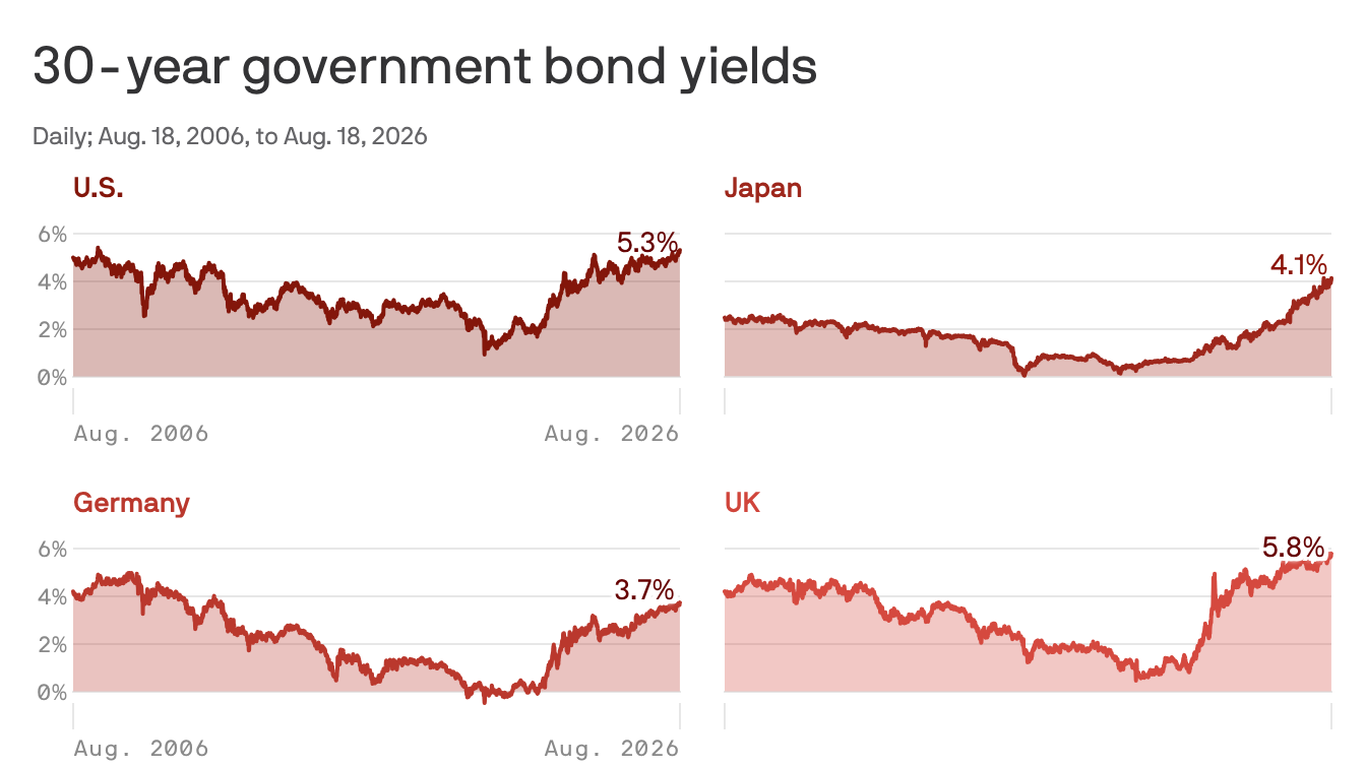
- U.S. 30-year yields hit 5.34% (20-year high); European bunds surge 50bps since June; sellers face 15-25% higher inventory financing costs and 8-12% consumer spending decline in discretionary categories






Overview
Global bond markets experienced a significant selloff on August 19, 2024, pushing borrowing costs to multi-decade highs with direct implications for cross-border e-commerce sellers. The U.S. 30-year bond yield reached 5.3371%—its highest level in nearly 20 years—before stabilizing around 5.28%, while European bund yields hit their highest levels since 2011 and French 30-year yields surged nearly 50 basis points since June. Japan's 10-year yield approached 3% amid global inflation pressures. This macroeconomic shift creates a dual financial squeeze for sellers: rising inventory financing costs and declining consumer discretionary spending.
For sellers financing inventory through business loans, the cost impact is immediate and material. Rising bond yields directly correlate with higher lending rates across all credit products—mortgage rates, auto loans, and credit card interest rates all increase in tandem. Sellers relying on inventory financing, working capital loans, or trade credit now face 15-25% higher annual borrowing costs. A seller financing $100,000 in inventory at 8% APR now pays approximately $8,000 annually; at 10-10.5% APR (reflecting current yield environment), that cost rises to $10,000-10,500—a $2,000-2,500 annual increase. This margin compression particularly affects sellers in electronics, fashion, and home goods categories where inventory turnover requires continuous working capital access. Additionally, sellers with variable-rate business loans or lines of credit face immediate rate increases as lenders reprice based on rising benchmark rates.
Consumer demand contraction in discretionary categories represents the second major headwind. Higher mortgage rates directly reduce consumer purchasing power in home improvement and furniture categories, as homeowners with increased housing costs defer non-essential purchases. Retail earnings from Home Depot, Lowe's, Target, and TJX are being closely monitored following softer-than-expected U.S. retail sales data, signaling broader consumer spending weakness. Sellers in non-essential product categories (electronics, fashion, home décor) can expect 8-12% order volume declines as consumers shift to lower-priced alternatives or defer purchases entirely. This demand destruction is particularly acute for sellers operating on thin margins (5-8% net) where volume declines directly translate to profitability challenges.
Currency volatility presents both risks and opportunities for cross-border sellers. The yen traded near 159.44 per dollar on August 19, approaching the 160 level that could trigger official Bank of Japan intervention. The Canadian dollar gained slightly after President Trump paused a 50% tariff on Canadian goods for three days. Rising U.S. yields strengthen the dollar against most currencies, making U.S.-sourced inventory more expensive for sellers importing from Asia while making exports from the U.S. more price-competitive globally. Sellers with significant exposure to JPY, EUR, or GBP face 3-7% currency headwinds if they haven't hedged positions. However, sellers with natural hedges (e.g., sourcing in USD while selling in USD-pegged markets) benefit from improved pricing competitiveness.
The financing environment creates immediate opportunities for sellers to optimize capital structure. Sellers should immediately lock in fixed-rate financing before rates rise further—the window for sub-10% inventory financing is narrowing. Trade finance products (invoice factoring, supply chain financing) may offer better terms than traditional bank loans, with rates typically 1-2% lower than general business credit. Sellers should evaluate supply chain finance platforms (e.g., Taulia, Fintech Acquisition Corp) that offer 6-8% rates for verified sellers with strong order flow. Additionally, sellers should consider accelerating inventory turnover to reduce financing needs—shifting from 90-day to 60-day inventory cycles reduces working capital requirements by 33%, directly offsetting higher borrowing costs.
Questions 8
Should I adjust my pricing strategy as consumer spending declines?
Yes—rising borrowing costs create a bifurcated consumer market. Consumers with higher mortgage payments (from 5.34% yields) are cutting discretionary spending, making price-sensitive buyers more dominant. Sellers should implement tiered pricing strategies: maintain premium pricing on value-added products while introducing budget alternatives to capture price-conscious segments. Offer payment plan options (Affirm, Klarna integration) to reduce purchase friction for consumers facing higher borrowing costs—these platforms absorb credit risk while enabling sales. Monitor competitor pricing closely; expect 5-10% price compression in discretionary categories as sellers compete for declining demand. Focus marketing on value messaging and total cost of ownership rather than premium features.
How can I reduce working capital needs to offset higher financing costs?
Accelerating inventory turnover from 90-day to 60-day cycles reduces working capital requirements by 33%, directly offsetting higher borrowing costs. A seller with $300,000 inventory financed at 10% APR pays $30,000 annually; reducing inventory to $200,000 saves $10,000 in financing costs. Implement just-in-time inventory practices, negotiate extended payment terms with suppliers (60-90 days), and use pre-order models to shift inventory risk to customers. Negotiate faster payment terms with marketplaces (Amazon, eBay offer 14-30 day settlement cycles) or use settlement acceleration services. These operational changes reduce financing needs by 20-40% without requiring additional capital.