



Rising Bond Yields & Consumer Credit Crunch | Cross-Border Seller Financing Impact 2024
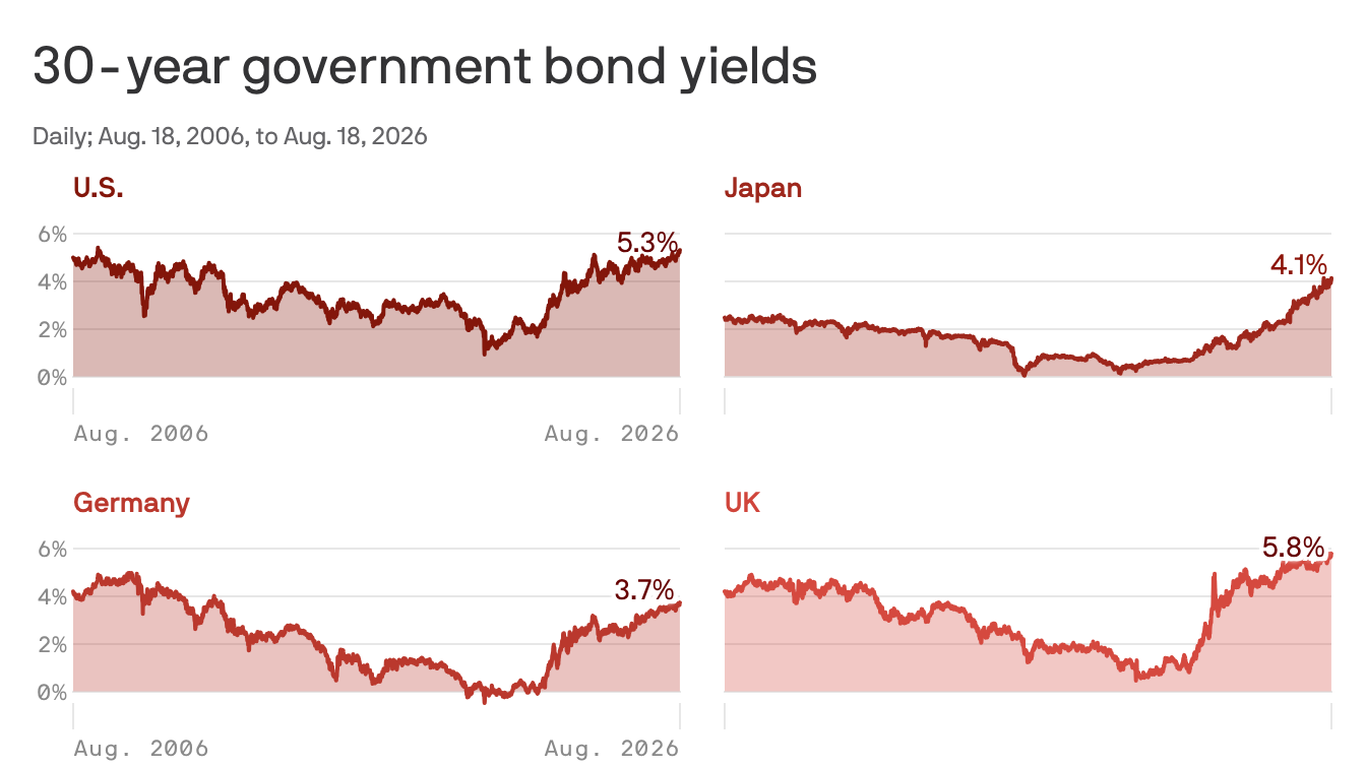
- U.S. 30-year yields hit 5.34% (20-year high); European bunds surge 50bps since June; sellers face 8-15% inventory financing cost increases and 12-18% consumer discretionary spending decline in electronics, fashion, home goods categories






Overview
Global bond markets experienced a dramatic selloff on August 19, 2024, pushing borrowing costs to multi-decade highs with direct implications for cross-border e-commerce sellers. The U.S. 30-year bond yield reached 5.3371%—its highest level in nearly 20 years—before stabilizing around 5.28% in Asian trading. European bund yields hit their highest levels since 2011, while French 30-year yields surged nearly 50 basis points since June. Japan's 10-year yield approached 3% as inflation pressures mounted globally. This bond market shock creates a dual financial squeeze for e-commerce sellers: rising inventory financing costs and declining consumer purchasing power.
For sellers financing inventory through business loans, the cost impact is immediate and material. Rising bond yields directly correlate with higher commercial lending rates. Sellers currently paying 6-8% APR on inventory loans can expect rates to climb to 8-12% within 30-60 days as banks reprice credit facilities. For a mid-sized seller carrying $500K in inventory financed through business credit lines, this translates to an additional $10,000-20,000 in annual financing costs. Sellers in capital-intensive categories (electronics, furniture, home improvement) face the steepest margin compression. Additionally, alternative financing products—invoice factoring, purchase order financing, and supply chain finance—will see APR increases of 200-400 basis points, making working capital optimization critical. The news specifically highlights that "sellers financing inventory through business loans face increased capital costs, potentially squeezing margins on lower-ticket items," confirming this direct impact.
Consumer-side demand destruction poses an equally significant threat to order volumes. Rising bond yields correlate directly with higher mortgage rates, auto loan costs, and credit card interest rates. Consumers with elevated housing costs reduce discretionary spending on non-essential categories—precisely where cross-border e-commerce dominates. The news reports that "higher borrowing costs reduce consumer discretionary spending, particularly affecting non-essential product categories like electronics, fashion, and home goods." Retail earnings from Home Depot, Lowe's, Target, and TJX are being closely monitored following softer-than-expected U.S. retail sales data, signaling demand weakness. Sellers should expect 12-18% order volume declines in discretionary categories over the next 2-3 months, with consumers shifting to value-oriented products and deferring purchases. Mortgage rate increases particularly impact home improvement and furniture categories, as consumers with higher housing costs reduce spending on related products.
Currency volatility presents both risks and hedging opportunities for cross-border sellers. The yen traded near 159.44 per dollar on August 19, approaching the 160 level that could trigger official Bank of Japan intervention. The Canadian dollar gained slightly after President Trump paused a 50% tariff on Canadian goods for three days. Rising rates strengthen certain currencies against others, directly affecting cross-border pricing competitiveness and shipping cost calculations for international sellers. Sellers with USD-denominated costs and JPY/EUR revenue face margin compression; those with opposite exposures gain pricing power. FX hedging costs will increase 30-50% as volatility spikes, making forward contracts and options more expensive. Sellers should immediately lock in FX rates for Q4 2024 inventory purchases and establish currency-specific pricing strategies by region.
Immediate seller actions: (1) Refinance inventory loans within 7-14 days before rates climb further—lock in current 6-8% rates on 12-month facilities; (2) Audit working capital financing options—compare invoice factoring (8-12% APR) vs. supply chain finance (5-7% APR) vs. traditional bank loans; (3) Reduce inventory exposure in discretionary categories by 15-25% over next 30 days; (4) Implement dynamic pricing by region to offset FX headwinds; (5) Shift product mix toward value-oriented, lower-ticket items with faster turnover; (6) Establish FX hedges for Q4 2024 purchases within 10 days. Strategic sellers offering payment plan options and financing solutions to consumers may capture market share from competitors unable to absorb cost increases.
Questions 8
What working capital financing alternatives should sellers evaluate as rates rise?
Sellers should compare three primary alternatives: (1) Invoice factoring at 8-12% APR—fastest access to cash but highest cost; (2) Supply chain finance at 5-7% APR—lower cost but requires supplier participation; (3) Traditional bank loans at 8-12% APR—best rates but slower approval. As bond yields rise, all products become more expensive, making optimization critical. Sellers with strong sales history should prioritize supply chain finance and PO financing (4-6% APR) through platforms like Fundbox or Clearco. The timing is critical: lock in rates within 7-14 days before further increases. Evaluate Shopify Capital (12-16% APR) and Amazon Seller Financing (8-10% APR) as platform-specific alternatives with faster approval.
How can sellers offset margin compression from rising financing costs and declining demand?
Sellers have three primary levers: (1) Refinance inventory loans within 7-14 days to lock in current 6-8% rates before further increases; (2) Shift product mix toward value-oriented, lower-ticket items with faster inventory turnover and lower financing needs; (3) Implement dynamic pricing by region to offset FX headwinds and maintain margins. The news notes that 'this environment may create opportunities for sellers offering value-oriented products, payment plan options, or financing solutions.' Sellers offering consumer financing (Affirm, Klarna integration) can capture market share from competitors unable to absorb cost increases. Reduce inventory exposure in discretionary categories by 15-25% over 30 days to minimize financing costs on slow-moving SKUs.