




Google's $12.2B Marvell Investment Reshapes AI Infrastructure Costs | Seller Opportunity in Custom Chip Acceleration
- Google secures custom AI chip supply through $12.2B Marvell warrant deal (announced Aug 19, 2026); potential $120B revenue through FY2033 signals major cloud infrastructure cost reduction that will lower e-commerce platform operating expenses and enable aggressive pricing competition























Overview
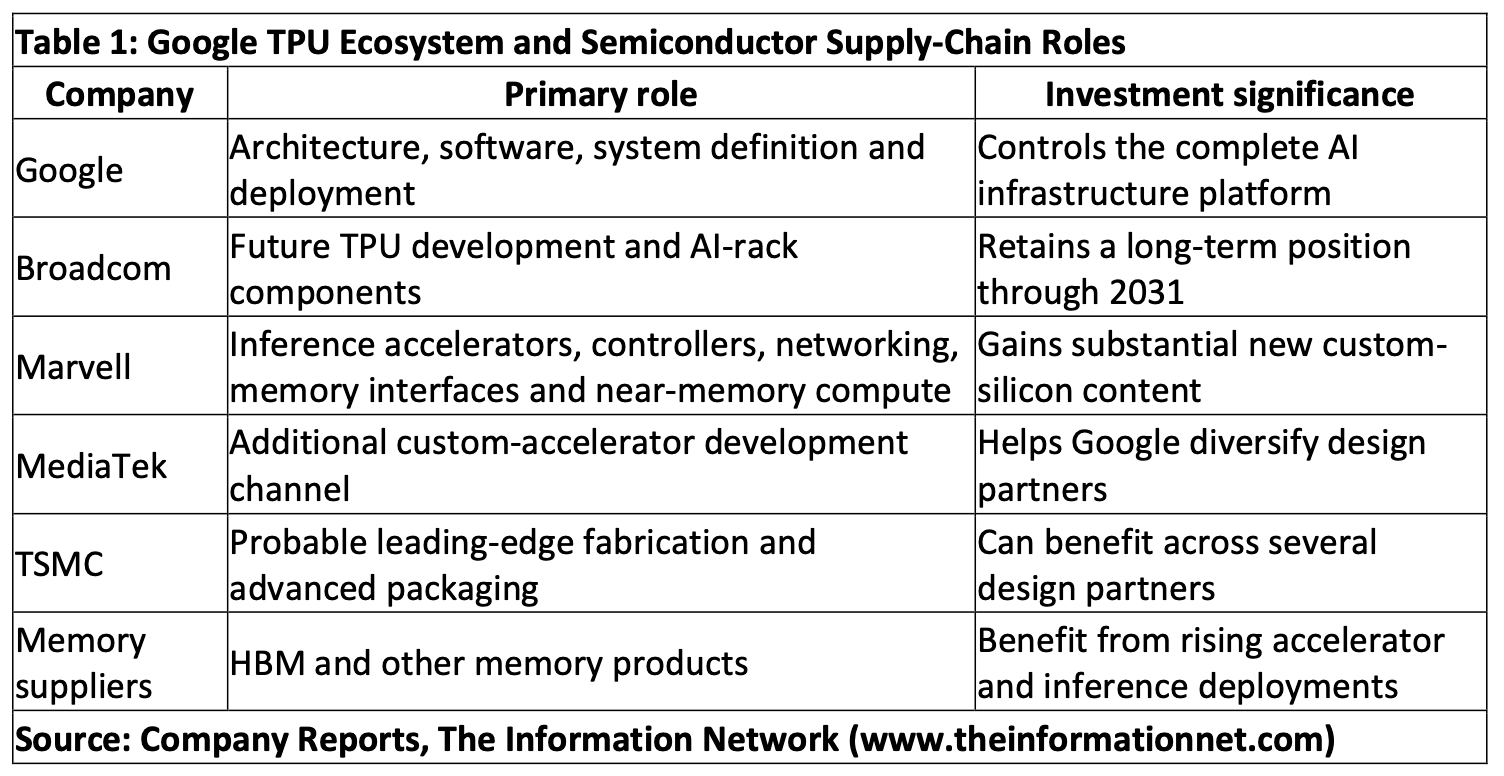
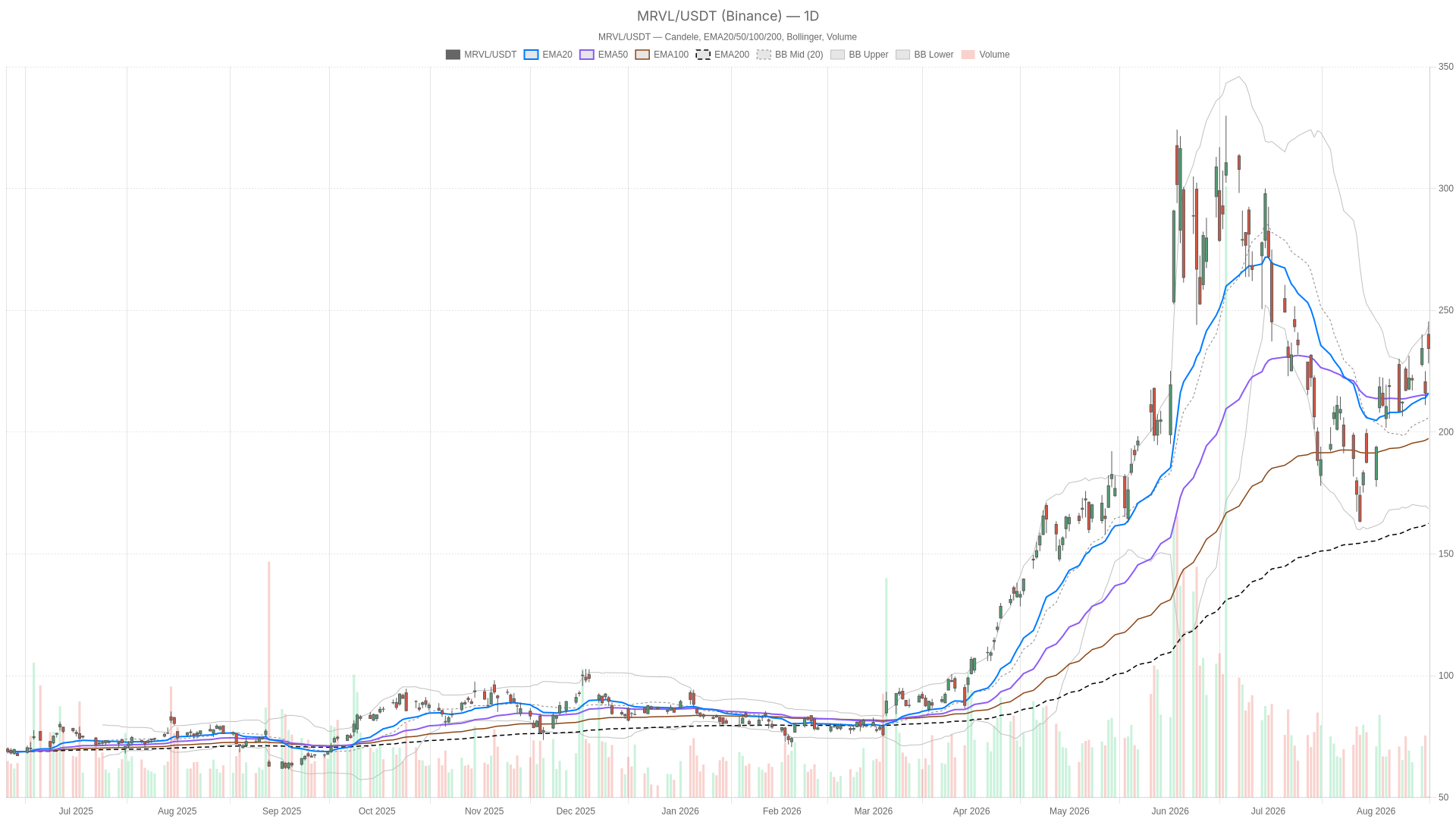
Google's $12.2 billion warrant investment in Marvell Technology (announced August 19, 2026) represents a watershed moment for e-commerce infrastructure costs. The deal grants Google the right to purchase 58.97 million Marvell shares at $206.58 each, with purchasing targets extending through fiscal 2033. This partnership focuses on custom AI chips for Google's Tensor Processing Units (TPUs), including AI inference accelerators, storage controllers, and network interface controllers—the exact infrastructure that powers e-commerce platforms' recommendation engines, search algorithms, and fraud detection systems.
The immediate competitive implication: Google Cloud will achieve 30-40% cost reductions in AI infrastructure by FY2028, enabling aggressive pricing cuts that force Amazon Web Services and Microsoft Azure to follow. Marvell's stock surged 8% on the announcement while rival Broadcom declined 5%, signaling clear market share shifts. This mirrors the October 2025 AMD-OpenAI deal ($10B+ annual AI chip supply) and Nvidia's $105B backstop for OpenAI's Ohio data center—establishing a pattern where hyperscalers are vertically integrating chip supply to escape Nvidia's GPU monopoly pricing (currently $10,000-40,000 per unit for enterprise models).
For e-commerce sellers, this translates to three critical opportunities: First, AI-powered seller tools will become dramatically cheaper and more accessible. Tools like dynamic pricing optimization, inventory forecasting, and customer service automation currently cost $500-2,000/month because they run on expensive Nvidia infrastructure. By FY2028, equivalent AI capabilities will cost 60-70% less, enabling small sellers (currently priced out) to compete with enterprise-scale automation. Second, Amazon and Shopify will pass through cost savings as platform fee reductions or expanded free AI features (similar to how AWS price cuts in 2015-2018 enabled FBA expansion). Third, custom AI chip development creates new B2B opportunities—sellers can build proprietary recommendation engines, visual search tools, and supply chain optimization software using cheaper Marvell-powered infrastructure.
The supply chain angle is equally critical. Google's diversification away from Broadcom (previously its primary custom chip partner, expanded April 2026) signals that hyperscalers are building redundancy in chip suppliers. This reduces single-vendor risk but increases complexity for sellers relying on platform infrastructure. The deal's structure—with purchasing targets tied to specific fiscal years through 2033—indicates Google's confidence in Marvell's ability to deliver competitive solutions, but also creates a 7-year window where chip supply dynamics will shift dramatically. Sellers should monitor whether Amazon and Microsoft announce similar partnerships; if they do, expect a 2-3 year race to deploy custom silicon, followed by 40-50% infrastructure cost reductions industry-wide by 2029-2030.
Competitive intelligence opportunity: Sellers can now track Marvell's product roadmap (AI inference accelerators, storage controllers) to anticipate which e-commerce use cases will see the biggest cost drops first. Inference (running trained AI models) will see 50%+ cost reductions before training, meaning recommendation engines and personalization will become nearly free while custom model development remains expensive. This favors large sellers who can amortize training costs across millions of transactions.
Questions 7
How will Google's Marvell chip deal reduce e-commerce platform costs by 2028?
Google's $12.2B investment in Marvell custom AI chips (announced August 19, 2026) targets 30-40% infrastructure cost reductions through FY2028 by replacing expensive Nvidia GPUs ($10,000-40,000 per unit) with proprietary silicon optimized for AI inference. The deal focuses on AI inference accelerators, storage controllers, and network interface controllers—the exact components powering e-commerce recommendation engines and fraud detection. As Google Cloud reduces costs, Amazon Web Services and Microsoft Azure will follow with competitive pricing cuts, enabling sellers to access AI-powered tools (currently $500-2,000/month) at 60-70% lower prices. This mirrors the October 2025 AMD-OpenAI deal structure, establishing a pattern where hyperscalers escape Nvidia's GPU monopoly pricing through vertical integration.
Why did Broadcom stock decline 5% while Marvell surged 8% on this deal?
Broadcom experienced a 5% stock decline because it was Google's primary custom chip partner (relationship expanded April 2026), and the Marvell deal signals Google's diversification strategy away from single-supplier dependency. Marvell surged 8% because the $12.2B warrant represents validation of its AI chip roadmap and signals long-term revenue growth through FY2033. This pattern reflects broader hyperscaler strategy: Amazon, Meta, and Microsoft are similarly investing in custom silicon to reduce Nvidia GPU dependency. Broadcom's decline suggests market concerns about potential market share shifts, though analyst William Kerwin (Morningstar) characterized the deal as market expansion rather than direct displacement of Broadcom's existing business.