

AI Deepfake Content Moderation Crisis | Critical Compliance Opportunity for Sellers
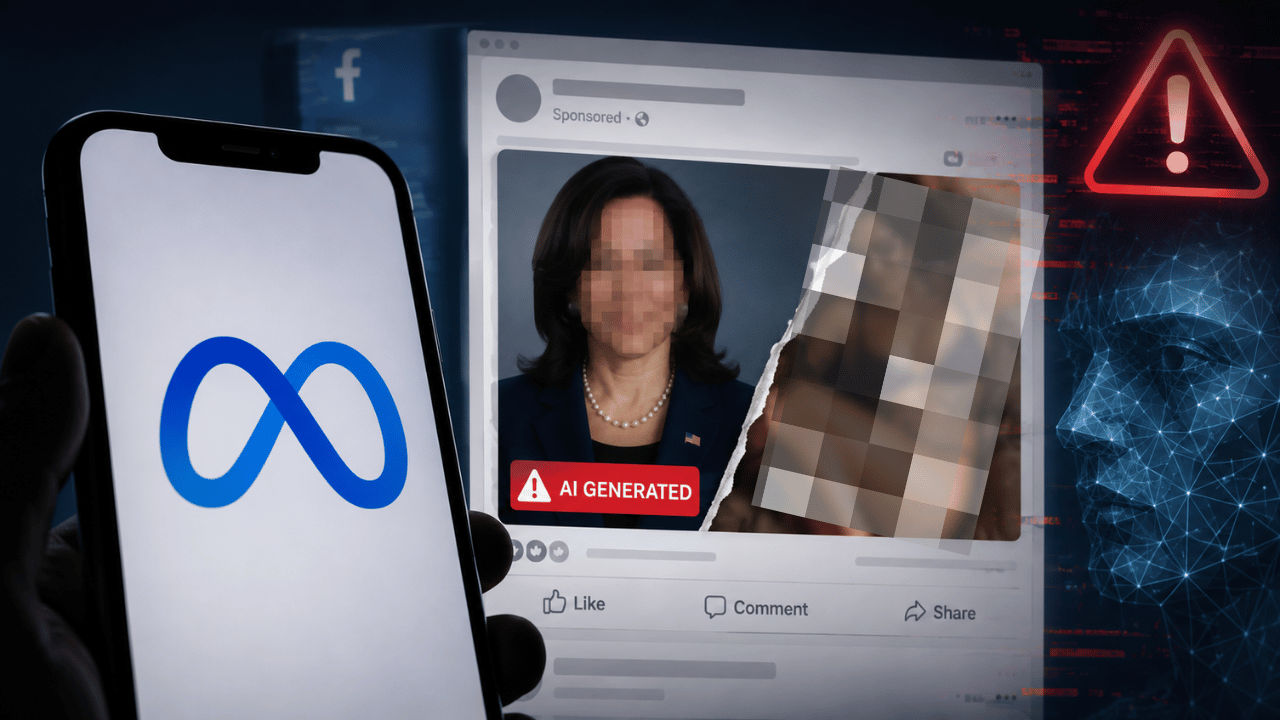
- Apple removes Kromix app after Meta runs 32 explicit deepfake ads; 340,000+ nudify ads removed annually; regulatory enforcement accelerates across US platforms
Overview
Platform enforcement against AI-generated non-consensual intimate imagery is accelerating dramatically, creating critical compliance barriers that will reshape advertising and content moderation standards across e-commerce ecosystems. Apple's removal of the Kromix app—which bypassed App Store review by disguising itself as an "AI image stylization tool"—and Meta's suspension of 32 ad campaigns promoting deepfake pornography signals a fundamental shift in how platforms police AI-generated content. The incident reveals systemic vulnerabilities: Meta removed over 340,000 nudify-related ads in the previous year alone, yet researchers discovered 50+ ads containing AI-generated child sexual abuse material on Meta platforms between November 2025 and August 2026. San Francisco City Attorney David Chiu issued cease-and-desist letters demanding removal of 13 specific nudify apps from Apple and Google, establishing legal precedent for aggressive regulatory intervention.
For sellers, this enforcement wave creates three critical compliance implications. First, advertising policy tightening is accelerating: Meta's deployment of new AI detection technology and Apple's aggressive developer account removal (targeting apps that "attempt to evade our processes") signals platforms will implement stricter pre-approval screening for any AI-powered tools, image editors, or content generation products. Sellers marketing AI image tools, photo editors, or face-swapping software face heightened scrutiny—Meta's 32 ads ran only 5-46 hours before removal, indicating real-time detection is now operational. Second, content moderation liability is shifting upstream: the Kromix case demonstrates platforms hold advertisers accountable for downstream misuse, not just the app developers. Sellers running ads for any AI-powered visual content tool must now verify compliance with platform policies prohibiting "sexual material" and "non-consensual intimate imagery." Third, regulatory enforcement is expanding geographically: San Francisco's cease-and-desist letters establish precedent for state-level intervention, likely triggering similar actions in California, New York, and potentially EU jurisdictions under proposed AI Act provisions.
The compliance opportunity emerges in three dimensions. Sellers offering legitimate AI image editing tools (photo enhancement, style transfer, professional editing software) can differentiate by obtaining third-party compliance certifications proving their products cannot generate non-consensual sexual content—creating a competitive moat against competitors facing ad suspensions. Sellers in content moderation services (AI detection tools, policy compliance platforms, content screening software) face explosive demand: Meta's removal of 340,000+ ads annually indicates platforms are overwhelmed and will outsource detection to third-party vendors. Sellers offering compliance consulting for AI product developers can capture high-margin advisory work, as the Kromix case demonstrates developers lack basic understanding of platform policies. The fastest compliance path involves obtaining SOC 2 Type II certification (30-60 days, $8-15K cost) combined with explicit policy documentation prohibiting sexual content generation—this creates defensible positioning against regulatory action and platform suspension.
Questions 8
What is the cost-benefit analysis for obtaining compliance certification for AI products?
**Compliance costs**: SOC 2 Type II certification ($8-15K, 30-60 days), legal policy documentation ($2-5K), technical safeguards implementation ($5-20K depending on product complexity). **Benefits**: (1) Defensible positioning against regulatory action—San Francisco's cease-and-desist letters target non-compliant apps, not certified ones; (2) Ad approval acceleration—platforms may fast-track ads from certified sellers; (3) Premium pricing—sellers can charge 15-25% more for 'compliance-certified' AI tools; (4) Reduced suspension risk—Meta's 340,000+ ad removals annually indicate non-certified sellers face constant enforcement. **ROI timeline**: For sellers with $50K+ monthly ad spend, compliance certification pays for itself within 2-3 months through reduced suspension costs and faster ad approval. For smaller sellers, the decision depends on product category—AI image editors face higher risk than professional photo software.
Are there legal alternatives to deepfake-capable AI tools that sellers can market instead?
Yes. Sellers can pivot to **compliant AI image categories** that avoid sexual content generation: (1) **Professional photo enhancement** (noise reduction, color correction, upscaling)—these tools have legitimate commercial use and face lower regulatory scrutiny; (2) **Style transfer and artistic filters** that don't enable face-swapping or nude generation—Kromix disguised itself as 'stylization tool,' so sellers must implement technical safeguards preventing sexual use; (3) **Background removal and object detection** tools for e-commerce product photography; (4) **AI-powered design tools** for graphic design, not image manipulation. The compliance opportunity is substantial: legitimate AI image tools represent a $2-4B market, and regulatory enforcement is eliminating non-compliant competitors. Sellers offering certified, compliant alternatives can capture market share from suspended competitors within 60-90 days.