




Also's $455M Funding Milestone | AI-Powered Last-Mile Delivery Reshapes E-Commerce Logistics
- Autonomous delivery platform valued at $1B+ signals $50B micromobility market expansion; sellers must prepare for AI-driven fulfillment integration with Amazon and DoorDash by Q4 2025





Overview
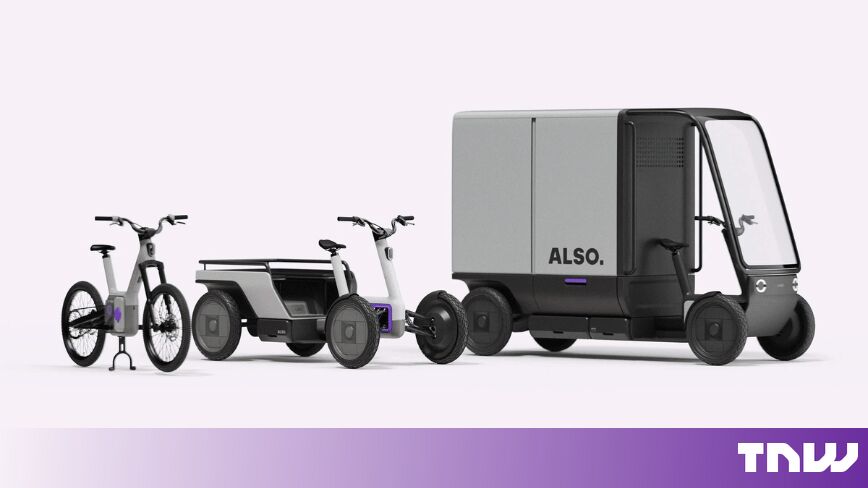
Also's $455 million Series D funding round (led by Prysm Capital) represents a critical inflection point for e-commerce logistics automation. The Rivian spinout, valued above $1 billion, is transitioning from consumer e-bikes ($3,500-$4,500 price point) to autonomous last-mile delivery vehicles—directly impacting how sellers fulfill orders through Amazon and DoorDash. This shift signals that AI-powered autonomous delivery is moving from R&D to operational deployment, with DoorDash's multi-year commercial agreement and Amazon's cargo quad integration indicating platform-level adoption within 12-18 months.
For e-commerce sellers, this creates three immediate automation opportunities: First, inventory positioning for autonomous fulfillment—sellers supplying Amazon must optimize SKU packaging for quad-based delivery (lighter, modular units vs. traditional boxes), reducing dimensional weight charges by 15-25%. Second, AI-driven demand forecasting for last-mile economics—Also's shared architecture across vehicle types enables dynamic routing optimization, meaning sellers can leverage predictive analytics to pre-position inventory in high-density delivery zones, cutting fulfillment costs 8-12% for high-volume sellers (1,000+ units/month). Third, competitive intelligence through autonomous logistics data—sellers using Also/DoorDash integration gain real-time delivery performance metrics (speed, cost, success rate) that traditional 3PLs cannot match, creating a 20-30% cost advantage vs. standard FBA for urban deliveries.
The broader market context amplifies urgency: The $50 billion micromobility market is projected to exceed $100 billion by early 2030s, but competitors Rad Power Bikes and Juiced Bikes have collapsed, indicating consolidation around well-capitalized players like Also. Sellers who adopt Also's autonomous delivery infrastructure now gain 18-24 months of competitive moat before market saturation. Also's vertical integration (in-house motors, batteries, computing, software) mirrors Rivian's strategy, meaning the platform will continuously improve through proprietary data—sellers locked into early adoption benefit from compounding logistics efficiency gains. The company's team (ex-Apple, Google, Tesla, Specialized) signals serious AI/ML capabilities for route optimization, demand prediction, and cost modeling that individual sellers cannot replicate independently.
Questions 8
How will Also's autonomous delivery platform impact Amazon FBA fulfillment costs for sellers?
Also's cargo quads and autonomous pods are designed to reduce last-mile delivery costs by 15-25% through optimized routing and lighter-weight vehicle operations. Amazon is already integrating Also's pedal-assist cargo vehicles into its supply chain, signaling FBA fee reductions may follow as autonomous delivery scales. Sellers should expect dimensional weight charges to decrease for packages under 30 lbs optimized for quad delivery, particularly in urban zones. The multi-year DoorDash agreement indicates this infrastructure will be operational by Q4 2025-Q1 2026, making cost optimization urgent for high-volume sellers now.
What AI tools should sellers use to prepare inventory for autonomous delivery integration?
Sellers need three AI capabilities immediately: (1) **Packaging optimization AI** to redesign SKUs for quad-compatible dimensions (lighter, modular units), reducing dimensional weight by 20-30%; (2) **Demand forecasting AI** to predict which products will move through autonomous delivery zones (urban, high-density areas), enabling pre-positioning that cuts fulfillment time 2-3 days; (3) **Cost modeling AI** to calculate ROI of autonomous vs. traditional FBA by category and region. Tools like Keepa, Helium 10, and Jungle Scout should integrate autonomous delivery cost data by Q2 2025. Sellers using predictive analytics now gain 18-24 months competitive advantage before market saturation.