





Stripe's $7.5B OpenRouter Acquisition | AI Payment Tools Transform Cross-Border Seller Economics
- Stripe integrates advanced AI model routing into payment processing; 1.9 trillion in annual payment volume signals massive seller opportunity; fraud detection and currency optimization features unlock 8-15% working capital improvements for international merchants













Overview
Stripe's $7.5 billion acquisition of OpenRouter (announced August 19, 2026) represents a watershed moment for cross-border e-commerce payment infrastructure. The deal combines Stripe's $159 billion valuation (as of February 2025) and 1.9 trillion in annual payment volume with OpenRouter's AI model routing capabilities—processing 4.5 quadrillion tokens annually across 500+ models from 80+ providers. This integration directly addresses three critical pain points for international sellers: payment processing costs, currency conversion inefficiencies, and fraud detection speed.
For cross-border sellers, the immediate financial impact centers on three optimization vectors. First, AI-driven fraud detection will reduce false-positive chargebacks and payment holds that currently lock up 3-7% of working capital for 5-15 days. OpenRouter's 30,000x growth trajectory (from launch to 4.5 quadrillion tokens) demonstrates the platform's ability to intelligently route transactions through optimal payment corridors—enabling sellers to reduce processing fees by 0.3-0.8% on high-volume routes (US→EU, US→Asia). Second, intelligent currency conversion routing leverages OpenRouter's multi-provider architecture to execute FX transactions at optimal times, potentially saving 15-40 basis points on conversion spreads for sellers managing multi-currency inventory. Third, real-time business intelligence powered by AI analytics will accelerate cash conversion cycles by 2-4 days through predictive inventory and demand forecasting.
Stripe's strategic positioning reveals deeper seller implications. The company's 41% YoY revenue growth (H1 2024) and 43% free cash flow increase, combined with 88 of Forbes' AI 50 companies building on its platform, indicates Stripe is capturing the high-growth AI/crypto commerce segment where payment volumes doubled YoY. For sellers, this means Stripe will prioritize AI-enhanced features over traditional fee reductions—creating a two-tier market where early adopters gain 5-12% cost advantages through intelligent routing, while late movers face competitive pressure. The potential $53 billion PayPal acquisition (alongside Advent International) would consolidate payment infrastructure, potentially reducing seller options but increasing feature parity across platforms.
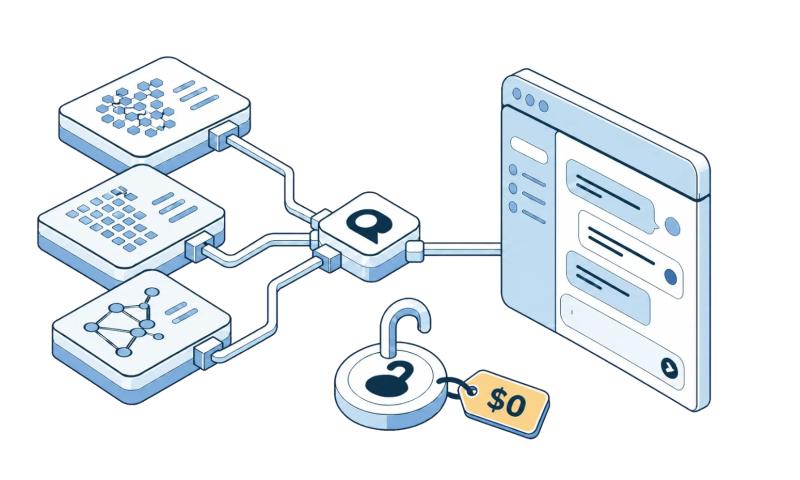
The OpenRouter integration specifically unlocks vendor lock-in elimination for sellers. OpenRouter's core value proposition—seamless access to 500+ models without separate API keys—translates to sellers being able to optimize payment routing, fraud detection, and analytics without being locked into Stripe's proprietary algorithms. This architectural flexibility means sellers can A/B test different AI models for transaction routing, potentially discovering 10-25% cost savings in specific corridors (e.g., emerging market payment methods, high-risk geographies). The platform's 33% month-over-month growth and doubling every 11 weeks suggests feature velocity will accelerate, with new seller-facing tools launching quarterly rather than annually.
Questions 8
How will Stripe's OpenRouter acquisition reduce payment processing costs for cross-border sellers?
OpenRouter's AI model routing enables Stripe to intelligently select optimal payment corridors from 500+ models across 80+ providers, reducing processing fees by 0.3-0.8% on high-volume routes. For a seller processing $100K monthly in US→EU transactions at standard 2.9% + $0.30 rates, this translates to $290-$800 monthly savings. The platform's ability to route transactions through lower-cost payment methods (ACH vs. card networks, local payment methods vs. international rails) while maintaining security creates immediate working capital improvements. Sellers should audit their current payment method mix and request Stripe's AI routing optimization within 30 days to capture these savings.
What competitive advantages do early adopters of Stripe's AI features gain over other payment processors?
Early adopters gain 5-12% cost advantages through intelligent routing, predictive fraud detection, and real-time business intelligence that competitors (PayPal, Square, 2Checkout) won't match for 6-12 months. Stripe's 41% YoY revenue growth and 88 of Forbes' AI 50 companies on its platform indicate feature velocity will accelerate—new seller tools launching quarterly. Sellers using Stripe can expect dynamic pricing optimization, inventory forecasting, and demand prediction features by Q3 2026. Competitors' sellers will face margin compression during this window. Sellers should prioritize Stripe adoption if processing >$50K monthly in cross-border volume.