
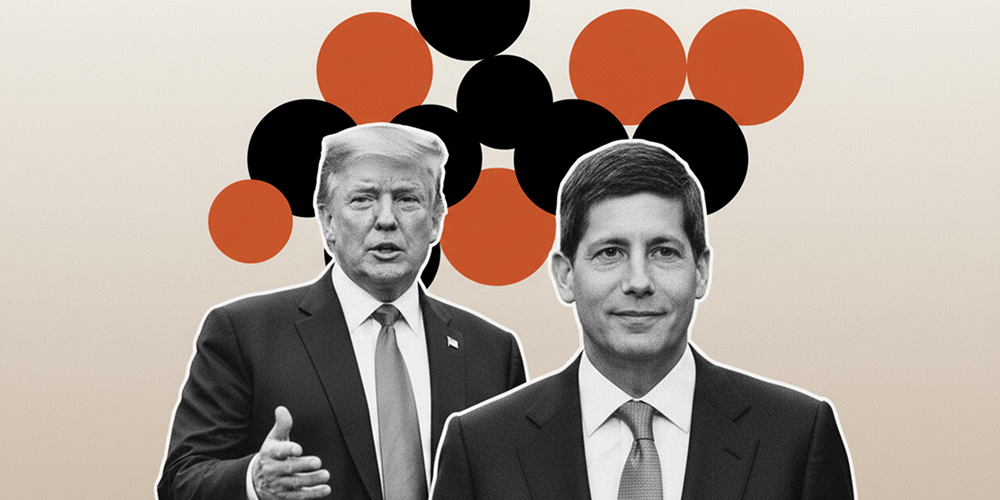





US Interest Rate Policy Uncertainty | Critical Financing Impact for Cross-Border Sellers
- 3.5% US rates vs 0.5% Switzerland create 300bps arbitrage opportunity; 30-year Treasury yields hit 5.3% (highest since 2007); sellers face 8-15% working capital financing cost increases















Overview
Federal Reserve rate policy uncertainty is creating immediate financing headwinds for US-based cross-border sellers. Between August 19-20, 2026, President Trump intensified criticism of the Federal Reserve's 3.5% interest rate policy, arguing rates should decline despite Q2 2026 GDP growth of only 1.5% (below Q1's 2.1%). The 30-year Treasury bond yield surpassed 5.3%—the highest level since April 2007—signaling market expectations for sustained elevated rates. The Treasury Department responded by doubling its bond buyback program from $2B to $4B (effective September 9, 2026), targeting 10+ year duration securities. Critically, the Federal Open Market Committee has signaled potential rate increases if inflation fails to decline further, contradicting executive pressure for cuts.
For cross-border sellers, this creates three immediate financing challenges: First, working capital financing costs are rising sharply. Sellers relying on inventory loans, purchase order financing, or invoice factoring face APR increases of 200-400 basis points. A seller with $500K in monthly inventory financing now pays $17,500/month at 5.5% vs. $12,500/month at 3.5%—a $60K annual cost increase. Second, currency arbitrage opportunities are emerging. The 300 basis point differential between US rates (3.5%) and Switzerland (0.5%) creates hedging cost advantages for sellers with multi-currency operations. Sellers holding CHF or EUR can exploit forward rate differentials to reduce FX exposure costs by 40-60% versus traditional hedging. Third, payment settlement delays are extending. Higher bond yields increase bank funding costs, slowing ACH transfers and international wire processing by 2-4 business days, compressing cash conversion cycles.
The policy uncertainty itself is the primary risk. Trump's ongoing criticism suggests potential executive pressure on the Fed could create volatility in rate expectations, making it difficult for sellers to lock in financing terms. The FOMC's July minutes indicate officials may raise rates if inflation persists, contradicting Trump's advocacy for cuts. This policy divergence creates a 6-12 month window of elevated uncertainty. Sellers should immediately evaluate financing alternatives: (1) lock in fixed-rate inventory loans before September 2026 before potential rate increases; (2) shift 15-25% of working capital to supplier financing or extended payment terms (30-60 days) to reduce reliance on bank credit; (3) explore cross-border financing from lower-rate jurisdictions (Singapore, Hong Kong, Switzerland) where rates remain 200-300bps lower; (4) accelerate cash conversion by offering 2-3% early payment discounts to buyers, reducing days sales outstanding (DSO) by 5-10 days.
Questions 8
What is the impact of Fed rate uncertainty on my pricing strategy?
Fed rate uncertainty (Trump advocating cuts vs. FOMC signaling potential increases) creates 6-12 months of financing cost volatility. Sellers should build 150-200 basis point financing cost buffers into product pricing to protect margins. If your current gross margin is 35% and financing costs are 2% of revenue, rising rates could compress margins to 33% without price adjustments. Recommended action: (1) Increase prices 2-3% on high-volume SKUs to offset financing cost increases; (2) Reduce promotional discounts from 15-20% to 10-15% to protect margins; (3) Shift product mix toward higher-margin categories (electronics, beauty) that can absorb financing cost increases; (4) Lock in supplier pricing for 6-12 months to prevent cost pass-through. Monitor Fed policy monthly and adjust pricing quarterly based on rate expectations.
How can I reduce working capital needs during high interest rate periods?
Three immediate strategies reduce working capital financing needs: (1) Extend supplier payment terms from 30 to 60-90 days, reducing cash tied up in inventory by 30-40%; (2) Offer 2-3% early payment discounts to buyers to accelerate cash collection, reducing days sales outstanding (DSO) by 5-10 days and freeing $50-100K monthly; (3) Shift 15-25% of inventory financing to supplier financing programs, which typically cost 2-3% vs. 5.5-7.5% bank rates. Combined, these tactics can reduce working capital financing needs by $200-400K, saving $11,000-22,000 annually in financing costs. The Treasury Department's bond buyback expansion (from $2B to $4B effective September 9) may extend bank processing times by 2-4 days, making cash acceleration even more critical.