


Target's $994M Tariff Refund & Q2 Surge | Retail Expansion & O2O Opportunities for Cross-Border Sellers
- Target receives $994M tariff refund, invests in 600+ store beauty remodels and 130-store expansion; creates immediate O2O partnership opportunities for beauty, toys, sporting goods, and electronics sellers targeting 3.6% traffic growth








Overview
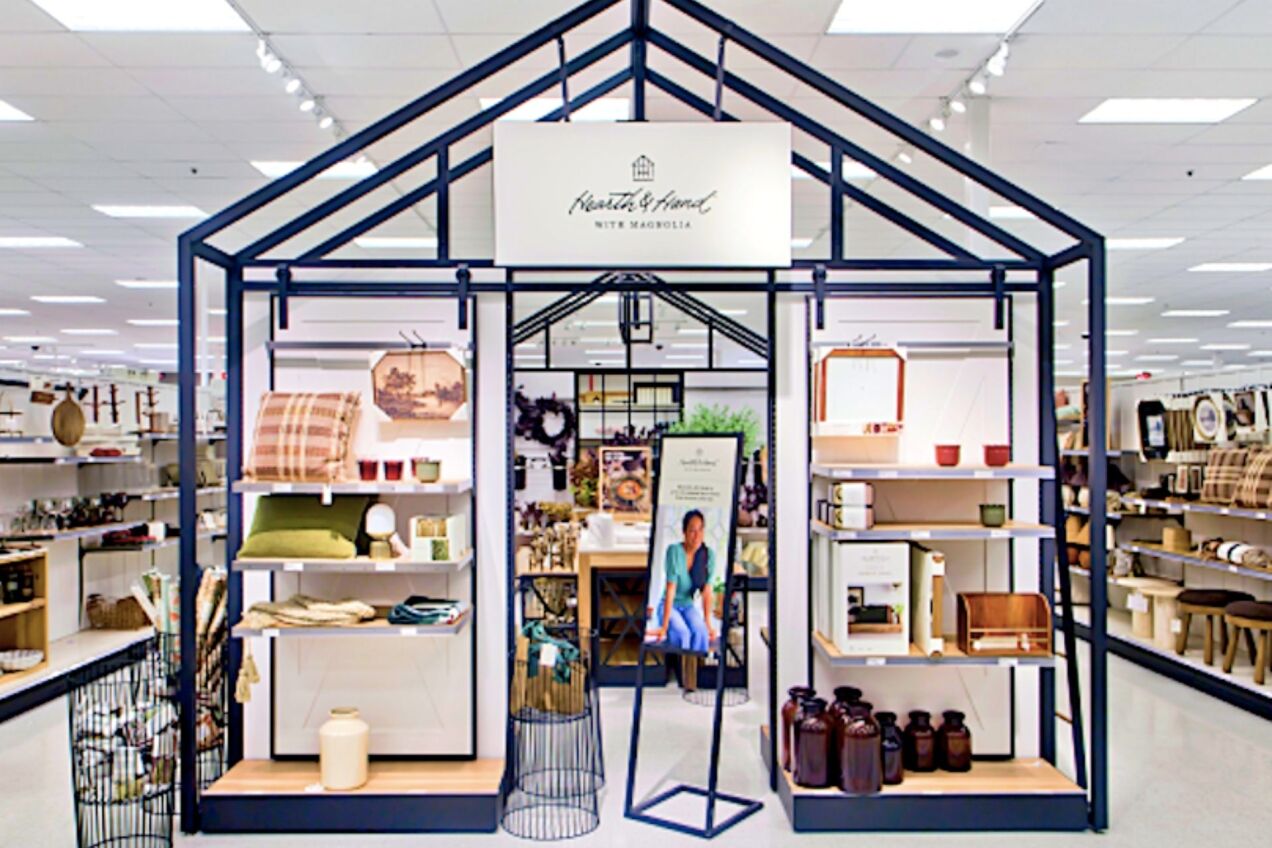
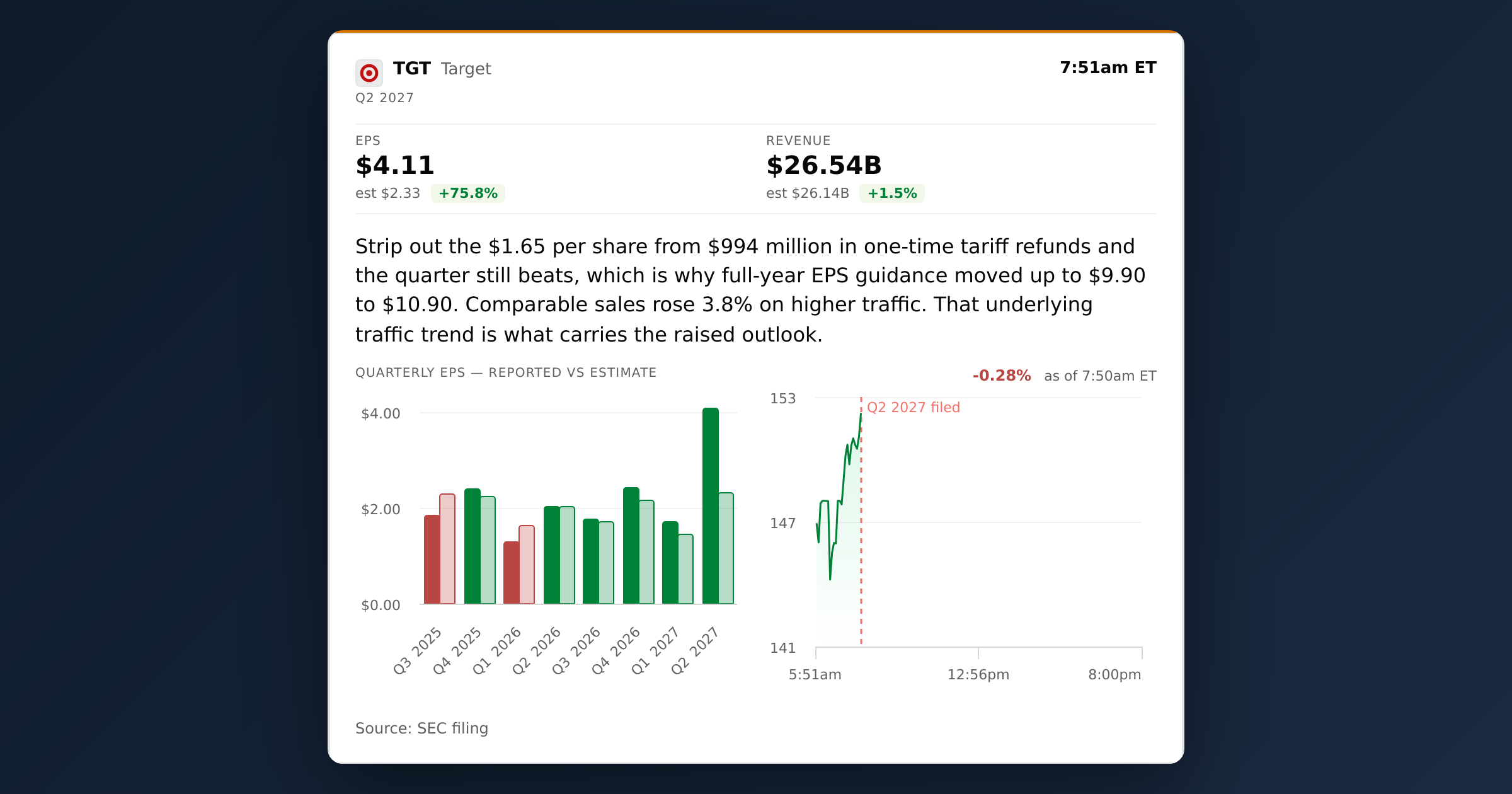
Target's $994 million tariff refund and strong Q2 2025 results (5.3% net sales growth to $26.5B) signal a critical inflection point for cross-border sellers pursuing offline-to-online (O2O) retail partnerships. The Supreme Court's ruling against Trump's initial tariff wave triggered $100 billion in total "Liberation Day" refunds, with Target deploying capital into aggressive store expansion—130 new locations, 100 full-store remodels, and 600+ Target Beauty Studio launches starting September 2025. This represents the largest retail infrastructure investment in Target's recent history, directly creating partnership opportunities for third-party sellers in beauty, toys, sporting goods, and electronics categories where Target reported double-digit growth.
For O2O-focused sellers, Target's expansion strategy offers three immediate partnership angles: First, Target Beauty Studio's replacement of Ulta Beauty across 600+ stores creates a 12-18 month window for indie beauty brands and cross-border cosmetics sellers to negotiate shelf space, co-branded displays, and exclusive product launches. Target's CFO Jim Lee confirmed continued price investment on 10,000+ items, signaling margin flexibility for wholesale partnerships. Second, Target's 25% same-day delivery expansion and 8.7% digital growth (driven by AI-powered agentic commerce with OpenAI/Google Gemini) indicate the retailer is actively seeking inventory partners to fill fulfillment centers and regional distribution hubs. Third, the company's reduced China sourcing (30% vs. 60% in 2017) creates supply gaps in home furniture and non-essential goods—categories where cross-border sellers from Vietnam, India, and Southeast Asia can position as alternative suppliers.
The broader trade environment remains volatile but favorable for strategic sellers. While Trump's threatened $20 billion Canadian tariffs create short-term uncertainty, Target's tariff refund windfall demonstrates that major retailers are now actively seeking diversified sourcing to reduce tariff exposure. Sellers who can demonstrate supply chain resilience (multi-country sourcing, tariff-efficient logistics) and product innovation (AI-optimized listings, personalized recommendations) will command premium wholesale margins. Target's appointment of Chandhu Nair as first chief AI officer signals aggressive digital transformation—sellers with AI-ready product data, dynamic pricing capabilities, and predictive inventory systems will be prioritized for partnership expansion. The back-to-school season momentum (95% of school supplies at or below prior-year pricing) indicates Target is willing to absorb margin pressure to drive traffic, creating negotiating leverage for bulk wholesale suppliers.
Immediate O2O opportunities exist in three geographic clusters: (1) Top 20 Metro Areas (NYC, LA, Chicago, Dallas, Atlanta) where Target is conducting 100 full-store remodels—sellers can negotiate pop-up spaces within remodeled stores during 6-8 week construction windows; (2) Suburban Growth Markets (Phoenix, Austin, Nashville, Charlotte) where Target opened 24 new locations—these greenfield stores lack established vendor relationships and offer 30-45 day partnership negotiation windows; (3) Regional Distribution Hubs (Memphis, Dallas, Atlanta, Los Angeles) where Target is expanding fulfillment capacity—3PL and logistics-enabled sellers can negotiate direct-to-warehouse supply agreements with 15-20% margin premiums over traditional wholesale.
Questions 8
Which retail chains are actively seeking product partnerships aligned with Target's strategy?
Target's Beauty Studio expansion and grocery reset signal broader retail consolidation around experiential and localized assortments. Retailers actively seeking partnerships include: (1) Ulta Beauty (standalone stores) seeking new beauty brands to replace Target partnership, (2) Whole Foods (Amazon-owned) expanding specialty grocery and prepared foods, (3) Walmart (expanding beauty and home categories to compete with Target), and (4) regional chains (Kroger, Albertsons, regional department stores) seeking differentiated assortments. Sellers should prioritize Ulta Beauty partnerships (direct brand relationships) and Whole Foods vendor programs (higher margins, premium positioning). Typical retail partnership requirements: 40-50% wholesale margin, 90-day payment terms, minimum order quantities ($10-50K), and category exclusivity agreements. Pitch timelines: Q3 2025 for holiday season, Q4 2025 for spring 2026 assortments.
What does Target's AI partnership with OpenAI and Google Gemini mean for product visibility?
Target's partnership with OpenAI and Google Gemini for 'agentic commerce' means the retailer is implementing AI-driven product discovery and recommendation systems. AI-sourced digital traffic is growing 3.5x faster than industry average, indicating this channel is becoming a primary traffic driver. For sellers, this means product listings must be optimized for AI parsing: clear product descriptions, structured data (schema markup), high-quality images, and customer reviews are now critical ranking factors. Sellers should audit their Amazon, Walmart, and Shopify listings for AI-readiness, ensure product titles include key attributes (material, size, color, use case), and build review velocity through Q3 2025. AI-driven discovery will increasingly bypass traditional search, making listing optimization a top priority for visibility.