




AI Skepticism Surge Among Gen Z Buyers | Seller Opportunity in Human-Centric Products
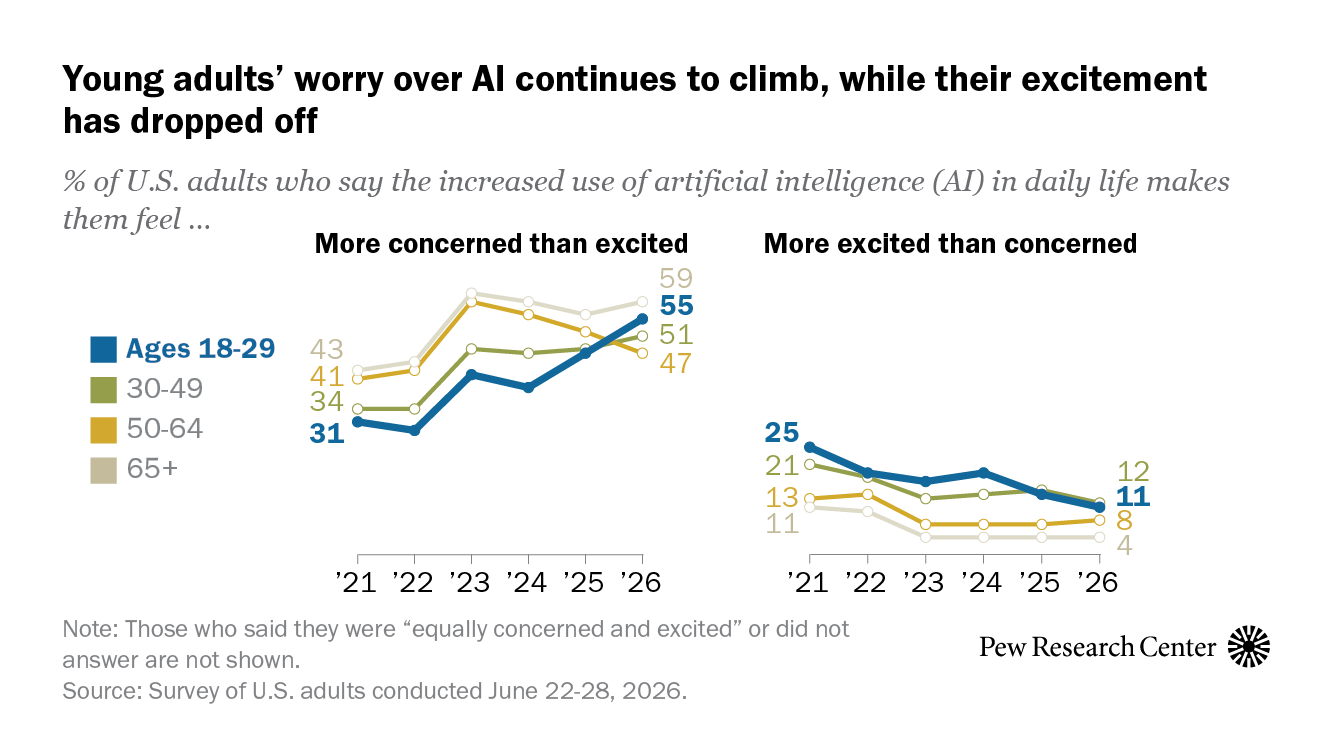
- 55% of under-30 Americans now concerned about AI (up from 31% in 2021); 73% expect job losses; creates demand for authenticity-focused, human-made, and anti-AI positioning in e-commerce














Overview
The Pew Research Center survey (June 2026, 3,488 respondents) reveals a critical market inflection: young Americans under 30 have shifted from AI's strongest advocates to its most vocal skeptics, with concern climbing from 31% (2021) to 55% (2026)—a 24-percentage-point swing in just five years. This generational reversal directly impacts e-commerce seller strategy, as Gen Z represents the fastest-growing consumer demographic with $143B+ annual purchasing power. The primary driver is job displacement anxiety: 73% of young adults now expect AI to reduce employment opportunities over the next 20 years, up from 61% in 2024. This 12-point increase in just two years signals accelerating concern with no signs of plateauing.
For e-commerce sellers, this sentiment shift creates immediate product and positioning opportunities. The data reveals that young adults specifically worry AI will harm creativity and human connection—concerns that directly translate to product demand. Sellers can capitalize on this through: (1) Authenticity-focused product categories: handmade goods, artisanal products, vintage items, and locally-sourced merchandise that emphasize human craftsmanship over automation; (2) Anti-AI positioning: marketing that highlights "human-made," "no AI-generated content," "ethically produced," and "creator-owned" as premium differentiators; (3) Transparency in supply chains: detailed sourcing information, maker stories, and production methods that counter automation narratives. Categories like handmade jewelry, artisanal home goods, vintage fashion, and creator-economy products (Etsy, Shopify, Amazon Handmade) are positioned to capture this demographic's spending shift.
The competitive intelligence angle is equally critical. With only 9% of Americans expressing excitement about AI (down from 18% in 2021), sellers who aggressively marketed AI-powered features (chatbots, AI recommendations, automated customer service) now face consumer backlash risk. Conversely, sellers emphasizing human customer service, personalized curation, and transparent operations gain competitive advantage. The survey shows young adults are "most likely to view AI negatively for society and themselves personally," meaning marketing messages featuring AI automation, job-displacement language, or efficiency-over-humanity positioning will alienate this high-value demographic. This creates a 6-12 month window for sellers to reposition product narratives before competitors fully capitalize on the authenticity trend. The data also indicates this skepticism is now mainstream—young adults' job loss concerns now align with those aged 30-64—suggesting the trend will persist and potentially intensify as AI deployment accelerates across sectors.
Questions 8
How does Gen Z's AI skepticism impact e-commerce product demand?
The Pew survey shows 55% of under-30 Americans now express concern about AI (up from 31% in 2021), with 73% expecting job losses. This directly increases demand for handmade, artisanal, and authenticity-focused products that emphasize human creation over automation. Sellers in categories like Etsy handmade goods, vintage fashion, and creator-economy products are positioned to capture this demographic's spending shift. The trend is accelerating with no signs of plateauing, suggesting 12-24 months of sustained demand growth for anti-AI positioned products. Sellers should immediately audit product listings to emphasize human craftsmanship, maker stories, and transparent production methods.
What compliance or regulatory risks emerge from anti-AI consumer sentiment?
No immediate regulatory risks, but reputational risks are significant. The survey shows 71% of Americans believe AI will reduce jobs—if sellers are perceived as using AI to replace workers or reduce employment, they face social media backlash and boycott risk. Sellers should: (1) Avoid messaging that emphasizes automation-driven cost reduction; (2) Highlight any human employment supported by their business; (3) Be transparent about AI use if questioned; (4) Monitor social media sentiment for negative AI-related comments about their brand. The trend also signals potential future regulation—policymakers face 'mounting pressure to address legitimate employment concerns.' Sellers should prepare for possible future requirements to disclose AI use in product descriptions or customer interactions, similar to emerging AI transparency laws in EU and California.