

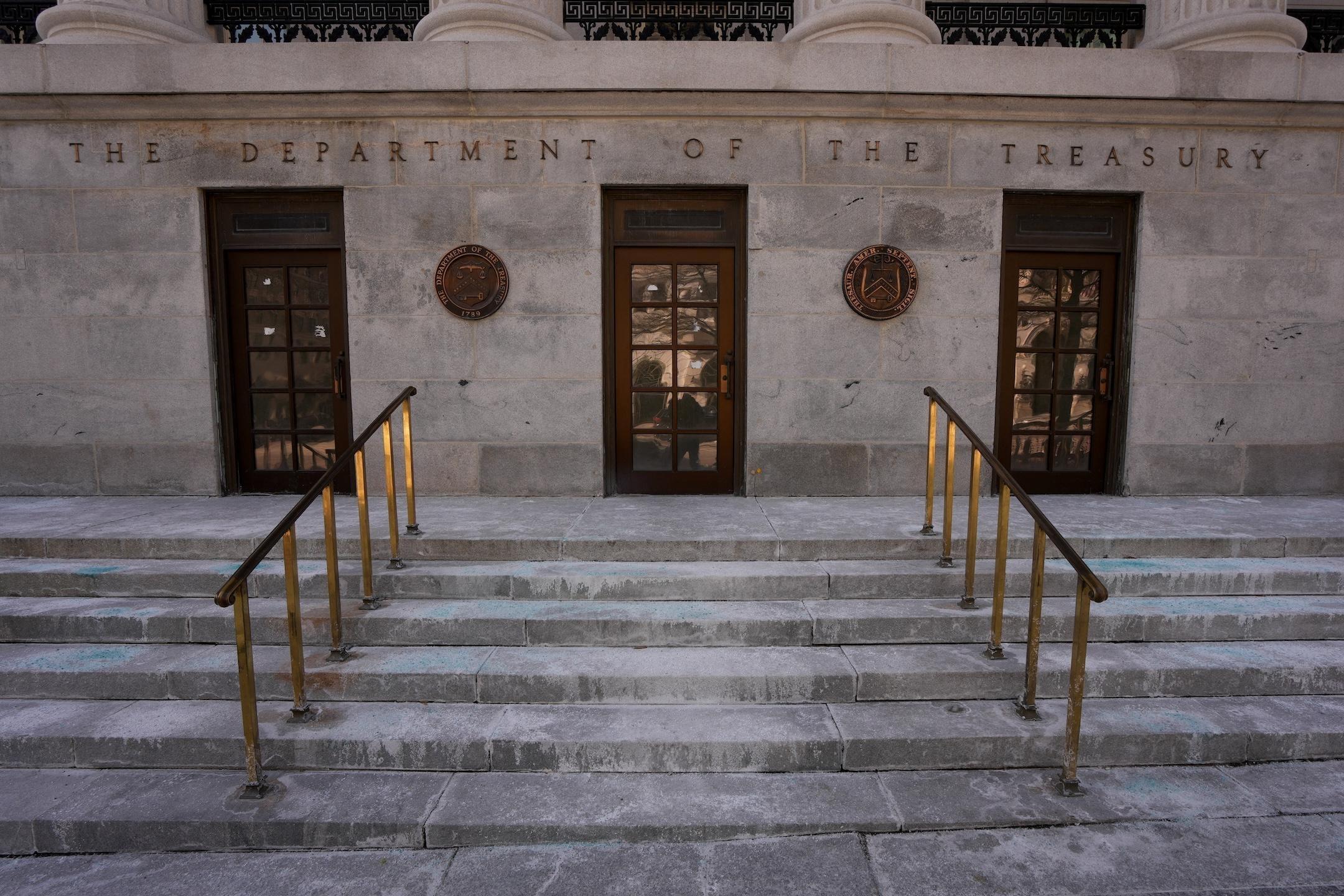




Treasury Yield Surge Drives Up Seller Financing Costs | Cross-Border E-Commerce Impact
- Rising interest rates increase inventory financing costs 8-15% for cross-border sellers; working capital pressure intensifies as consumer discretionary spending declines amid higher borrowing costs

Overview
U.S. Treasury yields have reached their highest levels in nearly two decades, with the 30-year bond yield spiking amid mounting economic pressures. Treasury Secretary Scott Bessent implemented emergency buyback measures this week, but yields resumed climbing by Thursday, signaling persistent market uncertainty. The underlying drivers are critical for cross-border e-commerce sellers: the U.S. national debt has surpassed $40 trillion for the first time, accelerating at approximately $2 trillion annually, while geopolitical tensions—particularly the Iran conflict—have driven oil prices higher and increased domestic fuel costs.
For cross-border sellers, rising Treasury yields directly translate to higher borrowing costs across all working capital financing products. As Treasury yields climb, mortgage rates, auto loan rates, and credit card interest rates increase correspondingly. This creates a cascading effect: inventory financing through traditional lenders (banks, alternative lenders, supply chain finance providers) becomes more expensive, with APR rates typically rising 50-150 basis points during yield spikes of this magnitude. Sellers relying on PO financing, invoice factoring, or inventory loans will face 8-15% higher annual costs. For a mid-sized seller with $500K in outstanding inventory financing, this translates to $40K-75K in additional annual interest expense. Additionally, the bond market turbulence reflects massive corporate AI spending financed through debt issuance, creating competition between corporations and the federal government for bond buyers—further pressuring yields upward.
Consumer purchasing power is simultaneously compressed by higher borrowing costs, directly impacting discretionary spending on imported goods. As mortgage rates, auto loan rates, and credit card interest rates rise, household budgets tighten, reducing demand for non-essential imported products. This demand compression is particularly acute for categories like electronics, home décor, fashion, and consumer goods—the core of cross-border e-commerce. Sellers should expect 5-12% volume declines in discretionary categories over the next 2-3 months as consumers defer purchases. Simultaneously, logistics costs are escalating: fuel surcharges on international shipping, increased transportation expenses, and supply chain inflation driven by geopolitical tensions (Iran conflict) are raising fulfillment costs 3-8% globally. The economic uncertainty also influences currency valuations and international payment processing fees, creating operational challenges for sellers managing multi-currency transactions. Immediate action is required to optimize working capital and reduce financing exposure before rates stabilize at higher levels.
Questions 8
How do rising Treasury yields directly increase costs for cross-border sellers?
Rising Treasury yields increase benchmark interest rates across all lending products. When the 30-year Treasury yield spikes (as reported this week to near 20-year highs), lenders immediately raise APR rates on inventory financing, PO financing, and working capital loans. A typical seller with $500K in inventory financing could see annual interest costs rise $40K-75K. This occurs because lenders price their products as Treasury yield + spread; when Treasury yields rise 50-150 basis points (common during yield spikes), seller borrowing costs rise proportionally. Monitor your lender's rate adjustment schedule—many adjust within 2-4 weeks of Treasury movements.
What financing alternatives should sellers explore as rates rise?
As traditional lending becomes more expensive, sellers should evaluate: (1) **Supply chain finance platforms** (Tradeshift, Fintech Collective) offering 3-6% lower rates than traditional lenders by leveraging buyer credit; (2) **Revenue-based financing** (Clearco, Pipe) that ties repayment to sales rather than fixed terms, reducing burden during demand downturns; (3) **Inventory loans from alternative lenders** (Kabbage, OnDeck) that may offer fixed rates locking in current levels; (4) **Cross-border payment providers** (Wise, Remitly) offering better FX rates and lower payment fees, freeing up 1-3% in transaction costs. For sellers with strong buyer relationships, negotiate extended payment terms (60-90 days) to improve cash conversion cycles without additional financing.