




US Battery Supply Chain Reshoring | $500M DOE Grants Reshape Electronics & EV Sourcing for Cross-Border Sellers
- $500M federal funding accelerates domestic lithium/cobalt production; battery & electronics sellers face 2028-2030 supply cost shifts; China's 90% refinery dominance under direct challenge










Overview
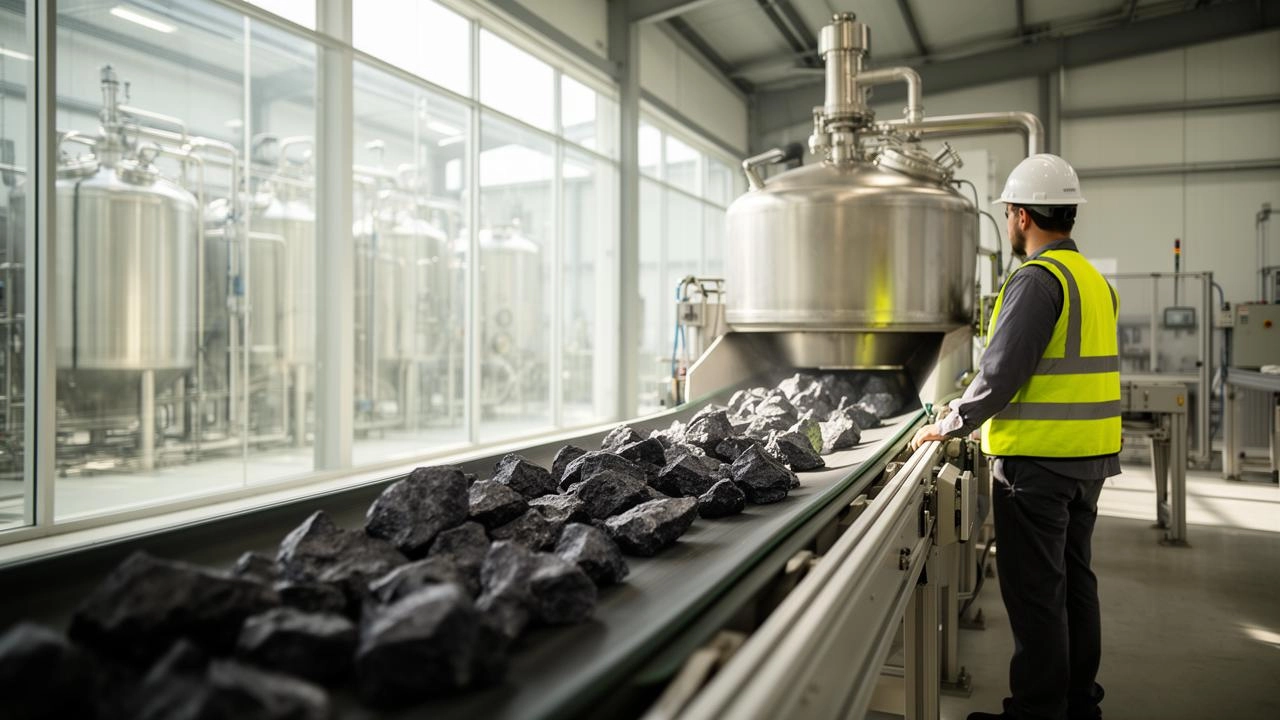
The U.S. Department of Energy is deploying $500 million in grants across seven companies to establish domestic critical mineral processing, marking a fundamental shift in battery supply chain geography that directly impacts cross-border e-commerce sellers. This third-round funding (part of nearly $5 billion allocated to 39 projects representing $16 billion in total domestic investment) targets lithium extraction, cobalt refining, and battery recycling—three categories where China currently controls 90% of global refinery production and 70% of rare earth element output.
Key funding recipients and timelines reshape sourcing economics: Lilac Solutions ($100M) will extract 5,000 metric tons of lithium annually from Utah's Great Salt Lake by 2028; Jervois ($100M) will construct America's only cobalt refinery in Idaho; Nth Cycle ($100M) will process 24,000 metric tons of black mass annually by 2029 through Project SHIELD in the Southeast. Additional $50M grants support cathode reprocessing (Princeton NuEnergy in Georgia), battery electrolyte chemicals (Arcanum Ventures), and silicon-anode manufacturing (Coreshell Technologies in California). The Trump administration's recent black mass export restrictions directly complement these investments, creating artificial scarcity in international markets while subsidizing domestic production.
For electronics and battery-dependent sellers, this creates a three-phase supply disruption window: (1) Immediate (2025-2027): Chinese suppliers will likely increase prices 8-15% as export restrictions tighten and domestic US capacity remains offline; (2) Transition (2028-2029): US domestic production comes online at higher initial costs but with tariff/subsidy advantages for US-based manufacturers; (3) Stabilization (2030+): Dual-sourcing becomes economically viable, reducing China dependency but increasing complexity. Sellers in battery-powered devices (power tools, e-bikes, portable electronics), automotive aftermarket parts, and renewable energy equipment face the most acute sourcing pressure. The cobalt refinery development directly addresses battery supply constraints affecting electronics manufacturers—cobalt costs could fluctuate 20-30% during the 2028-2030 implementation window.
Strategic implications for seller segments: US-based sellers manufacturing domestically gain 15-25% cost advantages through government subsidies and tariff protection; China-based suppliers lose export volume but can pivot to non-US markets; Southeast Asian manufacturers (Vietnam, Indonesia) may benefit as alternative sourcing hubs if they secure offtake agreements with US recyclers. Utah's "Mission Critical" initiative (launched January 2026) positions the state as a critical minerals hub, with 80% of US government-designated essential minerals present in state deposits. The binding 10-year offtake agreement between Nth Cycle and commodity trader Trafigura ($1.1 billion value) signals that recycled battery materials will command premium pricing, creating opportunities for sellers who can source end-of-life batteries at scale.
Questions 7
How will the $500M DOE battery grants affect lithium and cobalt prices for electronics sellers?
The DOE grants will create a two-stage price impact: 2025-2027 will see 8-15% price increases as Chinese suppliers respond to export restrictions and US domestic capacity remains offline; 2028-2030 will stabilize prices as Lilac Solutions (5,000 metric tons/year lithium) and Jervois (cobalt refinery) come online. Sellers sourcing from China currently face immediate cost pressure, while those who can shift to US domestic suppliers by 2029 gain 15-25% cost advantages through government subsidies. Monitor commodity futures for lithium carbonate and cobalt sulfate pricing through 2028.
Which product categories face the biggest supply chain disruption from battery material reshoring?
Battery-dependent electronics (power tools, e-bikes, portable chargers, wireless devices), automotive aftermarket parts, and renewable energy equipment face the most acute sourcing pressure. These categories rely on cobalt and lithium-ion batteries where US domestic capacity is currently zero (cobalt) or minimal (lithium). Sellers in these categories should diversify suppliers across Vietnam, Indonesia, and South Korea as alternative sourcing hubs, as China's export restrictions will tighten through 2027. The black mass export ban specifically impacts sellers who source recycled battery materials—this supply will now be reserved for domestic US processors.