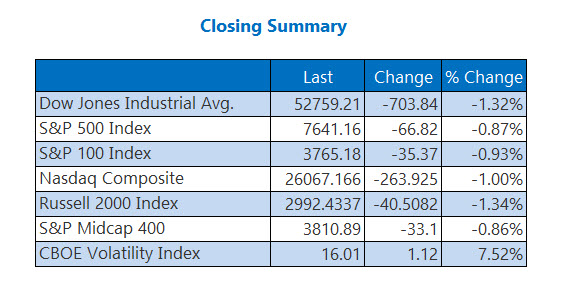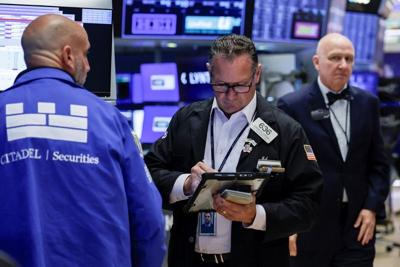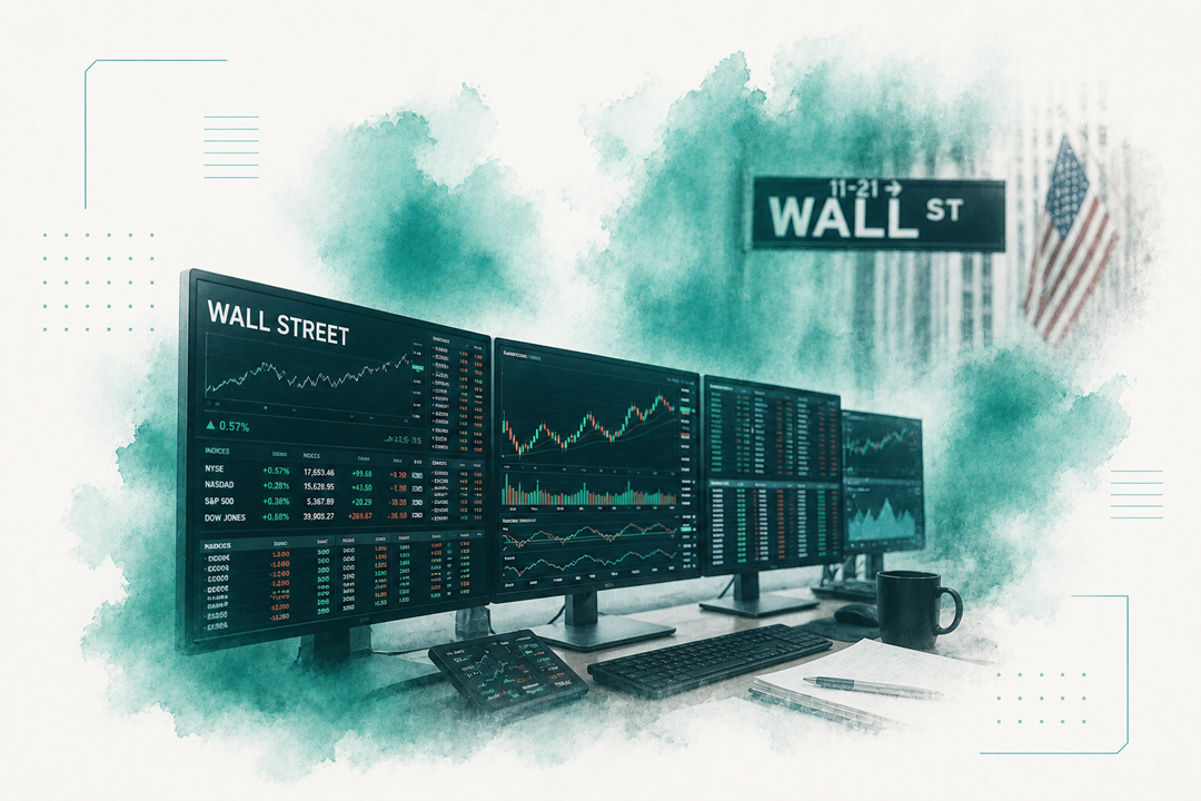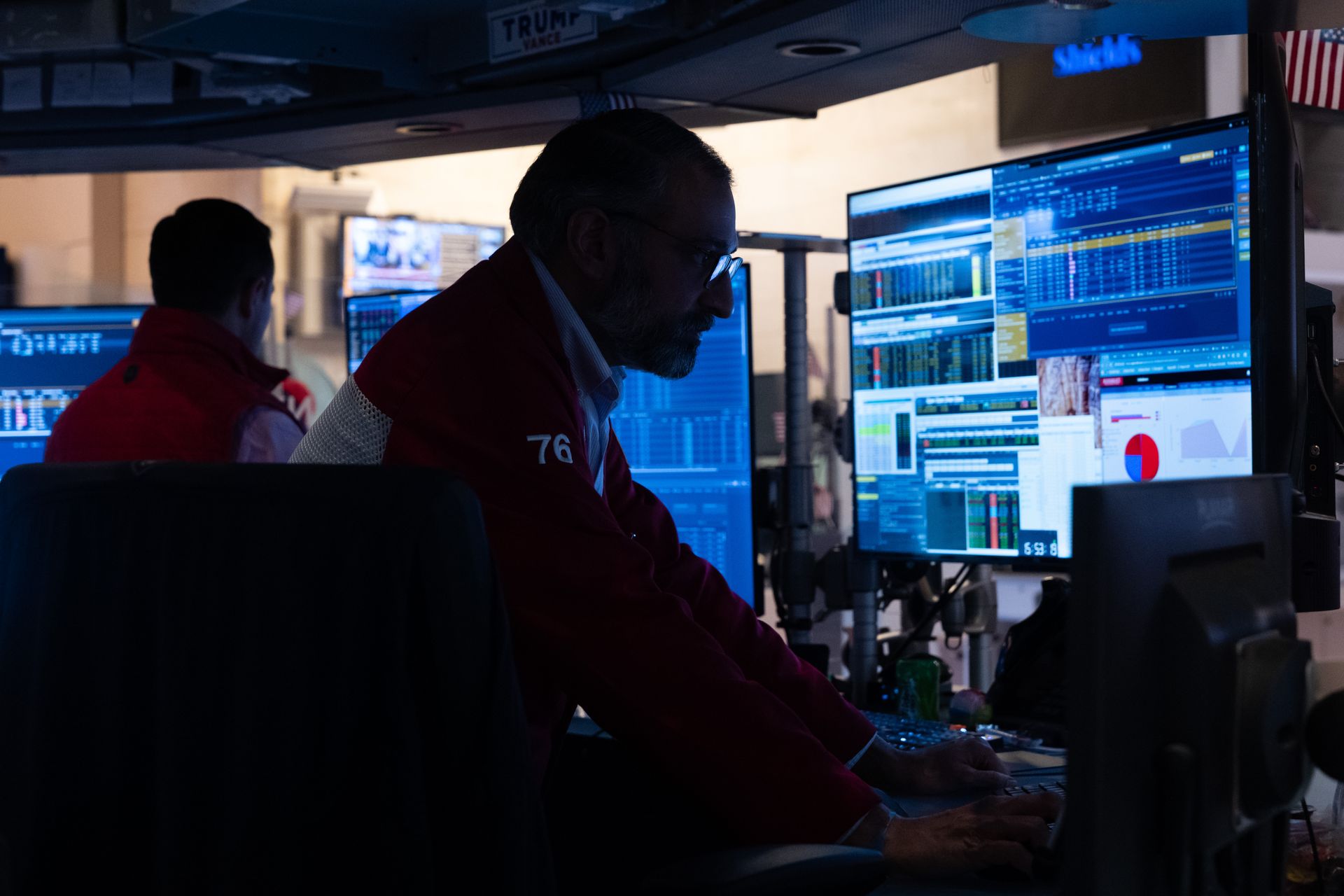


Market Volatility Creates Dual Crisis for Cross-Border E-Commerce Sellers: On August 20-21, 2026, U.S. financial markets experienced a severe correction as Treasury bond yields surged despite government intervention, with the S&P 500 dropping 0.87%, Nasdaq falling 1.00%, and Walmart—the world's largest retailer—plummeting 9.2% after missing earnings expectations. This simultaneous equity and bond sell-off signals investor panic about economic fundamentals, not sector-specific weakness. For cross-border sellers, this creates an immediate financing crisis: rising bond yields directly increase borrowing costs for inventory financing, working capital lines, and business expansion by 150-300 basis points. A seller with a $500K inventory loan at 8% APR now faces potential rates of 9.5-11%, adding $7,500-15,000 annually to financing costs.
Consumer Spending Collapse Threatens Discretionary Categories: Walmart's earnings miss explicitly attributed to rising gasoline prices ($87/barrel crude, up five consecutive sessions) causing consumers to reduce spending. This cascades across retail: Costco, Dollar Tree, and Albertsons all declined 1-2.6%. The Consumer Discretionary sector fell 1.8% with Amazon among the biggest drags, while Consumer Staples dropped 1.93%—the largest S&P 500 sector decline. For sellers, this means demand destruction in non-essential categories (fashion, home décor, electronics accessories) while staple/value categories show relative resilience. Sellers in discretionary categories should expect 15-25% demand compression over the next 60-90 days as consumers redirect spending to fuel and essentials.
Currency Volatility and Logistics Cost Explosion: The news explicitly highlights that market turbulence triggers currency volatility affecting international shipping costs and FX exposure for multi-market sellers. With oil at $87/barrel and geopolitical tensions (stalled U.S.-Iran peace talks, Middle East supply disruptions), shipping costs from Asia to North America will spike 8-15% within 30 days. Sellers with RMB/INR/PHP exposure face additional headwinds: USD strength during risk-off periods increases the cost of sourcing from China/India by 3-5% as importers compete for limited dollar liquidity. The $40 trillion U.S. national debt context signals sustained high rates ahead, meaning this isn't a temporary dislocation but a structural shift in financing costs.
Immediate Financial Optimization Opportunities: Despite the crisis, three financial moves unlock working capital: (1) Invoice factoring acceleration—convert 30-60 day receivables to 5-7 day cash at 2-3% discount (vs. 8-11% financing cost), saving 500-800 bps; (2) FX hedging on inbound shipments—lock in USD/CNY, USD/INR rates now before further appreciation, protecting 3-5% margin on Q4 inventory; (3) Inventory-backed lending alternatives—explore non-bank lenders (Clearco, Fundbox, Shopify Capital) offering 6-8% rates vs. traditional bank 9-11%, saving $3,000-8,000 on $500K facilities. Sellers should execute these moves within 7-14 days before credit markets tighten further.
Based on August 2026 market signals, expect sustained high rates for 3-6 months minimum. The news reports $40 trillion U.S. national debt and Treasury Department's failed intervention attempts, indicating structural fiscal pressures rather than temporary volatility. Bond yields surging despite government buyback efforts suggest investors expect sustained inflation and high rates ahead. Historical precedent: 2022-2023 rate hiking cycle lasted 12+ months with rates staying elevated for 18+ months. Current environment shows similar characteristics: dual equity/bond sell-off, consumer spending weakness, geopolitical tensions (Iran, Middle East), and fiscal imbalance. **Seller planning horizon**: Assume 3-6 month period of elevated financing costs (8-11% APR), high shipping costs ($87+ oil), and 15-25% discretionary demand compression. By Q1 2027 (4-5 months out), expect potential rate stabilization if inflation moderates or recession fears ease. **Action timeline**: (1) Immediate (0-30 days): Lock in financing rates, hedge FX, reduce discretionary inventory; (2) Medium-term (30-90 days): Monitor Treasury yields and Fed policy signals, adjust inventory strategy monthly; (3) Long-term (90+ days): Prepare for potential rate cuts in Q1 2027 if recession fears materialize. Track 10-year Treasury yield daily—if it drops below 3.8%, expect rate environment to ease within 4-6 weeks.
During market stress with rising rates, payment method selection becomes critical for cost optimization. **Immediate actions**: (1) **Shift to ACH/bank transfers for B2B payments**: 0.5-1% cost vs. 2-3% for credit cards, saving $500-2,000 per $100K in monthly supplier payments. Negotiate 2-3 day settlement with suppliers instead of 5-7 day credit card processing. (2) **Use stablecoin payments (USDC, USDT) for international suppliers**: 0.1-0.3% network fees vs. 2-4% for wire transfers + FX spreads, saving $1,500-3,500 per $100K cross-border payment. Requires supplier adoption but increasingly common with Asia-based manufacturers. (3) **Consolidate payment volume with single processor**: Negotiate volume discounts (0.5-1.5% vs. standard 2-3%) with Stripe, Square, or PayPal if processing $50K+ monthly. (4) **Delay non-critical payments 15-30 days**: Extend supplier terms from 30 to 45-60 days to preserve cash during high-rate environment, freeing $10K-50K working capital per month. Cost: negotiate 0.5-1% early payment discount if you pay in 15 days instead. Net benefit: $5K-25K monthly working capital improvement at minimal cost. Execute payment optimization within 14 days before credit markets tighten further.
Consumer Discretionary categories face 15-25% demand compression based on Walmart's earnings miss and the Consumer Discretionary sector's 1.8% decline on August 20, 2026. Specifically affected: fashion/apparel, home décor, electronics accessories, beauty/cosmetics, and non-essential home goods. Walmart attributed weakness to rising gasoline prices ($87/barrel crude) forcing consumers to redirect spending to fuel and essentials. Consumer Staples (groceries, household basics) show relative resilience with only 1.93% sector decline. Sellers in discretionary categories should immediately reduce Q4 inventory orders by 20-30%, shift marketing budget to value/budget product lines, and consider promotional pricing to clear existing stock. Staple/value sellers can maintain current inventory levels and expect 5-10% demand lift as consumers trade down from premium brands.
Treasury yield increases of 150-300 basis points directly translate to higher borrowing costs for inventory loans, working capital lines, and business expansion financing. A seller with a $500K inventory facility at 8% APR could see rates jump to 9.5-11%, adding $7,500-15,000 annually. The August 2026 market data shows bond yields surging despite Treasury Department intervention, signaling sustained higher rates ahead. Sellers should lock in fixed-rate financing immediately through platforms like Amazon Lending, Shopify Capital, or alternative lenders (Clearco, Fundbox) offering 6-8% rates before credit markets tighten further. Monitor 10-year Treasury yields daily—if they exceed 4.5%, expect bank prime rates to rise another 50-75 bps within 2-3 weeks.
Yes, but selectively by category. Reduce discretionary category orders (fashion, home décor, electronics) by 20-30% based on Walmart's earnings miss and Consumer Discretionary sector's 1.8% decline. Maintain or slightly increase staple/value category orders (groceries, household basics, budget apparel) as Consumer Staples show relative resilience. The August 2026 data shows consumer spending is shifting from discretionary to essentials due to rising gasoline prices and inflation concerns. Specifically: (1) **Discretionary sellers**: Cut Q4 orders by 25%, shift budget to promotional inventory (clearance items, bundles) to move existing stock; (2) **Staple sellers**: Maintain current order levels or increase 5-10% to capture trade-down demand from premium brands; (3) **All sellers**: Reduce SKU count by 15-20% to focus on top 80% of revenue-generating products, freeing working capital for high-velocity items. Execute order reductions within 7-10 days before suppliers lock in Q4 pricing. Monitor Walmart, Amazon, and Target earnings reports weekly—if discretionary weakness persists beyond September, cut orders another 15-20% for January 2027 delivery.
Yes, significantly. Oil at $87/barrel (up five consecutive sessions as of August 20, 2026) and stalled U.S.-Iran peace talks with Middle East supply disruptions will drive shipping cost increases of 8-15% within 30 days. Fuel surcharges on ocean freight from Asia to North America typically rise $200-400 per 40-foot container for every $10/barrel oil increase. At current $87/barrel levels, expect surcharges of $400-600 per container (vs. $200-300 baseline), adding $1,200-1,800 to typical 3-container monthly shipments. Air freight costs will spike 12-18% due to fuel surcharges and capacity constraints. Sellers should: (1) Negotiate fixed fuel surcharge rates with freight forwarders for Q4 2026 shipments NOW (lock in 30-60 day rates before further increases); (2) Shift non-urgent inventory to ocean freight (slower but cheaper) and reserve air freight for high-velocity SKUs only; (3) Build 8-12% shipping cost buffer into Q4 pricing models. Monitor EIA crude oil data daily—if oil exceeds $90/barrel, expect additional 3-5% surcharge increases within 2 weeks.
Three immediate alternatives to traditional bank loans (now 9-11% APR): (1) **Invoice factoring**: Convert 30-60 day customer receivables to 5-7 day cash at 2-3% discount, saving 500-800 bps vs. bank financing. Platforms like Fundbox, BlueVine, and Shopify Capital offer 24-48 hour funding. Cost: $1,500-3,000 on $100K receivables vs. $8,000-11,000 for bank loans. (2) **Inventory-backed lending**: Clearco, Shopify Capital, and Amazon Lending offer 6-8% rates secured by inventory or future sales, 200-300 bps cheaper than banks. Typical terms: $50K-500K at 6-8% APR with 12-24 month repayment. (3) **Supplier payment term negotiation**: Extend payment terms from 30 to 45-60 days with existing suppliers (especially if you have 2+ year relationships), freeing $20K-100K in working capital immediately at zero cost. Prioritize invoice factoring for immediate 30-day cash needs, then layer in inventory-backed lending for 90-180 day working capital. Avoid traditional bank loans until Treasury yields stabilize below 4.0%.
The August 2026 market turbulence creates a risk-off environment where USD strengthens against emerging market currencies (CNY, INR, PHP) as investors flee to safety. Simultaneously, oil at $87/barrel and geopolitical tensions (stalled U.S.-Iran talks, Middle East supply disruptions) signal sustained energy costs. For sellers sourcing from China/India: (1) Lock in USD/CNY and USD/INR forward rates NOW at current levels (typically 1-3% premium to spot) for Q4 2026 shipments—this protects 3-5% margin on inbound costs; (2) Use 60-90 day forward contracts rather than spot purchases to avoid daily volatility; (3) Consider currency options (puts on CNY/INR) for 2-3% of volume to cap downside while preserving upside if USD weakens. Cost: 0.5-1.5% of transaction value, but saves 3-5% if USD appreciates 3-5% over 90 days. Execute hedges within 7-14 days before credit market stress forces emerging market central banks to raise rates, widening hedging costs.
Based on August 2026 market signals, expect sustained high rates for 3-6 months minimum. The news reports $40 trillion U.S. national debt and Treasury Department's failed intervention attempts, indicating structural fiscal pressures rather than temporary volatility. Bond yields surging despite government buyback efforts suggest investors expect sustained inflation and high rates ahead. Historical precedent: 2022-2023 rate hiking cycle lasted 12+ months with rates staying elevated for 18+ months. Current environment shows similar characteristics: dual equity/bond sell-off, consumer spending weakness, geopolitical tensions (Iran, Middle East), and fiscal imbalance. **Seller planning horizon**: Assume 3-6 month period of elevated financing costs (8-11% APR), high shipping costs ($87+ oil), and 15-25% discretionary demand compression. By Q1 2027 (4-5 months out), expect potential rate stabilization if inflation moderates or recession fears ease. **Action timeline**: (1) Immediate (0-30 days): Lock in financing rates, hedge FX, reduce discretionary inventory; (2) Medium-term (30-90 days): Monitor Treasury yields and Fed policy signals, adjust inventory strategy monthly; (3) Long-term (90+ days): Prepare for potential rate cuts in Q1 2027 if recession fears materialize. Track 10-year Treasury yield daily—if it drops below 3.8%, expect rate environment to ease within 4-6 weeks.
During market stress with rising rates, payment method selection becomes critical for cost optimization. **Immediate actions**: (1) **Shift to ACH/bank transfers for B2B payments**: 0.5-1% cost vs. 2-3% for credit cards, saving $500-2,000 per $100K in monthly supplier payments. Negotiate 2-3 day settlement with suppliers instead of 5-7 day credit card processing. (2) **Use stablecoin payments (USDC, USDT) for international suppliers**: 0.1-0.3% network fees vs. 2-4% for wire transfers + FX spreads, saving $1,500-3,500 per $100K cross-border payment. Requires supplier adoption but increasingly common with Asia-based manufacturers. (3) **Consolidate payment volume with single processor**: Negotiate volume discounts (0.5-1.5% vs. standard 2-3%) with Stripe, Square, or PayPal if processing $50K+ monthly. (4) **Delay non-critical payments 15-30 days**: Extend supplier terms from 30 to 45-60 days to preserve cash during high-rate environment, freeing $10K-50K working capital per month. Cost: negotiate 0.5-1% early payment discount if you pay in 15 days instead. Net benefit: $5K-25K monthly working capital improvement at minimal cost. Execute payment optimization within 14 days before credit markets tighten further.
Consumer Discretionary categories face 15-25% demand compression based on Walmart's earnings miss and the Consumer Discretionary sector's 1.8% decline on August 20, 2026. Specifically affected: fashion/apparel, home décor, electronics accessories, beauty/cosmetics, and non-essential home goods. Walmart attributed weakness to rising gasoline prices ($87/barrel crude) forcing consumers to redirect spending to fuel and essentials. Consumer Staples (groceries, household basics) show relative resilience with only 1.93% sector decline. Sellers in discretionary categories should immediately reduce Q4 inventory orders by 20-30%, shift marketing budget to value/budget product lines, and consider promotional pricing to clear existing stock. Staple/value sellers can maintain current inventory levels and expect 5-10% demand lift as consumers trade down from premium brands.
Treasury yield increases of 150-300 basis points directly translate to higher borrowing costs for inventory loans, working capital lines, and business expansion financing. A seller with a $500K inventory facility at 8% APR could see rates jump to 9.5-11%, adding $7,500-15,000 annually. The August 2026 market data shows bond yields surging despite Treasury Department intervention, signaling sustained higher rates ahead. Sellers should lock in fixed-rate financing immediately through platforms like Amazon Lending, Shopify Capital, or alternative lenders (Clearco, Fundbox) offering 6-8% rates before credit markets tighten further. Monitor 10-year Treasury yields daily—if they exceed 4.5%, expect bank prime rates to rise another 50-75 bps within 2-3 weeks.
Yes, but selectively by category. Reduce discretionary category orders (fashion, home décor, electronics) by 20-30% based on Walmart's earnings miss and Consumer Discretionary sector's 1.8% decline. Maintain or slightly increase staple/value category orders (groceries, household basics, budget apparel) as Consumer Staples show relative resilience. The August 2026 data shows consumer spending is shifting from discretionary to essentials due to rising gasoline prices and inflation concerns. Specifically: (1) **Discretionary sellers**: Cut Q4 orders by 25%, shift budget to promotional inventory (clearance items, bundles) to move existing stock; (2) **Staple sellers**: Maintain current order levels or increase 5-10% to capture trade-down demand from premium brands; (3) **All sellers**: Reduce SKU count by 15-20% to focus on top 80% of revenue-generating products, freeing working capital for high-velocity items. Execute order reductions within 7-10 days before suppliers lock in Q4 pricing. Monitor Walmart, Amazon, and Target earnings reports weekly—if discretionary weakness persists beyond September, cut orders another 15-20% for January 2027 delivery.
Yes, significantly. Oil at $87/barrel (up five consecutive sessions as of August 20, 2026) and stalled U.S.-Iran peace talks with Middle East supply disruptions will drive shipping cost increases of 8-15% within 30 days. Fuel surcharges on ocean freight from Asia to North America typically rise $200-400 per 40-foot container for every $10/barrel oil increase. At current $87/barrel levels, expect surcharges of $400-600 per container (vs. $200-300 baseline), adding $1,200-1,800 to typical 3-container monthly shipments. Air freight costs will spike 12-18% due to fuel surcharges and capacity constraints. Sellers should: (1) Negotiate fixed fuel surcharge rates with freight forwarders for Q4 2026 shipments NOW (lock in 30-60 day rates before further increases); (2) Shift non-urgent inventory to ocean freight (slower but cheaper) and reserve air freight for high-velocity SKUs only; (3) Build 8-12% shipping cost buffer into Q4 pricing models. Monitor EIA crude oil data daily—if oil exceeds $90/barrel, expect additional 3-5% surcharge increases within 2 weeks.
Three immediate alternatives to traditional bank loans (now 9-11% APR): (1) **Invoice factoring**: Convert 30-60 day customer receivables to 5-7 day cash at 2-3% discount, saving 500-800 bps vs. bank financing. Platforms like Fundbox, BlueVine, and Shopify Capital offer 24-48 hour funding. Cost: $1,500-3,000 on $100K receivables vs. $8,000-11,000 for bank loans. (2) **Inventory-backed lending**: Clearco, Shopify Capital, and Amazon Lending offer 6-8% rates secured by inventory or future sales, 200-300 bps cheaper than banks. Typical terms: $50K-500K at 6-8% APR with 12-24 month repayment. (3) **Supplier payment term negotiation**: Extend payment terms from 30 to 45-60 days with existing suppliers (especially if you have 2+ year relationships), freeing $20K-100K in working capital immediately at zero cost. Prioritize invoice factoring for immediate 30-day cash needs, then layer in inventory-backed lending for 90-180 day working capital. Avoid traditional bank loans until Treasury yields stabilize below 4.0%.
The August 2026 market turbulence creates a risk-off environment where USD strengthens against emerging market currencies (CNY, INR, PHP) as investors flee to safety. Simultaneously, oil at $87/barrel and geopolitical tensions (stalled U.S.-Iran talks, Middle East supply disruptions) signal sustained energy costs. For sellers sourcing from China/India: (1) Lock in USD/CNY and USD/INR forward rates NOW at current levels (typically 1-3% premium to spot) for Q4 2026 shipments—this protects 3-5% margin on inbound costs; (2) Use 60-90 day forward contracts rather than spot purchases to avoid daily volatility; (3) Consider currency options (puts on CNY/INR) for 2-3% of volume to cap downside while preserving upside if USD weakens. Cost: 0.5-1.5% of transaction value, but saves 3-5% if USD appreciates 3-5% over 90 days. Execute hedges within 7-14 days before credit market stress forces emerging market central banks to raise rates, widening hedging costs.
Based on August 2026 market signals, expect sustained high rates for 3-6 months minimum. The news reports $40 trillion U.S. national debt and Treasury Department's failed intervention attempts, indicating structural fiscal pressures rather than temporary volatility. Bond yields surging despite government buyback efforts suggest investors expect sustained inflation and high rates ahead. Historical precedent: 2022-2023 rate hiking cycle lasted 12+ months with rates staying elevated for 18+ months. Current environment shows similar characteristics: dual equity/bond sell-off, consumer spending weakness, geopolitical tensions (Iran, Middle East), and fiscal imbalance. **Seller planning horizon**: Assume 3-6 month period of elevated financing costs (8-11% APR), high shipping costs ($87+ oil), and 15-25% discretionary demand compression. By Q1 2027 (4-5 months out), expect potential rate stabilization if inflation moderates or recession fears ease. **Action timeline**: (1) Immediate (0-30 days): Lock in financing rates, hedge FX, reduce discretionary inventory; (2) Medium-term (30-90 days): Monitor Treasury yields and Fed policy signals, adjust inventory strategy monthly; (3) Long-term (90+ days): Prepare for potential rate cuts in Q1 2027 if recession fears materialize. Track 10-year Treasury yield daily—if it drops below 3.8%, expect rate environment to ease within 4-6 weeks.
During market stress with rising rates, payment method selection becomes critical for cost optimization. **Immediate actions**: (1) **Shift to ACH/bank transfers for B2B payments**: 0.5-1% cost vs. 2-3% for credit cards, saving $500-2,000 per $100K in monthly supplier payments. Negotiate 2-3 day settlement with suppliers instead of 5-7 day credit card processing. (2) **Use stablecoin payments (USDC, USDT) for international suppliers**: 0.1-0.3% network fees vs. 2-4% for wire transfers + FX spreads, saving $1,500-3,500 per $100K cross-border payment. Requires supplier adoption but increasingly common with Asia-based manufacturers. (3) **Consolidate payment volume with single processor**: Negotiate volume discounts (0.5-1.5% vs. standard 2-3%) with Stripe, Square, or PayPal if processing $50K+ monthly. (4) **Delay non-critical payments 15-30 days**: Extend supplier terms from 30 to 45-60 days to preserve cash during high-rate environment, freeing $10K-50K working capital per month. Cost: negotiate 0.5-1% early payment discount if you pay in 15 days instead. Net benefit: $5K-25K monthly working capital improvement at minimal cost. Execute payment optimization within 14 days before credit markets tighten further.