


Walmart's $2.9B Tariff Refund Fuels Aggressive Price War | Third-Party Seller Margin Compression Alert
- Walmart implements 11,000 price rollbacks in Q2 2026 using tariff refunds; third-party sellers face 5-15% margin pressure on grocery and general merchandise categories













Overview
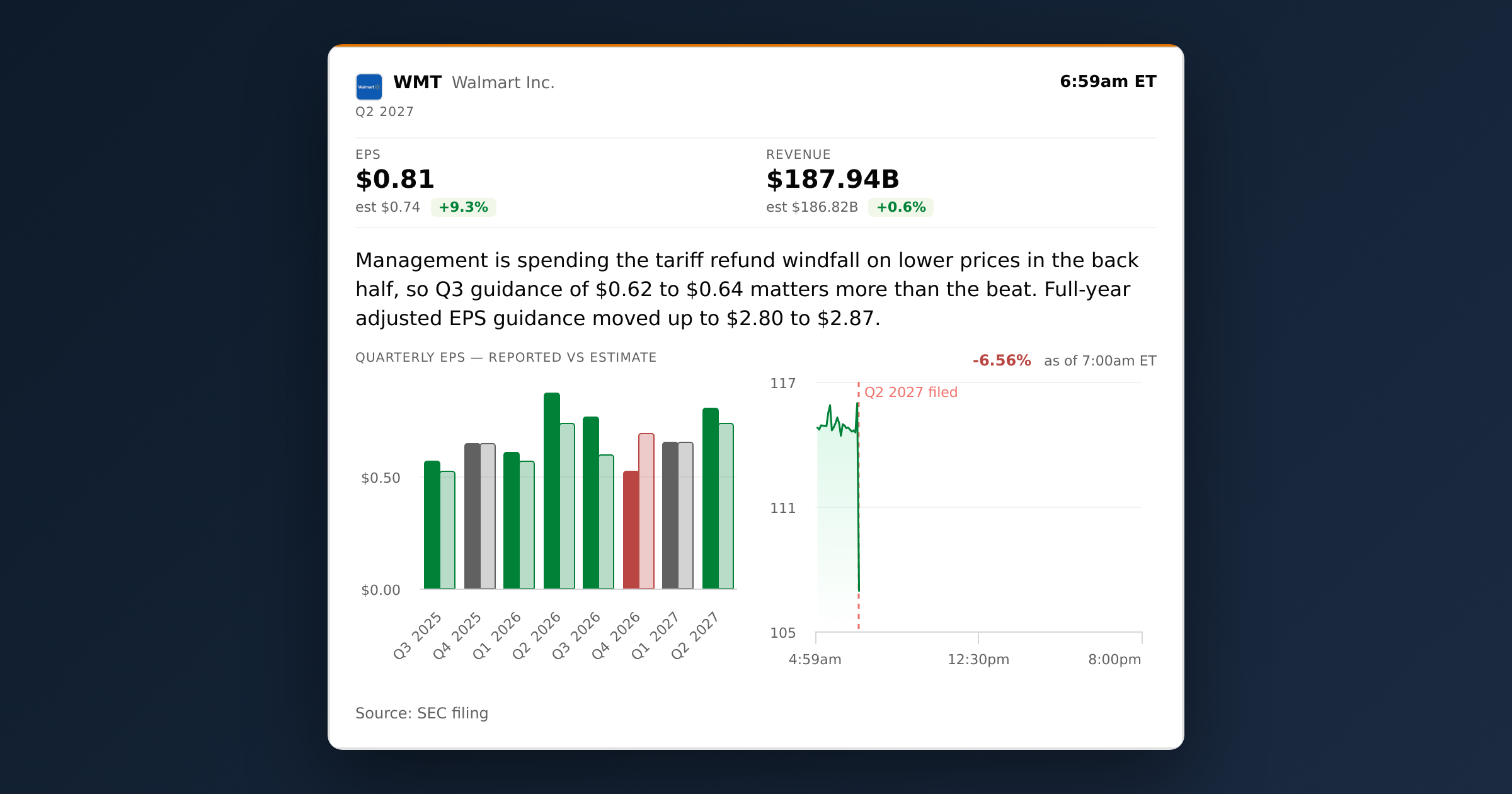
Walmart has deployed nearly all of its $2.9 billion in tariff refunds received from the U.S. government following the Supreme Court's decision to strike down portions of Trump's import taxes, channeling capital directly into aggressive price reductions across U.S. operations. The retailer implemented 11,000 temporary price rollbacks in Q2 2026—a 53% increase from 7,200 in Q1—with strategic focus on grocery and general merchandise categories including ground beef and potato chips. This represents the largest tariff refund reported by any U.S. company, signaling a fundamental shift in how major retailers leverage government reimbursements to capture market share during periods of consumer financial strain.
For third-party sellers on Walmart Marketplace and cross-border e-commerce platforms, this development creates immediate competitive pressure through margin compression. Walmart's strategy mirrors Target's approach of reducing prices on 10,000+ items, but Walmart's scale and refund magnitude ($2.9B vs. distributed refunds to smaller importers) enable deeper price cuts that third-party sellers cannot match without absorbing losses. The government distributed approximately $100 billion in tariff refunds by late July 2026 to importers who paid tariffs directly, but these refunds flow to importers rather than end consumers—meaning only large retailers with direct import operations receive the full benefit. Sellers relying on imported goods face a critical timing window: Walmart's price leadership is temporary (the $2.9B refund is one-time and won't recur), but the competitive damage to third-party seller Buy Box positioning and conversion rates will persist through Q3-Q4 2026.
The underlying consumer demand signal is deteriorating, which amplifies competitive risk. Walmart's U.S. comparable sales growth slowed to 2.6%—its weakest pace in six years—despite a 30% jump in operating income, indicating that the tariff refund profit boost masks weakening consumer spending. CFO John David Rainey noted that gas prices above $4 per gallon create psychological impacts on shopper behavior, and elevated fuel costs strain both consumer budgets and retailer expenses. This environment forces third-party sellers to choose between: (1) matching Walmart's prices and accepting 5-15% margin compression on grocery/general merchandise, (2) shifting inventory to higher-margin categories (electronics, home goods, specialty items) where Walmart's refund impact is less concentrated, or (3) diversifying to alternative marketplaces (Amazon, eBay, Shopify) where competitive dynamics differ. Sellers should immediately audit their Walmart Marketplace pricing strategy and category mix, as the 11,000 price rollbacks will directly impact Buy Box eligibility and conversion rates for competing SKUs through Q4 2026.
Questions 8
What is the timeline for when Walmart's tariff refund competitive advantage will diminish?
Walmart's $2.9B refund is one-time and non-recurring, meaning the aggressive pricing strategy is temporary through Q4 2026. CFO John David Rainey confirmed the refund won't recur in future quarters, indicating Walmart's price leadership will normalize in Q1 2027. However, the competitive damage to third-party seller positioning (Buy Box loss, conversion rate decline, customer acquisition cost increases) will persist beyond the refund period. Sellers should plan for 6-9 months of margin pressure (Q2-Q4 2026) and prepare alternative strategies (category diversification, marketplace expansion, cost reduction) before the refund advantage expires.
Which product categories should third-party sellers prioritize to avoid Walmart's price war?
Sellers should shift inventory allocation toward categories where Walmart's refund impact is minimal: electronics (where Walmart's refund focus is on grocery/general merchandise), home goods, specialty items, and niche categories with lower price elasticity. Walmart explicitly stated its refund deployment targets grocery and general merchandise, meaning categories like kitchen appliances, home décor, and specialized tools face less aggressive price competition. Third-party sellers can maintain 10-20% higher margins in these categories compared to grocery/general merchandise where Walmart's 11,000 price rollbacks create direct competition. Consider reallocating 20-30% of inventory from grocery/general merchandise to higher-margin categories by Q3 2026.