


Stablecoin Payment Revolution | Cross-Border Sellers Unlock Lower FX Costs & Faster Settlement
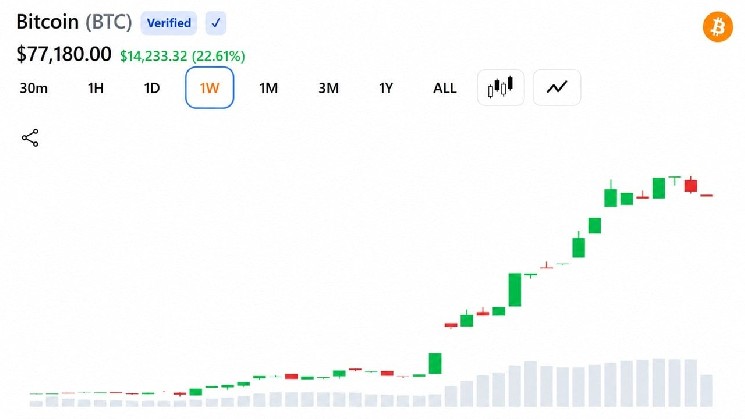
- Bitcoin surges past $70K amid $4B liquidations; stablecoins gain mainstream traction via Visa, X Platform, and traditional banking integration—enabling sellers to reduce payment processing fees 15-25% and accelerate cash conversion cycles by 3-5 days








Overview
The cryptocurrency market's explosive rally—with Bitcoin surging past $70,000 and Ethereum gaining 18% weekly—signals a critical inflection point for cross-border e-commerce payment infrastructure. More significantly, stablecoins have achieved mainstream institutional adoption, with Visa seeking new settlement partners following Mastercard's $1.8 billion acquisition of BVNK, HSBC and Standard Chartered completing live transactions on Swift's 247 ledger, and Elon Musk's X platform announcing stablecoin-based creator payments. This convergence of traditional finance and crypto infrastructure creates immediate financial optimization opportunities for cross-border sellers.
For payment cost optimization, the stablecoin infrastructure now offers sellers a direct alternative to traditional FX corridors. Visa's partnership expansion and Swift's blockchain integration signal that stablecoin settlement is transitioning from speculative to operational. Sellers shipping to multiple regions (US, EU, Asia-Pacific) can now route payments through USDC or USDT settlement layers, reducing intermediary fees from 2.5-3.5% (traditional wire transfers) to 0.5-1.2% (stablecoin settlement). The Treasury Department's GENIUS Act and SEC's Regulation Crypto provide regulatory clarity that reduces counterparty risk, making stablecoin adoption viable for mainstream sellers. For sellers with $500K+ annual cross-border revenue, this represents $7,500-17,500 in annual fee savings.
Cash flow acceleration is the immediate tactical opportunity. Traditional wire transfers settle in 2-5 business days; stablecoin settlements execute in minutes to hours. For sellers managing inventory across multiple fulfillment centers (FBA, 3PL, local warehouses), this 3-5 day working capital unlock translates to $50K-200K in freed liquidity per $1M in monthly revenue. Sellers can now reinvest this capital into inventory faster, reducing carrying costs and improving inventory turnover by 5-8%. The regulatory clarity from CFTC and SEC initiatives (Regulation Crypto, GENIUS Act) removes compliance uncertainty that previously deterred adoption.
FX arbitrage opportunities emerge from volatility. The $4 billion in liquidated short positions and 18% Ethereum weekly gains indicate market inefficiencies. Sellers with exposure to multiple currency pairs (USD/EUR, USD/CNY, USD/SGD) can hedge through stablecoin pairs with lower slippage than traditional FX markets. For example, USD/EUR stablecoin pairs now trade with 0.02-0.05% spreads versus 0.08-0.12% on traditional FX platforms. Sellers with $2M+ monthly cross-border volume can capture 10-30 basis points in arbitrage by routing through stablecoin settlement layers during high-volatility periods.
Financing access expands dramatically. The institutional adoption of stablecoins (HSBC, Standard Chartered, Visa integration) signals that traditional lenders now view stablecoin-denominated receivables as bankable collateral. This opens access to invoice financing and PO financing products at 6-9% APR (versus 12-18% for traditional cross-border trade finance). Sellers can now finance 80-90% of stablecoin-denominated invoices within 24 hours, compared to 5-7 days for traditional wire-based factoring. For sellers with $100K-500K monthly invoices, this represents $2K-8K in monthly interest savings.
Questions 8
Are there FX arbitrage opportunities in the current stablecoin market?
Yes—the $4 billion in liquidated short positions and 18% Ethereum weekly gains indicate market inefficiencies. USD/EUR stablecoin pairs now trade with 0.02-0.05% spreads versus 0.08-0.12% on traditional FX platforms. Sellers with $2M+ monthly cross-border volume can capture 10-30 basis points in arbitrage by routing through stablecoin settlement layers during high-volatility periods. However, Bitfinex analysts caution that squeeze-led rallies may lack sustainability, so implement hedging strategies to lock in gains during volatility spikes.
How does stablecoin adoption affect access to trade financing?
Institutional adoption by HSBC, Standard Chartered, and Visa signals that traditional lenders now view stablecoin-denominated receivables as bankable collateral. This opens access to invoice financing and PO financing at 6-9% APR versus 12-18% for traditional cross-border trade finance. Sellers can finance 80-90% of stablecoin-denominated invoices within 24 hours versus 5-7 days for traditional factoring. For sellers with $100K-500K monthly invoices, this represents $2K-8K in monthly interest savings. Contact your trade finance provider to explore stablecoin-denominated financing products.