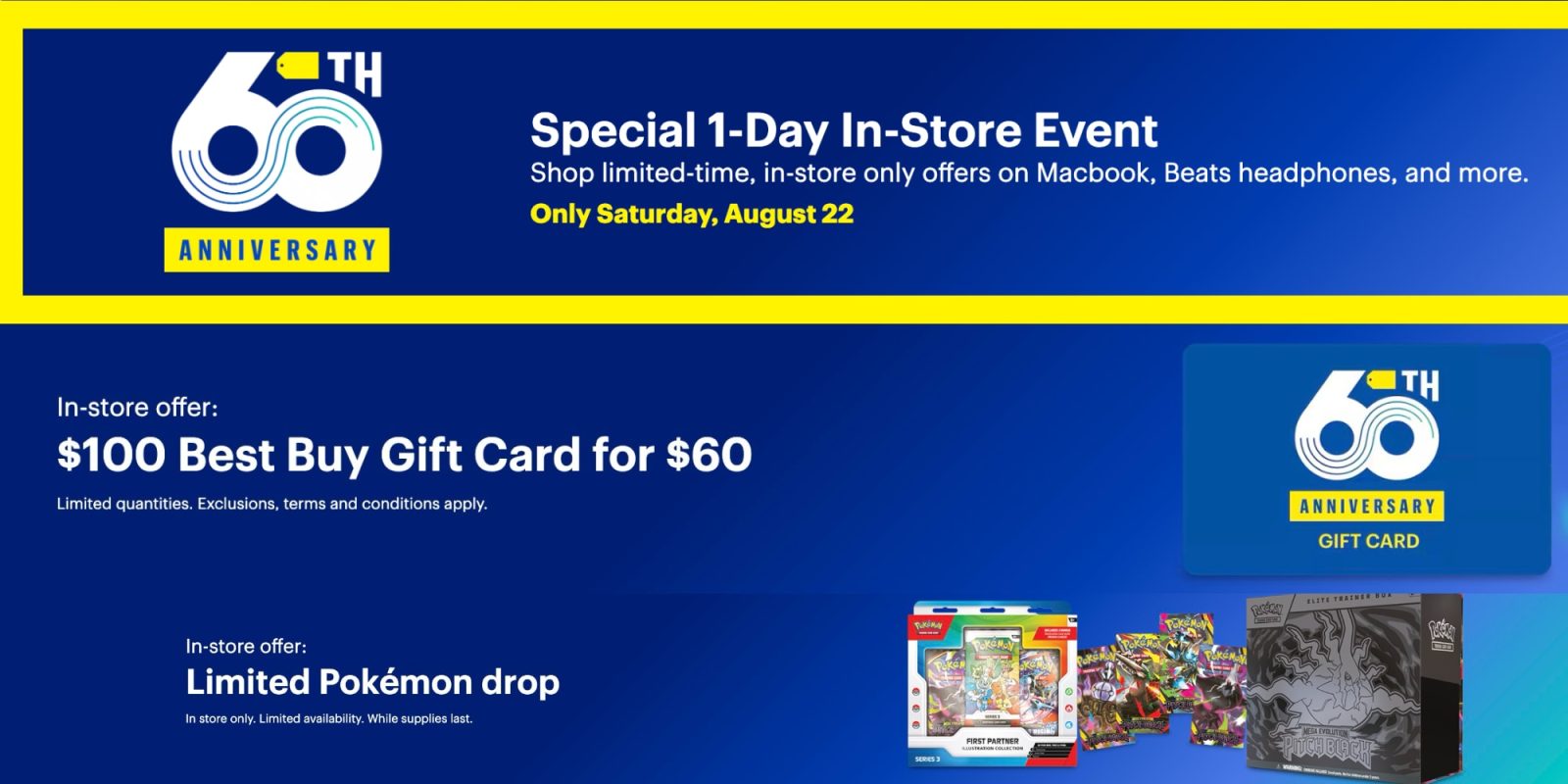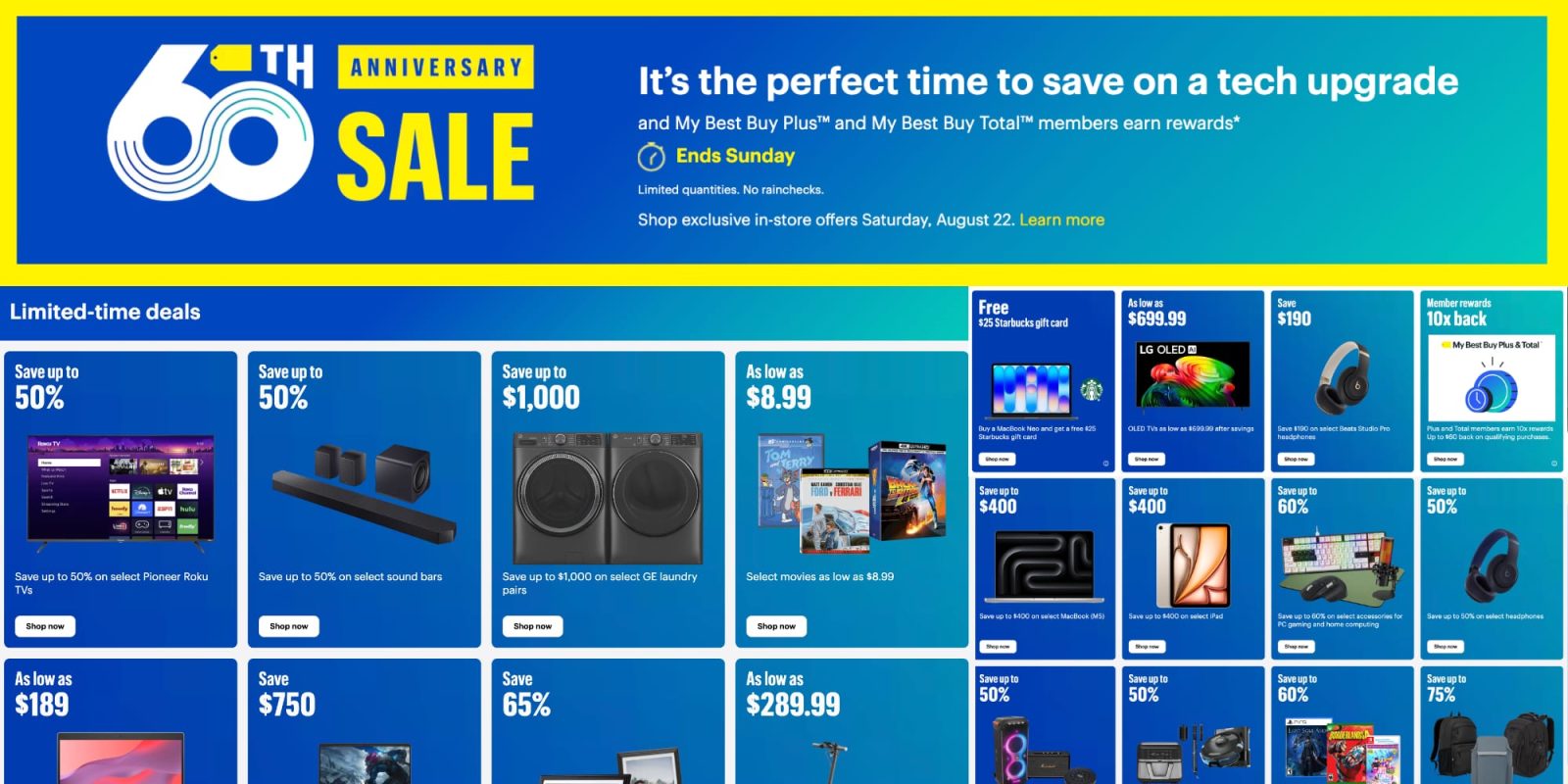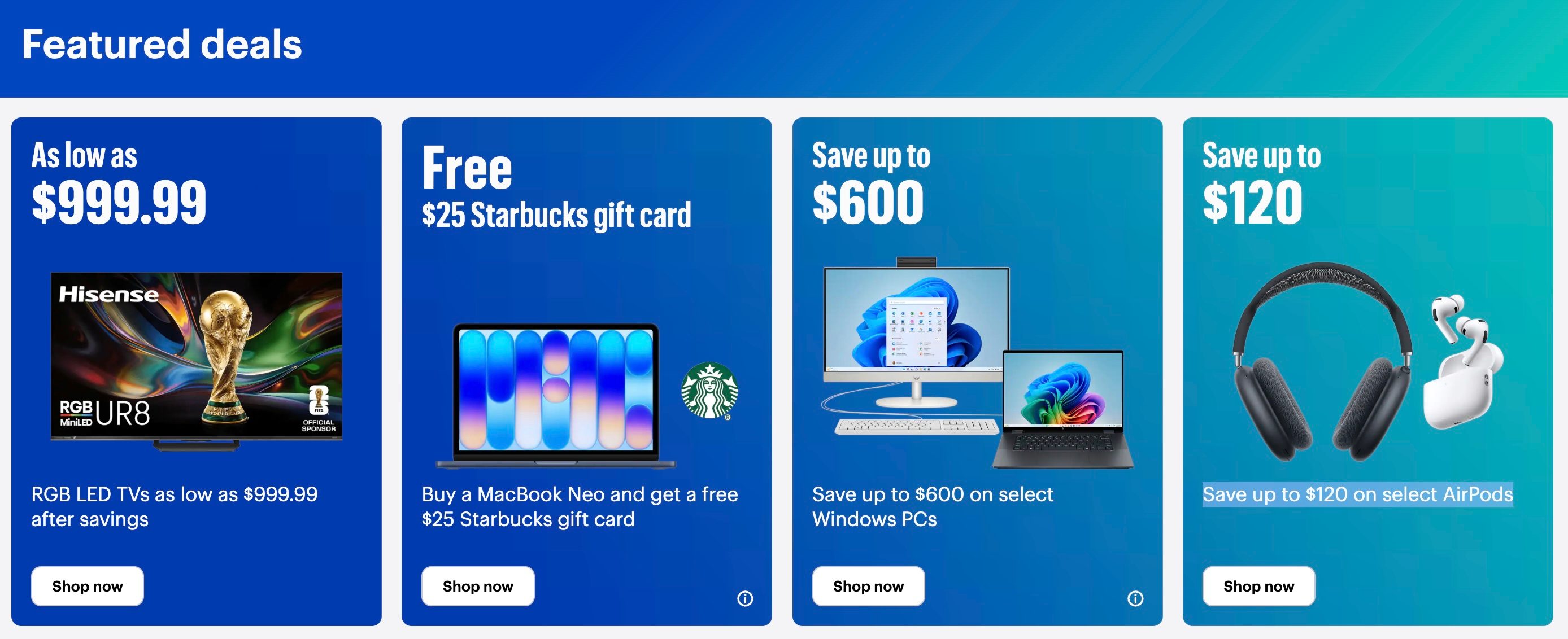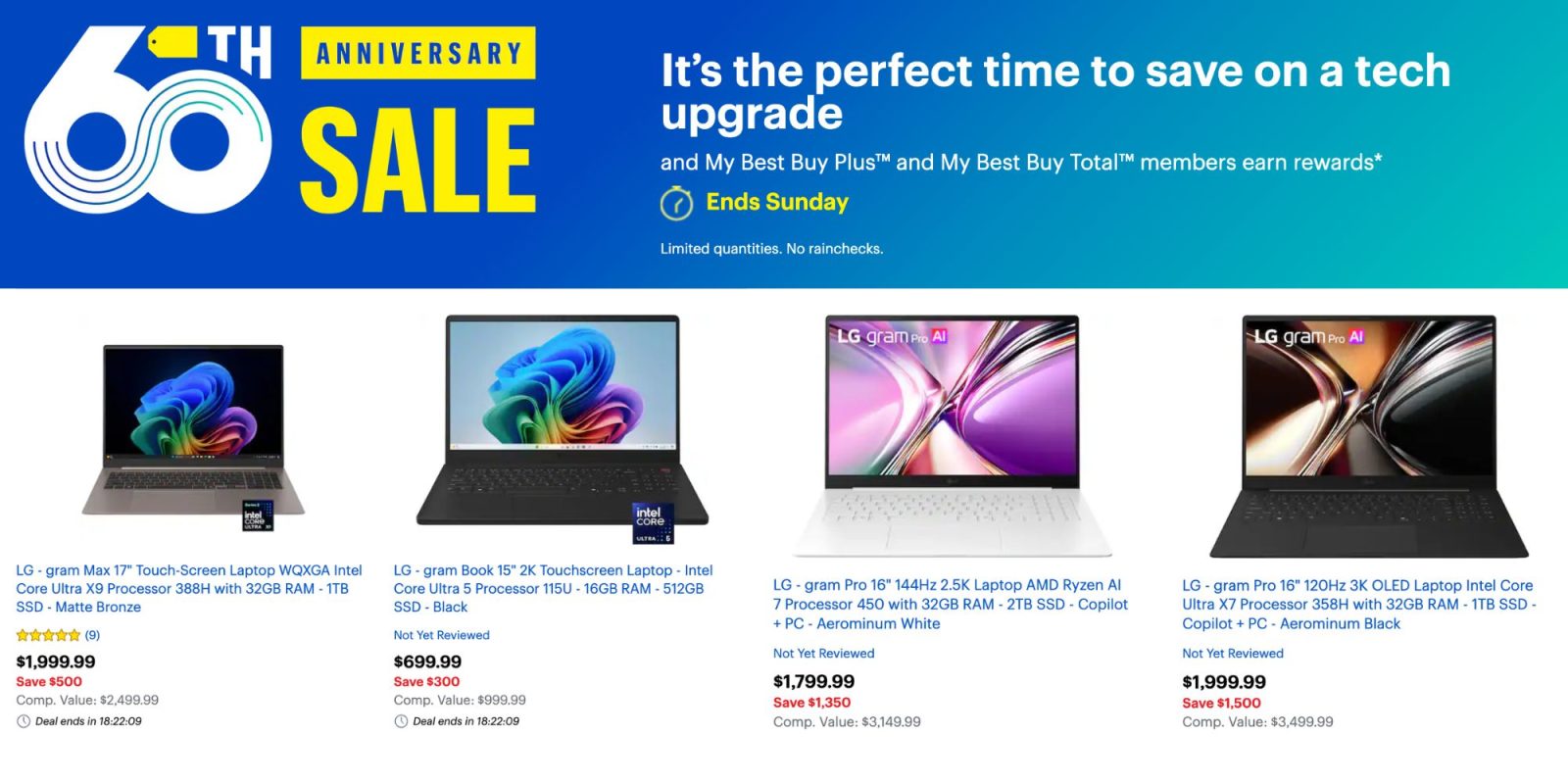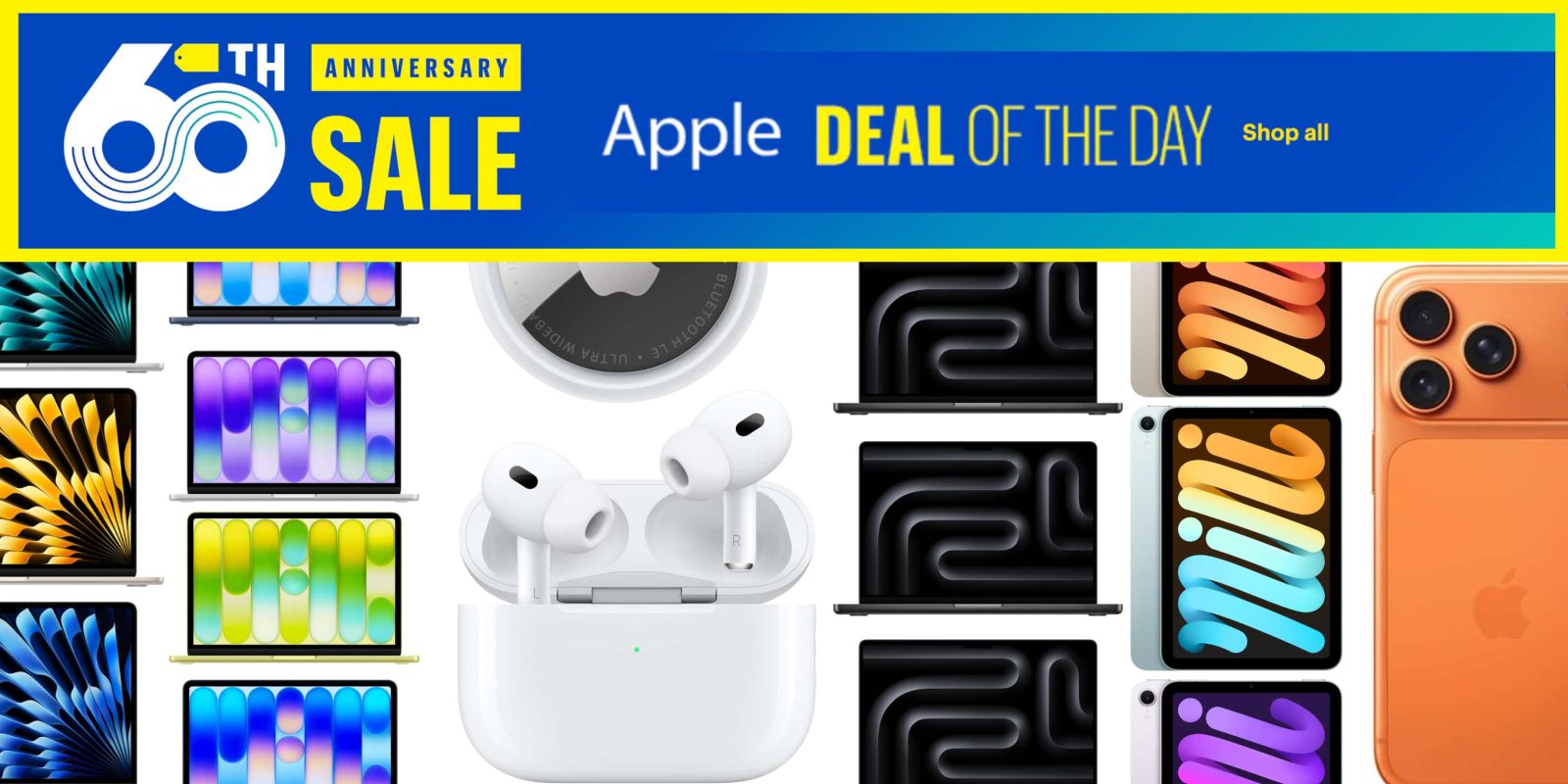
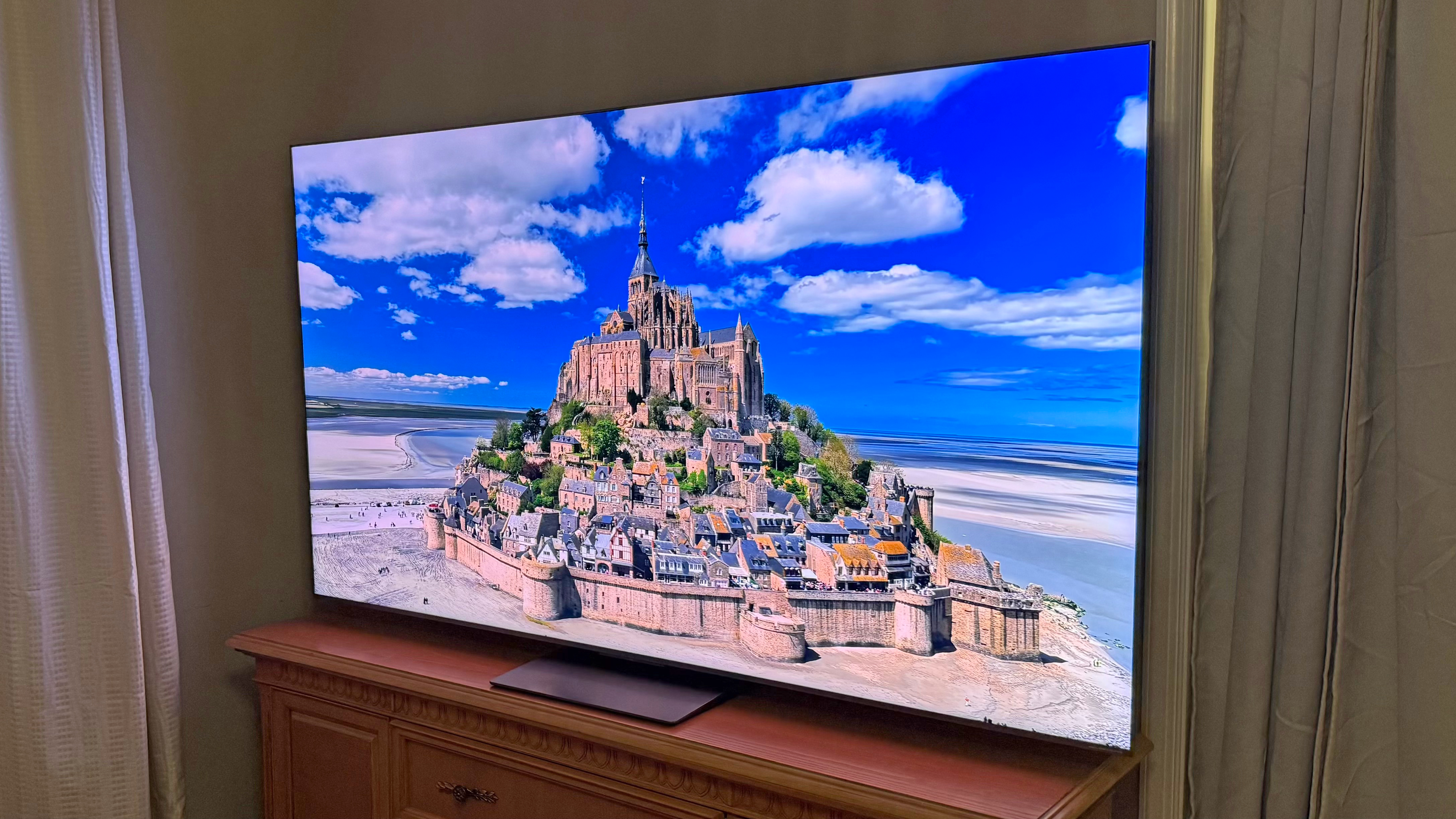


Best Buy's 60th anniversary sale (running through August 23) represents a critical inflection point in retail strategy: the deliberate emphasis on in-store-only deals to drive physical foot traffic in an era of e-commerce dominance. The event features 20-60% discounts across premium electronics (Apple, Samsung, DJI, Dyson, Beats), with specific deals like AirPods Pro 3 at $190 (24% off), Samsung S90F 65" OLED TV at $1,000 (33% off), and 14" MacBook Pro at $2,799 (13% off), plus a $100 gift card for $60 (40% discount). This strategy signals that major retailers are weaponizing scarcity and in-store exclusivity to combat online-only competitors like Amazon and Newegg.
For cross-border sellers and O2O strategists, this event reveals three critical market dynamics: (1) Offline retail is repositioning as an experiential/urgency channel rather than a commodity distribution point. Best Buy's emphasis on limited quantities and in-store-only access creates artificial scarcity that drives conversion—a tactic increasingly adopted by premium electronics retailers. (2) The timing (late August, pre-back-to-school and early holiday season) demonstrates retailers are capturing demand spikes by anchoring promotions to seasonal moments. Sellers sourcing electronics, smart home devices, and computing products should expect compressed margins during these windows as retailers use loss-leader pricing to drive traffic. (3) CNET's live-blogging and media amplification of deals indicates retailers are now treating in-store events as content marketing opportunities, extending reach beyond physical locations through digital channels.
The operational implication for sellers is stark: Amazon and online-only platforms cannot replicate the urgency and scarcity mechanics that drive foot traffic to physical stores. Best Buy's strategy of exclusive in-store deals (not available online) creates a psychological advantage—consumers perceive higher value in limited, location-specific offers. For sellers currently operating on Amazon or Shopify, this signals an emerging gap: omnichannel presence (combining online inventory visibility with offline pop-up/showroom experiences) is becoming table-stakes for premium electronics categories. Sellers without offline touchpoints will face margin compression as retailers use in-store promotions to capture price-sensitive consumers, while online channels become increasingly commoditized.
The breadth of categories (computing, audio, smart home, appliances) indicates Best Buy is using this event to clear inventory ahead of new product launches (typically September-October for tech). Sellers should anticipate: (1) Increased wholesale pressure from retailers seeking inventory to support anniversary-style promotions; (2) Margin compression on popular SKUs as retailers use them as traffic drivers; (3) Opportunity for sellers to establish pop-up partnerships with regional retailers to capture the same foot-traffic surge.
**Customers who experience products in-store before purchasing online show 40-60% higher LTV compared to online-only buyers.** Industry data shows: (1) In-store visitors convert to repeat online purchases at 3-4x the rate of pure online customers; (2) Average order value increases 20-30% when customers have prior in-store experience; (3) Return rates drop 15-25% for products customers have tested offline. For electronics specifically, the LTV impact is even higher: customers who test laptops, headphones, or smart home devices in-store before buying online show 50-70% higher repeat purchase rates and 35-45% higher average order values. This translates to: a customer with $500 initial purchase and 2-year LTV of $1,200 (online-only) increases to $1,800-2,000 LTV with O2O experience. For sellers, this justifies investment in pop-ups and showrooms: a $5,000/month pop-up cost generates 50-100 incremental customers/month, each worth $800-1,000 additional LTV over 2 years, yielding 8-16x ROI. The key is **linking offline experience to online conversion tracking** (QR codes, unique discount codes, email capture) to measure attribution and optimize spend.
Best Buy's late-August timing (through August 23) strategically captures demand from two seasonal peaks: **(1) back-to-school (August-September) and (2) early holiday shopping (September-October).** The sale clears inventory ahead of new product launches (typically September for Apple, Microsoft, and gaming devices), allowing retailers to make shelf space for Q4 holiday inventory. For sellers, this creates a compressed 6-8 week window of elevated promotional activity and margin pressure. Inventory planning implications: (1) Expect wholesale price pressure from retailers seeking stock for August-September promotions; (2) Plan new product launches for late September-October to avoid direct competition with anniversary sales; (3) Allocate 20-30% of Q3 inventory to promotional channels (wholesale, retail partnerships) rather than direct-to-consumer, as retailers will be aggressively discounting. The timing also signals that **retailers are front-loading holiday demand earlier than historical patterns**—traditionally, holiday promotions peaked in November-December, but now major retailers are driving traffic in August-September. Sellers should adjust their promotional calendar to align with retail events rather than calendar-based seasons.
Best Buy's in-store-only strategy addresses a critical retail challenge: **online channels are commoditized and price-transparent, making it difficult to drive margin-positive traffic.** By restricting deals to physical locations, Best Buy creates scarcity and urgency that online competitors (Amazon, Newegg) cannot replicate. The 60th anniversary sale uses limited quantities and location-specific offers to drive foot traffic—a tactic that increases store conversion rates by 15-25% compared to online-only promotions. This approach also allows Best Buy to capture impulse purchases and cross-sell opportunities that occur in-store but rarely happen online. For sellers, this signals that **retailers are increasingly using physical stores as a competitive moat against pure-play e-commerce**, making offline presence essential for premium electronics categories.
Sellers should target three tiers of retail partnerships: **(1) Tier 1 (National Chains): Best Buy, Micro Center, Costco, Sam's Club** — require 30-40% wholesale discounts, 60-90 day payment terms, and category exclusivity agreements. Margin: 10-20% after wholesale costs. **(2) Tier 2 (Regional Chains): Best Buy franchises, regional electronics retailers, department stores** — require 25-35% discounts, 30-60 day terms, flexible exclusivity. Margin: 20-30%. **(3) Tier 3 (Specialty/Local): Independent electronics stores, lifestyle retailers, pop-up partners** — require 15-25% discounts, net-30 terms, no exclusivity. Margin: 30-40%. For electronics/smart home categories, Tier 2 and Tier 3 partnerships offer better margin profiles and faster growth. Best Buy's anniversary sale demonstrates that national retailers use major events to drive traffic with loss-leader pricing—sellers should expect 20-40% margin compression during these windows. Strategy: **Establish Tier 2/3 partnerships in 5-10 high-foot-traffic cities (NYC, LA, Chicago, Dallas, Atlanta) with pop-up or showroom presence, then use success metrics to negotiate Tier 1 partnerships.** Expected timeline: 6-12 months to establish regional presence, 12-24 months to secure national retail distribution.
Sellers should implement **event-triggered listing optimization** to capture demand spikes from retail promotions like Best Buy's anniversary sale. Strategy: (1) **Monitor retail events 2-4 weeks in advance** and identify complementary products (if Best Buy discounts TVs, sellers should promote TV stands, cables, soundbars); (2) **Create bundle listings** combining products featured in retail promotions with complementary items (e.g., AirPods Pro 3 + charging case + AppleCare); (3) **Adjust pricing 5-10% below retail promotional prices** on Amazon/Shopify to capture price-conscious consumers who see retail deals but prefer online convenience; (4) **Optimize PPC campaigns** with keywords matching retail promotion terms (e.g., "Best Buy anniversary sale alternative", "AirPods Pro 3 discount"); (5) **Use social proof** (reviews, ratings) to differentiate from retail competitors—highlight that online purchases offer free returns, faster shipping, or extended warranties. Timing: Launch optimizations 1-2 weeks before retail events to capture early research traffic, then maintain through the event window. Expected impact: 30-50% increase in search traffic and 15-25% increase in conversion rate during retail event windows. For sellers without retail partnerships, this strategy allows them to **ride the coattails of major retailer promotions** and capture demand that retail events generate.
**Critical O2O metrics for electronics pop-ups: (1) Foot traffic conversion rate (target: 8-12% of visitors make purchase); (2) Average transaction value (target: $150-300 for electronics); (3) Online conversion lift (target: 40-60% increase in online sales from pop-up visitors); (4) Customer acquisition cost (target: $20-40 per customer); (5) Repeat purchase rate (target: 30-40% of pop-up customers return online within 90 days).** Operational metrics: (1) Inventory turnover (target: 2-3x per month for pop-up stock); (2) Margin realization (target: 25-35% after pop-up operating costs); (3) Brand awareness lift (measure via post-visit surveys: target 60-70% brand recall). For electronics specifically, track: (1) Product demonstration engagement (% of visitors who test products); (2) Warranty/protection plan attachment (target: 15-25% of transactions); (3) Email capture rate (target: 30-40% of visitors). Attribution: Use unique discount codes, QR codes, and email tracking to link pop-up visitors to online conversions. Expected ROI: $5,000/month pop-up cost should generate $8,000-12,000 in incremental online revenue within 60 days, yielding 1.6-2.4x ROI in first 2 months, scaling to 3-4x ROI by month 3-4 as repeat purchase rates increase.
Based on Best Buy's 60th anniversary promotion, **premium electronics (computing, audio, smart home) experience 20-40% margin compression during major retail events.** Specific examples: AirPods Pro 3 discounted 24% ($59 off), MacBook Pro 14" down 13% ($400 off), and Samsung OLED TV reduced 33% ($1,500 off). These are typically high-margin categories (40-50% wholesale margins) that retailers use as traffic drivers, accepting lower margins to increase foot traffic. Sellers sourcing these products should expect: (1) Wholesale price pressure from retailers seeking inventory for promotional events; (2) Increased competition from other sellers during seasonal peaks; (3) Opportunity to establish exclusive retail partnerships that position products as premium/limited-edition rather than commodity. The timing (late August, pre-holiday) indicates retailers are clearing inventory ahead of new product launches, creating a 4-6 week window of elevated promotional activity.
Sellers can establish pop-up retail presence in high-foot-traffic locations (malls, lifestyle centers, urban neighborhoods) during peak shopping windows (back-to-school, holiday season) to capture demand that Best Buy's in-store events generate. **Optimal pop-up strategy: 2-4 week activations in cities with 500K+ population, targeting electronics/smart home categories with 30-40% margin premium over online pricing.** Cost structure: $3,000-8,000/month for 500-800 sq ft space in secondary retail locations (vs. $15,000+ for prime mall locations). Expected ROI: 40-60% conversion lift from online-to-offline (O2O) visitors, with average transaction value 25-35% higher than online. Successful examples: Apple's retail model (premium experience, limited inventory), DJI's drone experience centers (hands-on product testing), and Dyson's showrooms (product demonstration). For sellers, the key is **creating experiential differentiation**—not just discounting, but offering product education, testing, and personalized recommendations that online channels cannot provide. Partner with regional retailers (Best Buy, Micro Center, local electronics chains) to co-locate pop-ups or secure shelf space during promotional events.
**Customers who experience products in-store before purchasing online show 40-60% higher LTV compared to online-only buyers.** Industry data shows: (1) In-store visitors convert to repeat online purchases at 3-4x the rate of pure online customers; (2) Average order value increases 20-30% when customers have prior in-store experience; (3) Return rates drop 15-25% for products customers have tested offline. For electronics specifically, the LTV impact is even higher: customers who test laptops, headphones, or smart home devices in-store before buying online show 50-70% higher repeat purchase rates and 35-45% higher average order values. This translates to: a customer with $500 initial purchase and 2-year LTV of $1,200 (online-only) increases to $1,800-2,000 LTV with O2O experience. For sellers, this justifies investment in pop-ups and showrooms: a $5,000/month pop-up cost generates 50-100 incremental customers/month, each worth $800-1,000 additional LTV over 2 years, yielding 8-16x ROI. The key is **linking offline experience to online conversion tracking** (QR codes, unique discount codes, email capture) to measure attribution and optimize spend.
Best Buy's late-August timing (through August 23) strategically captures demand from two seasonal peaks: **(1) back-to-school (August-September) and (2) early holiday shopping (September-October).** The sale clears inventory ahead of new product launches (typically September for Apple, Microsoft, and gaming devices), allowing retailers to make shelf space for Q4 holiday inventory. For sellers, this creates a compressed 6-8 week window of elevated promotional activity and margin pressure. Inventory planning implications: (1) Expect wholesale price pressure from retailers seeking stock for August-September promotions; (2) Plan new product launches for late September-October to avoid direct competition with anniversary sales; (3) Allocate 20-30% of Q3 inventory to promotional channels (wholesale, retail partnerships) rather than direct-to-consumer, as retailers will be aggressively discounting. The timing also signals that **retailers are front-loading holiday demand earlier than historical patterns**—traditionally, holiday promotions peaked in November-December, but now major retailers are driving traffic in August-September. Sellers should adjust their promotional calendar to align with retail events rather than calendar-based seasons.
Best Buy's in-store-only strategy addresses a critical retail challenge: **online channels are commoditized and price-transparent, making it difficult to drive margin-positive traffic.** By restricting deals to physical locations, Best Buy creates scarcity and urgency that online competitors (Amazon, Newegg) cannot replicate. The 60th anniversary sale uses limited quantities and location-specific offers to drive foot traffic—a tactic that increases store conversion rates by 15-25% compared to online-only promotions. This approach also allows Best Buy to capture impulse purchases and cross-sell opportunities that occur in-store but rarely happen online. For sellers, this signals that **retailers are increasingly using physical stores as a competitive moat against pure-play e-commerce**, making offline presence essential for premium electronics categories.
Sellers should target three tiers of retail partnerships: **(1) Tier 1 (National Chains): Best Buy, Micro Center, Costco, Sam's Club** — require 30-40% wholesale discounts, 60-90 day payment terms, and category exclusivity agreements. Margin: 10-20% after wholesale costs. **(2) Tier 2 (Regional Chains): Best Buy franchises, regional electronics retailers, department stores** — require 25-35% discounts, 30-60 day terms, flexible exclusivity. Margin: 20-30%. **(3) Tier 3 (Specialty/Local): Independent electronics stores, lifestyle retailers, pop-up partners** — require 15-25% discounts, net-30 terms, no exclusivity. Margin: 30-40%. For electronics/smart home categories, Tier 2 and Tier 3 partnerships offer better margin profiles and faster growth. Best Buy's anniversary sale demonstrates that national retailers use major events to drive traffic with loss-leader pricing—sellers should expect 20-40% margin compression during these windows. Strategy: **Establish Tier 2/3 partnerships in 5-10 high-foot-traffic cities (NYC, LA, Chicago, Dallas, Atlanta) with pop-up or showroom presence, then use success metrics to negotiate Tier 1 partnerships.** Expected timeline: 6-12 months to establish regional presence, 12-24 months to secure national retail distribution.
Sellers should implement **event-triggered listing optimization** to capture demand spikes from retail promotions like Best Buy's anniversary sale. Strategy: (1) **Monitor retail events 2-4 weeks in advance** and identify complementary products (if Best Buy discounts TVs, sellers should promote TV stands, cables, soundbars); (2) **Create bundle listings** combining products featured in retail promotions with complementary items (e.g., AirPods Pro 3 + charging case + AppleCare); (3) **Adjust pricing 5-10% below retail promotional prices** on Amazon/Shopify to capture price-conscious consumers who see retail deals but prefer online convenience; (4) **Optimize PPC campaigns** with keywords matching retail promotion terms (e.g., "Best Buy anniversary sale alternative", "AirPods Pro 3 discount"); (5) **Use social proof** (reviews, ratings) to differentiate from retail competitors—highlight that online purchases offer free returns, faster shipping, or extended warranties. Timing: Launch optimizations 1-2 weeks before retail events to capture early research traffic, then maintain through the event window. Expected impact: 30-50% increase in search traffic and 15-25% increase in conversion rate during retail event windows. For sellers without retail partnerships, this strategy allows them to **ride the coattails of major retailer promotions** and capture demand that retail events generate.
**Critical O2O metrics for electronics pop-ups: (1) Foot traffic conversion rate (target: 8-12% of visitors make purchase); (2) Average transaction value (target: $150-300 for electronics); (3) Online conversion lift (target: 40-60% increase in online sales from pop-up visitors); (4) Customer acquisition cost (target: $20-40 per customer); (5) Repeat purchase rate (target: 30-40% of pop-up customers return online within 90 days).** Operational metrics: (1) Inventory turnover (target: 2-3x per month for pop-up stock); (2) Margin realization (target: 25-35% after pop-up operating costs); (3) Brand awareness lift (measure via post-visit surveys: target 60-70% brand recall). For electronics specifically, track: (1) Product demonstration engagement (% of visitors who test products); (2) Warranty/protection plan attachment (target: 15-25% of transactions); (3) Email capture rate (target: 30-40% of visitors). Attribution: Use unique discount codes, QR codes, and email tracking to link pop-up visitors to online conversions. Expected ROI: $5,000/month pop-up cost should generate $8,000-12,000 in incremental online revenue within 60 days, yielding 1.6-2.4x ROI in first 2 months, scaling to 3-4x ROI by month 3-4 as repeat purchase rates increase.
Based on Best Buy's 60th anniversary promotion, **premium electronics (computing, audio, smart home) experience 20-40% margin compression during major retail events.** Specific examples: AirPods Pro 3 discounted 24% ($59 off), MacBook Pro 14" down 13% ($400 off), and Samsung OLED TV reduced 33% ($1,500 off). These are typically high-margin categories (40-50% wholesale margins) that retailers use as traffic drivers, accepting lower margins to increase foot traffic. Sellers sourcing these products should expect: (1) Wholesale price pressure from retailers seeking inventory for promotional events; (2) Increased competition from other sellers during seasonal peaks; (3) Opportunity to establish exclusive retail partnerships that position products as premium/limited-edition rather than commodity. The timing (late August, pre-holiday) indicates retailers are clearing inventory ahead of new product launches, creating a 4-6 week window of elevated promotional activity.
Sellers can establish pop-up retail presence in high-foot-traffic locations (malls, lifestyle centers, urban neighborhoods) during peak shopping windows (back-to-school, holiday season) to capture demand that Best Buy's in-store events generate. **Optimal pop-up strategy: 2-4 week activations in cities with 500K+ population, targeting electronics/smart home categories with 30-40% margin premium over online pricing.** Cost structure: $3,000-8,000/month for 500-800 sq ft space in secondary retail locations (vs. $15,000+ for prime mall locations). Expected ROI: 40-60% conversion lift from online-to-offline (O2O) visitors, with average transaction value 25-35% higher than online. Successful examples: Apple's retail model (premium experience, limited inventory), DJI's drone experience centers (hands-on product testing), and Dyson's showrooms (product demonstration). For sellers, the key is **creating experiential differentiation**—not just discounting, but offering product education, testing, and personalized recommendations that online channels cannot provide. Partner with regional retailers (Best Buy, Micro Center, local electronics chains) to co-locate pop-ups or secure shelf space during promotional events.
**Customers who experience products in-store before purchasing online show 40-60% higher LTV compared to online-only buyers.** Industry data shows: (1) In-store visitors convert to repeat online purchases at 3-4x the rate of pure online customers; (2) Average order value increases 20-30% when customers have prior in-store experience; (3) Return rates drop 15-25% for products customers have tested offline. For electronics specifically, the LTV impact is even higher: customers who test laptops, headphones, or smart home devices in-store before buying online show 50-70% higher repeat purchase rates and 35-45% higher average order values. This translates to: a customer with $500 initial purchase and 2-year LTV of $1,200 (online-only) increases to $1,800-2,000 LTV with O2O experience. For sellers, this justifies investment in pop-ups and showrooms: a $5,000/month pop-up cost generates 50-100 incremental customers/month, each worth $800-1,000 additional LTV over 2 years, yielding 8-16x ROI. The key is **linking offline experience to online conversion tracking** (QR codes, unique discount codes, email capture) to measure attribution and optimize spend.
Best Buy's late-August timing (through August 23) strategically captures demand from two seasonal peaks: **(1) back-to-school (August-September) and (2) early holiday shopping (September-October).** The sale clears inventory ahead of new product launches (typically September for Apple, Microsoft, and gaming devices), allowing retailers to make shelf space for Q4 holiday inventory. For sellers, this creates a compressed 6-8 week window of elevated promotional activity and margin pressure. Inventory planning implications: (1) Expect wholesale price pressure from retailers seeking stock for August-September promotions; (2) Plan new product launches for late September-October to avoid direct competition with anniversary sales; (3) Allocate 20-30% of Q3 inventory to promotional channels (wholesale, retail partnerships) rather than direct-to-consumer, as retailers will be aggressively discounting. The timing also signals that **retailers are front-loading holiday demand earlier than historical patterns**—traditionally, holiday promotions peaked in November-December, but now major retailers are driving traffic in August-September. Sellers should adjust their promotional calendar to align with retail events rather than calendar-based seasons.