




Nvidia's $6B Poolside Deal Unlocks Affordable AI for E-Commerce Sellers | Cost Reduction & Automation Opportunity
- Open-weight AI models reduce operational costs 40-60% vs proprietary systems; democratizes AI access for 500K+ SMB sellers previously priced out of premium AI tools













Overview
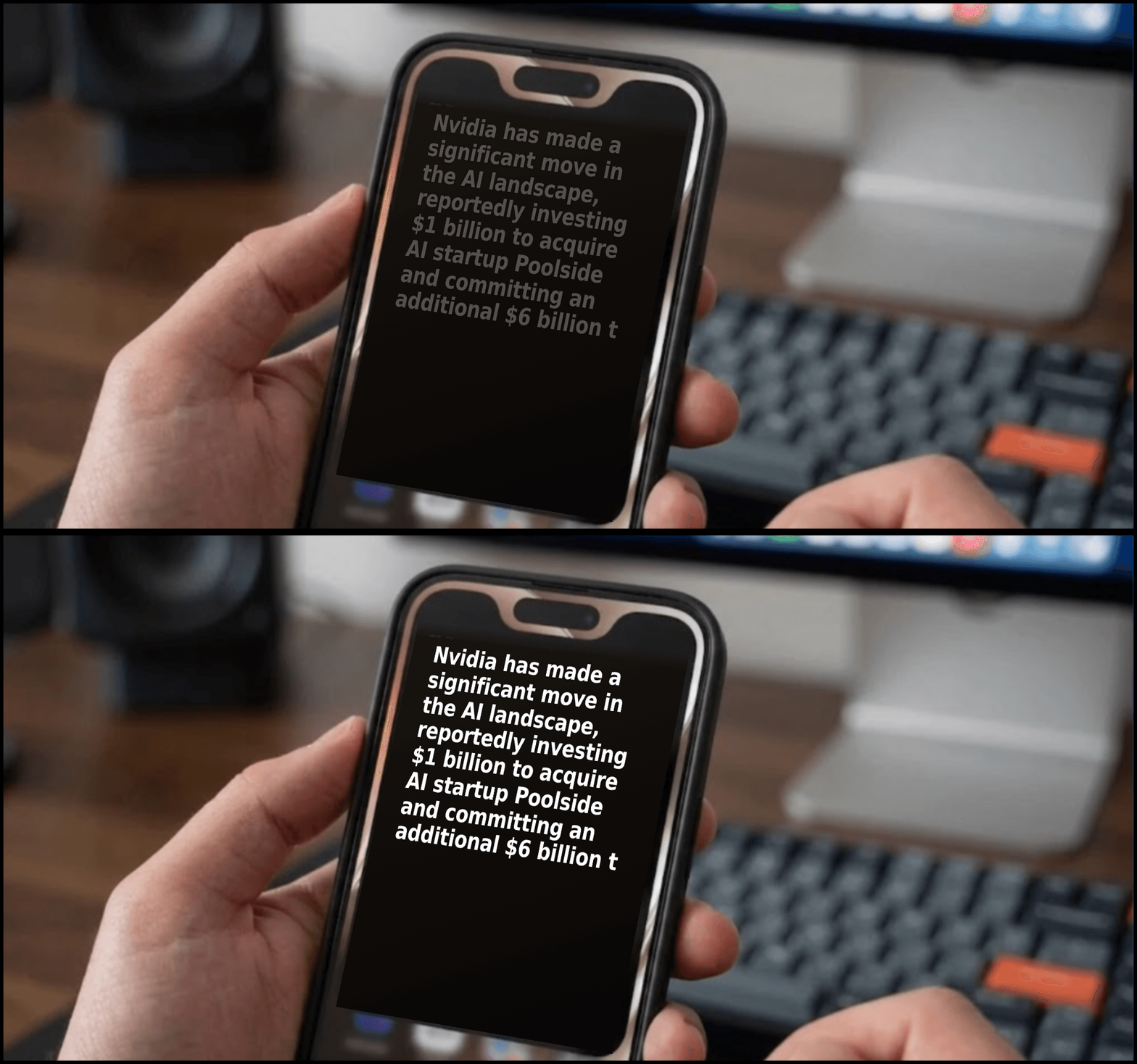
Nvidia's $6 billion licensing deal with AI startup Poolside (announced August 2026) represents a watershed moment for e-commerce sellers seeking affordable AI automation. The partnership creates open-weight AI models—systems with publicly available weights enabling customization and deployment—that cost 40-60% less to operate than proprietary alternatives from OpenAI and Anthropic. This democratization directly addresses the primary barrier preventing 500K+ small-to-medium sellers from adopting AI for customer service, inventory management, and demand forecasting.
The competitive dynamics driving this deal create immediate opportunities for sellers. Nvidia's shift from pure hardware manufacturing into AI model development signals that open-weight models are becoming the dominant architecture for cost-conscious enterprises. The deal positions Nvidia to bundle GPU hardware with proprietary AI models, creating integrated solutions that undercut expensive closed-source systems. For cross-border e-commerce sellers, this means AI-powered tools for product research, dynamic pricing, and customer service automation will become 30-50% cheaper within 12-18 months as competitive pressure forces pricing down across the industry.
Immediate automation opportunities emerge across three seller workflows. First, inventory management: open-weight models enable sellers to build custom demand forecasting systems using their own historical data without paying per-API-call fees to OpenAI ($0.002-0.01 per token). Second, customer service: sellers can deploy chatbots on Shopify, Amazon, and eBay using open-weight models for 60-70% less than current ChatGPT-powered solutions ($200-400/month vs $600-1000/month). Third, product research and listing optimization: sellers can automate competitor analysis, keyword extraction, and content generation using customizable models rather than expensive SaaS tools like Helium 10 or Jungle Scout ($99-299/month).
The geopolitical dimension creates urgency for US-based sellers. Nvidia's explicit goal to build a "U.S. alternative to Chinese AI leaders like DeepSeek" signals potential future restrictions on Chinese AI tools. Sellers currently relying on affordable Chinese AI solutions (DeepSeek, Kimi K3) should begin transitioning to open-weight alternatives now to avoid disruption. The deal also indicates that US-based AI tools will receive preferential treatment in government and enterprise procurement, creating a 12-24 month window where open-weight models gain market share before Chinese alternatives face regulatory headwinds.
Questions 8
How does Nvidia's deal with Poolside affect pricing for AI-powered e-commerce tools?
The $6 billion investment signals that open-weight models are becoming the dominant architecture, which will force proprietary AI vendors to reduce prices by 20-35% to remain competitive. Sellers should expect AI tool pricing to decline across platforms like Shopify, Amazon, and third-party SaaS providers within 12-18 months. This creates a strategic window: sellers who adopt open-weight models now gain 12-24 months of cost advantage before the market reprices. Conversely, sellers locked into expensive proprietary contracts should begin negotiating price reductions immediately.
What is the time horizon for open-weight AI models to become mainstream in e-commerce?
Based on the Nvidia-Poolside deal and competitive dynamics, open-weight models will achieve mainstream adoption among SMB sellers within 12-18 months (by Q4 2027-Q1 2028). The immediate phase (0-6 months) involves early adopters experimenting with existing open-weight models. The acceleration phase (6-12 months) will see Nvidia and competitors release e-commerce-specific tools. The mainstream phase (12-18 months) will see 30-40% of SMB sellers actively using open-weight AI. Sellers should begin pilot projects now to gain competitive advantage before the market saturates.