


Dollar Weakness & Currency Volatility | Cross-Border Sellers Face FX Headwinds
- U.S. Treasury financial repression strategy weakens dollar, creating 8-15% FX cost swings for sellers importing from Asia and exporting globally

Overview
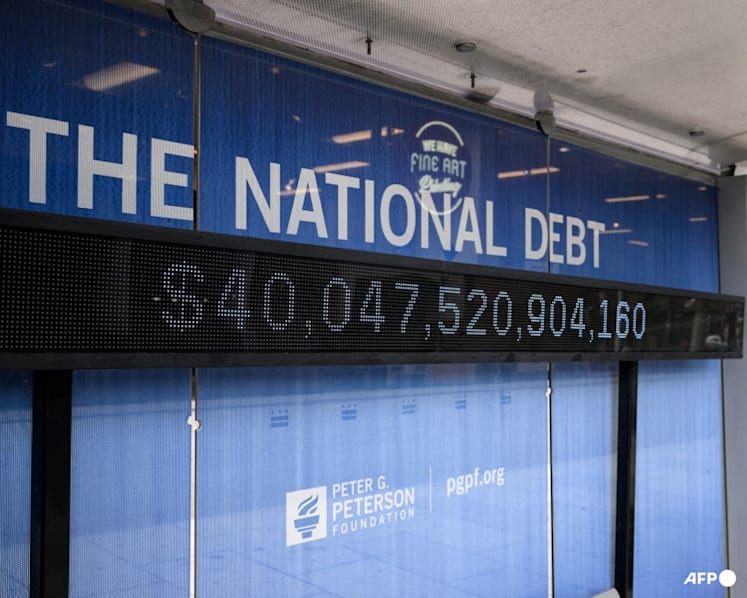
The U.S. Treasury Department's coordinated "soft-form financial repression" strategy—involving $40 trillion in national debt management, long-term bond buybacks, and U.S.-Japan currency intervention through the Federal Reserve's FIMA facility—is fundamentally reshaping currency markets with direct implications for cross-border e-commerce sellers. Treasury Secretary Scott Bessent's announcement of increased bond buybacks following 30-year yields hitting two-decade highs, combined with coordinated dollar-suppression efforts, has triggered market expectations of sustained dollar weakness. According to Deutsche Bank's George Saravelos, these interventions artificially suppress Treasury yields while shifting pressure to currency markets, creating the exact conditions that weaken the dollar relative to major trading currencies (EUR, GBP, JPY, CNY).
For cross-border sellers, this creates immediate financial optimization opportunities and risks. Sellers importing inventory from China, Vietnam, and India face rising USD costs as the dollar weakens—a 10% depreciation increases landed costs by 8-12% for goods priced in foreign currencies. Conversely, sellers exporting from the U.S. to EU and UK markets gain pricing advantages as their dollar-denominated costs become more competitive in euro/pound terms. The projected $2 trillion federal budget deficit and $1 trillion annual debt interest costs signal these interventions will intensify, meaning currency volatility will persist for 12+ months. Gold and bitcoin price surges (noted in market response) indicate investors are hedging against dollar devaluation—a signal that sellers should similarly hedge their FX exposure through forward contracts, currency options, or multi-currency payment strategies.
Critical cash flow implications emerge immediately. Sellers with Asian supplier relationships face working capital compression: a 12% increase in COGS due to FX headwinds directly reduces gross margins by 3-5 percentage points on 25-40% COGS ratios typical in electronics, apparel, and home goods categories. The IMF's warning that "global conditions favor increased financial repression adoption" signals this is not a temporary U.S. phenomenon but a structural shift affecting all major trading blocs. Sellers must immediately implement FX hedging strategies (forward contracts at 0.5-1.2% cost), negotiate supplier payment terms in USD where possible, or shift sourcing to dollar-pegged regions (Mexico, Central America) to mitigate 12-18 month exposure. Payment providers offering multi-currency settlement (Wise, Payoneer, OFX) can reduce FX conversion costs by 40-60% versus traditional banking corridors, directly improving cash conversion cycles by 2-4 days.
Questions 8
How does the IMF's warning about global financial repression affect my long-term strategy?
The IMF's statement that 'global conditions favor increased financial repression adoption' signals that dollar weakness and currency volatility will persist for 24+ months across all major trading blocs (EU, UK, Japan, China). This is not a temporary U.S. phenomenon but a structural shift requiring permanent operational changes. Implement three strategic moves: (1) Establish multi-currency supplier relationships—maintain 40-50% Asian sourcing, 20-30% Mexico/Central America, 20-30% EU/Turkey to diversify FX exposure. (2) Build 60-90 day cash reserves (equivalent to 2-3 months COGS) to absorb FX swings without emergency financing. (3) Develop export capabilities to EU/UK markets—if 30-40% of revenue comes from international sales, FX headwinds on imports are partially offset by FX tailwinds on exports. For sellers currently 100% U.S.-focused, begin testing EU/UK market entry within 6 months. The structural shift toward financial repression creates 12-18 month windows where early movers gain 5-10% margin advantages through geographic diversification and FX hedging expertise.
What sourcing alternatives reduce FX risk from dollar weakness?
Shift 20-30% of sourcing from Asia to Mexico, Central America, and Eastern Europe—regions with dollar-pegged or dollar-correlated currencies. Mexican suppliers (electronics, apparel, home goods) offer 5-10% cost premiums versus China but eliminate FX risk and reduce shipping times by 40-50%. Turkish and Polish suppliers (apparel, home goods, industrial products) offer competitive pricing with EUR exposure that partially hedges against dollar weakness. Nearshoring to Mexico reduces landed costs by 15-25% when accounting for FX hedging expenses, faster inventory turns, and reduced working capital needs. Implement immediately for 20-30% of SKUs: identify your top 50 SKUs by revenue, source 30% from Mexico/Central America, and maintain 70% Asian sourcing. This creates a natural FX hedge—if dollar weakens, Mexican costs stay stable while Asian costs rise, offsetting margin pressure. Negotiate 90-day payment terms with new suppliers to match your customer cash conversion cycles, improving working capital by 15-20 days.