



Amazon Hardware Prices Surge 60% | Memory Shortage Reshapes Seller Strategy Through 2027
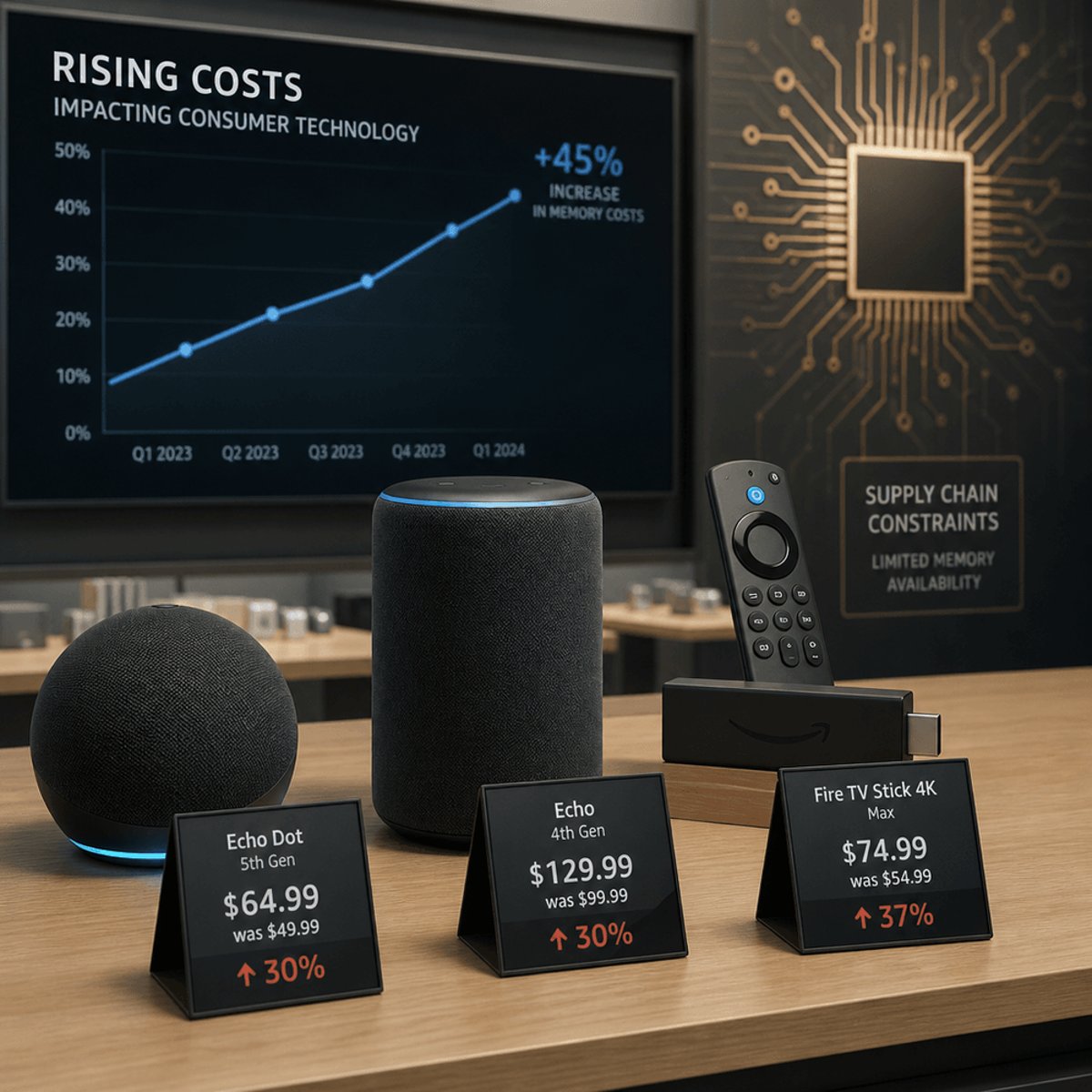
- Echo Dot jumps $49.99→$79.99; RAM shortage persists through 2027; sellers must reposition inventory and sourcing strategies immediately








)
Overview
Amazon's 60% hardware price increase (effective August 24, 2026) signals a critical supply chain inflection point that directly impacts cross-border sellers across multiple categories. The Echo Dot exemplifies the severity: jumping from $49.99 to $79.99 overnight, with Fire TVs, Kindles, and Eeros similarly affected. Amazon explicitly attributed the increases to "substantial rises in memory and storage component costs," absorbing these internally until August 2026 when the company could no longer sustain margin compression. This is not a temporary promotional adjustment—industry analysts project the global memory shortage (termed "RAMmageddon") will persist through 2027, with stabilization expected only in 2028.
For sellers, this creates three immediate logistics and sourcing implications: First, component cost inflation cascades across all electronics categories—not just Amazon's branded hardware. Any seller sourcing smart speakers, tablets, routers, or memory-intensive devices from Asia faces 15-25% landed cost increases due to DRAM/NAND flash price spikes. Second, Amazon's price increases signal demand destruction risk. The company's commitment to "occasional promotions throughout 2027" indicates management expects consumer price sensitivity to suppress unit sales. Sellers must prepare for lower volume forecasts on price-elastic categories (budget smart speakers, entry-level tablets) while premium segments may hold better. Third, inventory positioning becomes critical. Sellers holding 60-90 days of stock in US warehouses before Q4 2026 can avoid the worst component cost inflation; those sourcing new inventory in September-December 2026 face peak pricing.
Warehouse and fulfillment strategy shifts are essential. Amazon's price increases will drive some consumer demand toward alternative platforms (eBay, Walmart, Shopify) where sellers may have lower cost bases if they sourced inventory earlier. Sellers should evaluate 3PL positioning in US distribution centers (particularly Texas, California, Ohio hubs) to capture price-sensitive customers migrating from Amazon. The 2027 promotional calendar Amazon announced creates predictable demand windows—sellers can concentrate inventory replenishment around these promotional periods rather than spreading purchases across 12 months. Additionally, the memory shortage creates sourcing arbitrage: sellers with established relationships in Taiwan, South Korea, or Singapore can negotiate component allocations before spot prices peak, then manufacture in Vietnam or India where labor costs offset component inflation. This requires 90-120 day lead time planning starting immediately.
Total landed cost impact by category: Electronics with high memory content (smart speakers, tablets, routers) face 18-22% cost increases; lower-memory categories (basic smart home sensors, entry-level devices) see 8-12% increases. Sellers must recalculate gross margins by SKU and consider delisting low-margin items rather than absorbing cost inflation. The 2028 stabilization timeline means this is a 18-month supply chain challenge, not a quarterly blip.
Questions 8
Why did Amazon raise hardware prices 60% in August 2026 and how long will this last?
Amazon raised prices due to severe memory and storage component cost inflation driven by AI infrastructure demand (termed 'RAMmageddon'). The Echo Dot jumped from $49.99 to $79.99 overnight on August 24, 2026. Amazon absorbed these costs internally until August but could no longer sustain margin compression. Industry analysts project the shortage persists through 2027, with stabilization expected in 2028. This means sellers should expect elevated component costs for 18+ months, not a temporary spike.
How does Amazon's price increase affect sellers sourcing electronics from Asia?
Sellers face 15-25% landed cost increases on memory-intensive products (smart speakers, tablets, routers) due to DRAM/NAND flash price spikes. Sellers who source new inventory in September-December 2026 encounter peak component pricing. The strategic move is to stock 60-90 days of inventory in US warehouses before Q4 2026 to avoid worst pricing, or negotiate component allocations directly with Taiwan/South Korea suppliers before spot prices peak further.