



Claude AI Inside Salesforce CRM | 10,000-Click Workflow Reduction for Enterprise Sellers
- Eliminates 10,000 manual clicks per sales workflow, reducing to 30-second AI interactions; 37 pre-built skills available September 2026; shifts enterprise software from seat-based to consumption-based pricing model










Overview
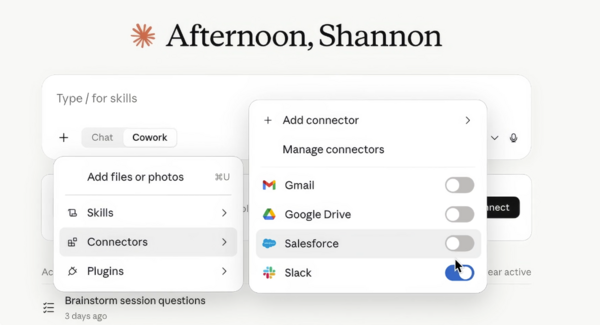
Salesforce and Anthropic announced Claudeforce on August 26, 2026, a transformative partnership embedding Claude AI directly into Salesforce's CRM platform. The centerpiece, "Salesforce in Claude," is a Claude CoWork plugin featuring 37 pre-built sales skills that enable sellers to access live revenue data, automate pipeline updates, and execute governed actions without opening Salesforce's traditional interface. This represents a fundamental architectural shift from UI-driven enterprise software to agentic systems where AI directly accesses data, workflows, and business rules. The plugin is available to select pilot customers immediately, with open beta launching September 2026 and additional business function skills rolling out in Q3 2026.
For enterprise sellers using Salesforce, this integration delivers immediate productivity gains through AI-powered workflow automation. The partnership leverages Model Context Protocol (MCP) to enable Claude to access Salesforce data, Slack, and email systems while respecting existing company permissions and business rules. Salesforce argues this increases platform value by eliminating 10,000 clicks from typical sales workflows, reducing them to 30-second Claude interactions. Internal Salesforce pilots demonstrated sellers completing pipeline reviews automatically, freeing time for customer conversations. The plugin includes deal analysis, account planning, and workflow automation capabilities built on 27 years of Salesforce experience. Setup requires single-time authentication with centralized permission management, eliminating per-user configuration overhead—a critical advantage for mid-market and enterprise sellers managing distributed teams.
The monetization model signals a broader industry shift from seat-based to consumption-based SaaS economics. Salesforce monetizes through headless consumption pricing based on API calls rather than per-user seats, while customers separately contract Anthropic for Claude inference. This fundamentally changes cost structures for enterprise sellers: instead of paying $165-330 per user monthly for Salesforce licenses, organizations pay only for actual API consumption. For a 50-person sales team, this could reduce licensing costs by 30-50% while increasing productivity through AI reasoning. The partnership roadmap extends beyond Sales to Service, Marketing, Commerce, Revenue, Field Service, Tableau, MuleSoft, Informatica, and Data 360—indicating Salesforce's commitment to embedding Claude across its entire platform ecosystem. Salesforce's internal impact demonstrates the productivity multiplier: Slackbot powered by Claude generated 8.1 million annualized productivity hours, more than doubling quarter-over-quarter, suggesting similar gains are achievable across Salesforce's customer base.
For sellers managing complex B2B or high-volume B2C operations, this integration creates competitive advantages through AI-powered decision-making and operational efficiency. Claude becomes the first large language model fully integrated within Salesforce's Trust Boundary, enabling regulated industry deployments while maintaining data security—critical for sellers in healthcare, financial services, and regulated commerce. The distinction between Claudeforce and Salesforce's existing Agentforce platform is important: Agentforce handles autonomous customer-facing work, while Salesforce in Claude targets internal knowledge worker productivity. This means sellers can deploy Claude for internal sales operations (pipeline analysis, deal health reviews, meeting preparation) while using Agentforce for customer-facing automation (chatbots, support agents). The integration's governance model—where Claude can only access data users are authorized to view and execute actions within their role permissions—ensures enterprise compliance without additional security overhead.
Questions 8
How much time can sellers save using Salesforce in Claude?
Salesforce reports that the integration eliminates 10,000 clicks from typical sales workflows, reducing them to 30-second Claude interactions. Internal pilots showed sellers completing pipeline reviews automatically, freeing time for customer conversations. Salesforce's internal Slackbot powered by Claude generated 8.1 million annualized productivity hours, more than doubling quarter-over-quarter. For a typical sales team, this translates to 5-10 hours per week saved per seller on administrative tasks like data gathering, pipeline analysis, and meeting preparation. The actual time savings depend on team size and workflow complexity.
What is Claudeforce and how does it change how sellers use Salesforce?
Claudeforce is a strategic partnership between Salesforce and Anthropic that embeds Claude AI directly into Salesforce's CRM platform through a plugin called 'Salesforce in Claude.' Instead of manually navigating Salesforce's interface, sellers can now query, update, and act on live CRM data through Claude's conversational interface. The plugin features 37 pre-built sales skills for meeting preparation, deal health reviews, and pipeline analysis. Salesforce claims this eliminates 10,000 clicks from typical sales workflows, reducing them to 30-second Claude interactions. The plugin is available to select pilot customers now, with open beta launching September 2026.