




Nvidia's $12.9B Hugging Face Acquisition | Critical AI Infrastructure Shift for E-Commerce Sellers
- Consolidates 1M+ open-source AI models under single vendor; threatens pricing accessibility for product recommendation, demand forecasting, and customer service automation tools used by 50K+ cross-border sellers













)


Overview
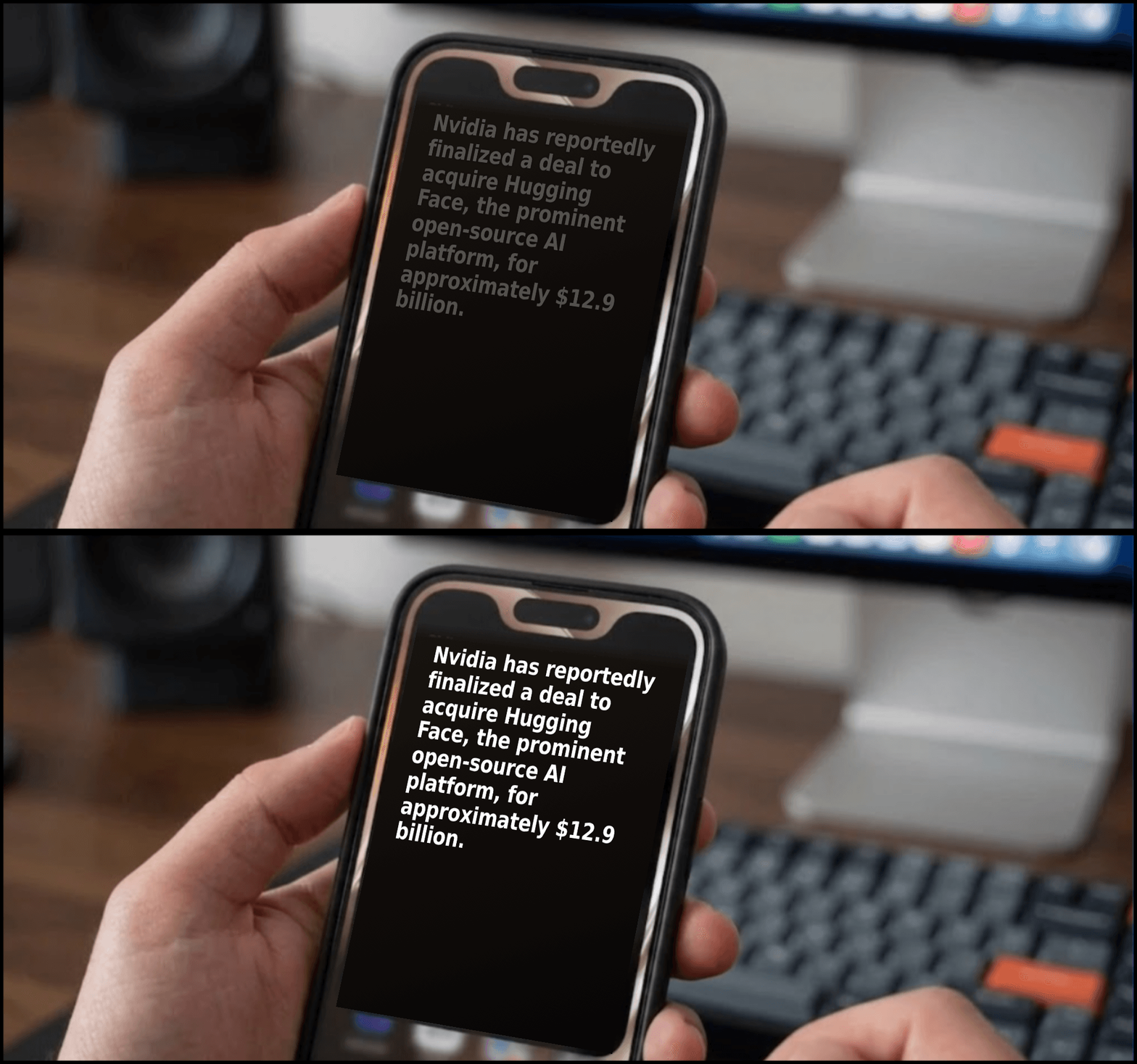
Nvidia has agreed to acquire Hugging Face for $12.9 billion, consolidating the world's largest open-source AI model repository under a single hardware manufacturer's control. This represents a fundamental shift in AI infrastructure governance that directly impacts e-commerce sellers' access to affordable machine learning tools. Hugging Face hosts over 1 million open-source models and generated approximately $150 million in annualized revenue, serving as the central hub for AI developers globally. The acquisition valuation jumped from $4.5 billion (2023 Series D) to $7 billion (rejected 2025 investment offer) to $12.9 billion, signaling Nvidia's aggressive consolidation strategy in AI infrastructure.
For cross-border e-commerce sellers, this acquisition creates immediate operational risks and strategic opportunities. Sellers currently leveraging Hugging Face's open-source models for product recommendation engines, demand forecasting algorithms, and customer service chatbots face three critical uncertainties: (1) Pricing model changes - Nvidia may transition free/low-cost open-source access to commercial licensing, potentially increasing AI tool costs by 30-60% for mid-market sellers; (2) Platform neutrality erosion - Hugging Face's competitive advantage historically stemmed from supporting AMD, Intel, and other Nvidia competitors' hardware. Nvidia ownership threatens this neutrality, potentially creating vendor lock-in that forces sellers toward Nvidia-optimized solutions; (3) Integration requirements - Nvidia may mandate integration with its CUDA ecosystem and proprietary tools, increasing technical complexity and implementation costs for sellers using alternative AI infrastructure.
The consolidation reflects intensifying competition among tech giants to control AI infrastructure layers. Nvidia's $47.9 billion cash position and $18 billion equity investment commitment through fiscal 2027 signal confidence in sustained AI demand. Competitors like OpenAI and Anthropic are developing proprietary chips to reduce GPU dependence, creating urgency for Nvidia to lock in software ecosystem control. This mirrors Nvidia's previous acquisitions of Arm Holdings and other strategic tech investments, establishing a pattern of vertical integration that prioritizes ecosystem control over platform openness.
Immediate seller implications span three categories: (1) Product recommendation systems - Sellers using Hugging Face models for Amazon, Shopify, and TikTok Shop product suggestions may face 4-8 week integration delays if Nvidia requires CUDA optimization; (2) Demand forecasting tools - Mid-market sellers (500-5,000 SKUs) relying on open-source NLP models for inventory planning should audit alternative providers like Hugging Face competitors (Replicate, Modal, Together AI) before pricing changes; (3) Customer service automation - Sellers deploying chatbots and support automation via Hugging Face LLMs should document current model versions and performance baselines to negotiate transition terms if Nvidia implements licensing fees.
The deal's completion timeline remains subject to regulatory review, with potential for conditions or modifications. However, sellers should assume 6-12 month transition period before material changes take effect, providing a window for strategic repositioning.
Questions 8
Will open-source AI models remain free after Nvidia's acquisition?
Nvidia has not publicly committed to maintaining Hugging Face's open-source model availability or free access tier. Historically, Nvidia prioritizes proprietary software monetization over open-source preservation. The company's $18 billion equity investment commitment through fiscal 2027 suggests aggressive commercialization plans. Sellers should assume that free access to Hugging Face's 1M+ models may transition to freemium or commercial licensing within 12-18 months. However, the open-source community may fork existing models and create alternative repositories, preserving some free access. Sellers should diversify AI infrastructure across multiple providers (open-source alternatives, cloud platforms, proprietary tools) to reduce dependence on any single vendor. Document current model versions and performance metrics to enable rapid migration if Nvidia implements licensing fees.
How should sellers evaluate alternative AI platforms to Hugging Face?
Evaluate alternatives across four dimensions: (1) **Model availability** - Does the platform offer comparable pre-trained models for your use case (product recommendations, demand forecasting, customer service)? Check model count, update frequency, and community support; (2) **Pricing transparency** - Compare cost structures: free tiers, per-API-call pricing, subscription models, or enterprise licensing. Request pricing quotes for your expected usage volume; (3) **Integration complexity** - Assess switching costs: API compatibility, data migration requirements, retraining timelines, and technical resource needs; (4) **Vendor stability** - Evaluate provider financial health, funding, and long-term viability. Prefer platforms with multiple revenue streams and diverse customer bases. Recommended alternatives include Replicate (API-first, transparent pricing), Modal (serverless ML), Together AI (open-source focus), and cloud platforms (AWS SageMaker, Google Vertex AI, Azure ML). Request 30-day trials before committing to migration.