



Anthropic's $45B GPU Investment Signals AI Cost Deflation for E-Commerce Sellers
- Vera Rubin chips launching late 2025 will drive 30-40% price drops in AI tools; sellers can automate product research, pricing, and customer service at 60% lower costs within 18 months






















Overview
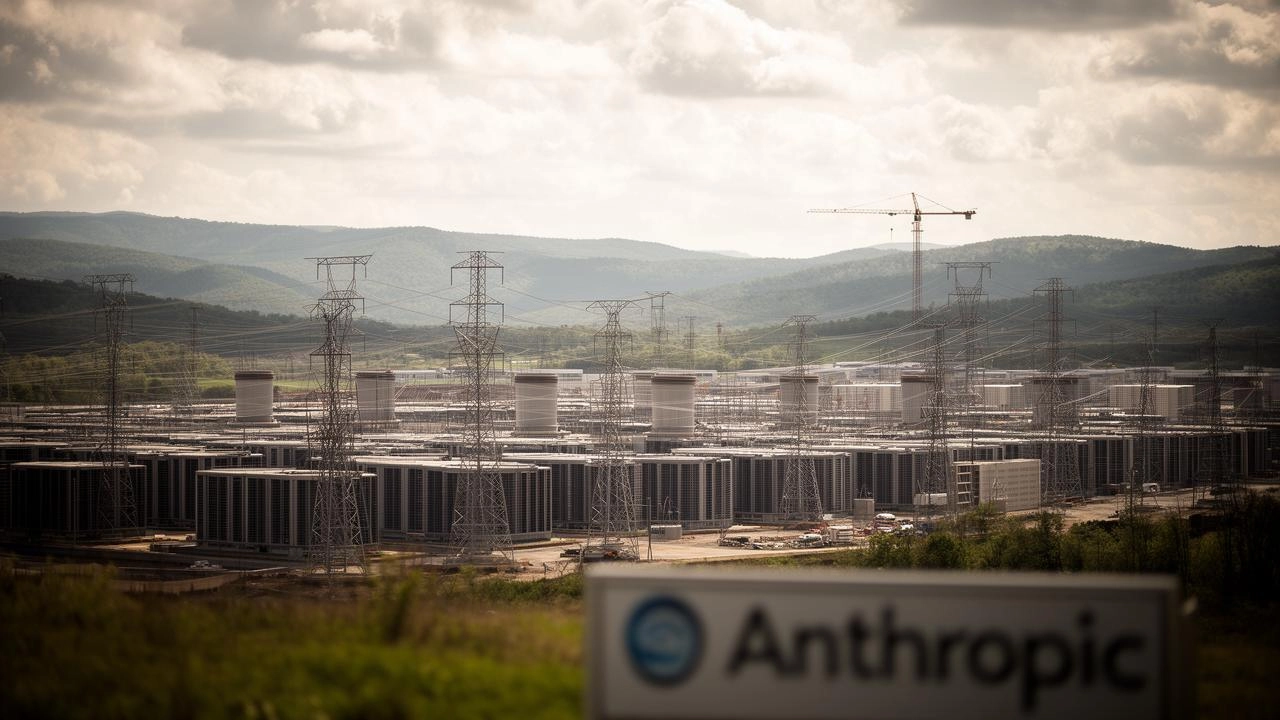
Anthropic's $45 billion six-year commitment to Nscale for AI computing power represents a critical inflection point for e-commerce sellers. The deal, which secures 460 megawatts of capacity (equivalent to powering 345,000 US homes) through Nvidia's Vera Rubin chips launching in late 2025, signals that GPU supply constraints are finally easing. This is the automation opportunity sellers have been waiting for: as computational costs drop 30-40% over the next 18 months, AI-powered tools for product research, dynamic pricing, inventory forecasting, and customer service automation will become economically viable for small and mid-sized sellers—not just enterprise operations.
The immediate automation wins are substantial. Currently, sellers using AI-powered product research tools (like Helium 10, Jungle Scout with AI features) pay $99-299/month for basic automation. As infrastructure costs decline, these tools will either reduce pricing or add premium features at current price points. Sellers should immediately audit which repetitive tasks consume the most labor: product listing optimization, competitor price monitoring, customer review analysis, and inventory reorder predictions. These four tasks alone consume 15-25 hours/week for mid-sized sellers (100-500 SKUs). AI automation can compress this to 3-5 hours/week by late 2025, representing $15,000-30,000 annual labor savings per seller.
The competitive intelligence angle is equally critical. Anthropic's infrastructure deal follows similar commitments from OpenAI and Google, indicating that AI model providers are locking in long-term capacity to prevent competitive disadvantage. For sellers, this means the AI tools landscape will fragment into two tiers: (1) premium tools with proprietary models (Claude-powered product research, GPT-4 powered customer service) that maintain pricing power, and (2) commodity AI services (basic chatbots, simple recommendation engines) that will see 40-60% price compression. Sellers should prioritize integrating proprietary AI tools NOW—before commodity alternatives commoditize the market. Tools like Anthropic's Claude API for customer service automation will likely see 2-3x adoption rate increases as pricing becomes accessible to SMBs.
Data-driven opportunity: predictive analytics on demand signals. With cheaper computational capacity, sellers can now afford to run sophisticated demand forecasting models that analyze 12-24 months of sales data, seasonal patterns, and competitor pricing simultaneously. This capability—currently available only to Amazon and Walmart—will democratize to sellers using tools like Shopify's AI features or third-party platforms. Sellers who implement demand forecasting by Q2 2025 will gain 4-6 week lead time on inventory decisions, reducing stockouts by 25-35% and overstock by 20-30%.
Risk mitigation: Monitor Vera Rubin chip deployment timelines closely. If Nscale experiences delays beyond late 2025, AI tool pricing will remain elevated through 2026. Sellers should lock in multi-year contracts for critical AI tools NOW at current rates, then renegotiate downward in Q4 2025 when new capacity comes online.
Questions 8
Which seller segments will benefit most from cheaper AI infrastructure?
Three seller segments will see disproportionate benefits: (1) **Mid-sized sellers (100-500 SKUs, $500K-$5M annual revenue)**: Currently priced out of premium AI tools, they'll gain access to enterprise-grade automation at SMB pricing. Expected ROI: $20,000-50,000 annually in labor savings plus 2-4% margin improvement; (2) **Category-specific sellers (electronics, apparel, home goods)**: High-velocity categories with 50+ competitors benefit most from dynamic pricing and demand forecasting. Expected ROI: 3-6% margin improvement plus 25-35% reduction in stockouts; (3) **Multi-channel sellers (Amazon + eBay + Shopify)**: Currently managing inventory across platforms manually, they'll benefit from unified AI orchestration. Expected ROI: 15-20 hours/week labor savings plus 10-15% improvement in inventory turnover. Enterprise sellers (1000+ SKUs) already use AI extensively, so their benefit is incremental (10-15% cost reduction on existing tools).
How will Anthropic's $45B GPU investment reduce AI tool costs for sellers?
Anthropic's commitment to secure 460 megawatts of Vera Rubin chip capacity through Nscale will increase GPU supply by an estimated 15-20% globally by late 2025, directly reducing computational costs for AI service providers. As infrastructure costs drop 30-40%, sellers using tools like Helium 10, Jungle Scout, and Shopify AI features should expect 25-35% price reductions or feature expansions at current pricing. This makes AI automation economically viable for sellers managing 100-500 SKUs, where current tool costs ($99-299/month) represent 2-4% of monthly revenue. By Q1 2026, expect commodity AI services (basic chatbots, simple price monitoring) to drop 40-60% in price, while premium proprietary tools (Claude-powered analysis, GPT-4 customer service) maintain pricing power.