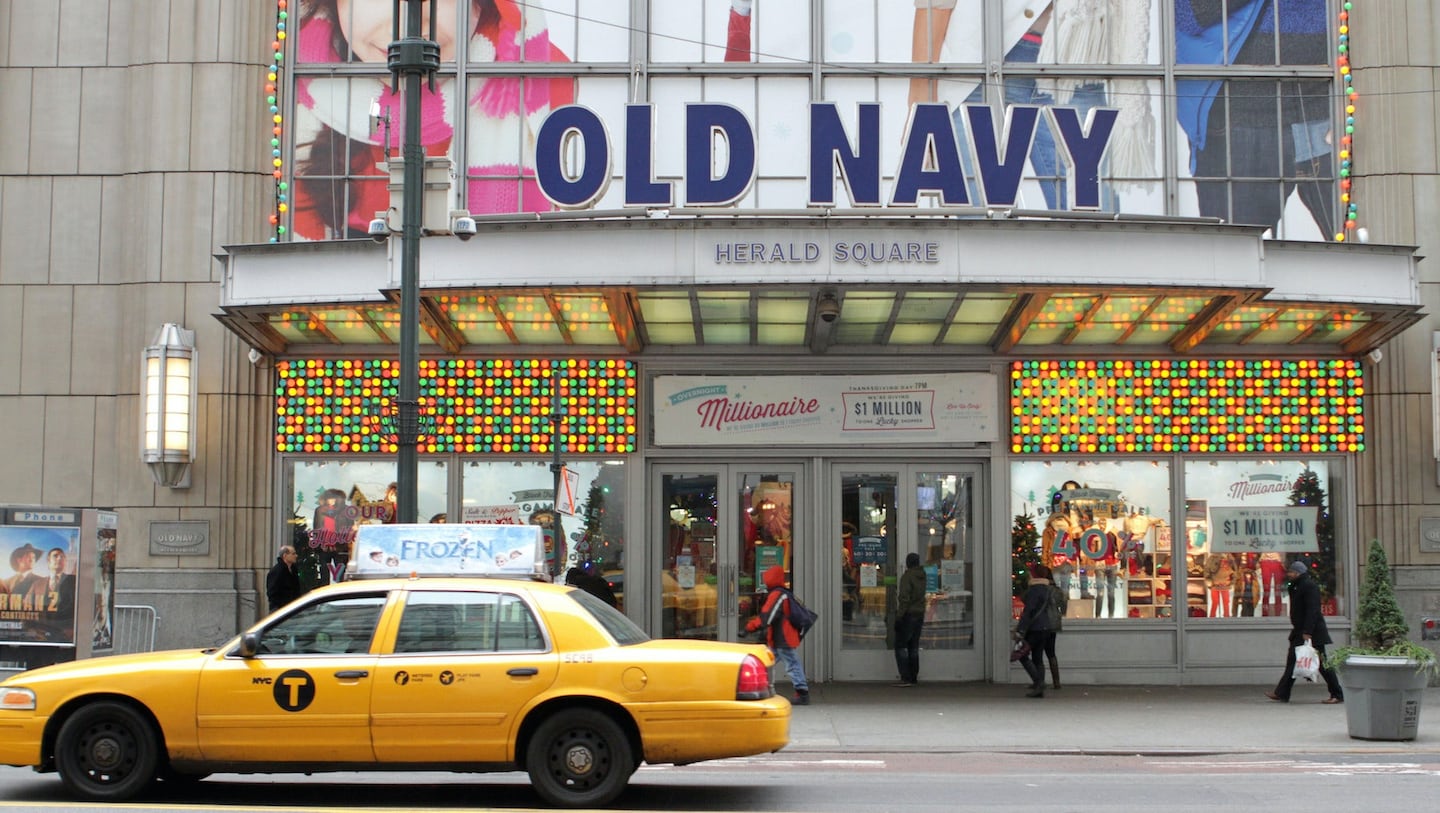




Old Navy's 4% comparable sales decline in Q2 2025 (ending August 1) represents a critical inflection point in the casual apparel market, with direct implications for third-party sellers competing on Amazon, eBay, and Walmart Marketplace. The brand, which generates nearly 60% of Gap Inc.'s $3.65B quarterly revenue, posted its first negative same-store sales since Q2 2023, attributed to "unanticipated traffic slowdowns" and weak summer marketing lacking direct product messaging. Gap's appointment of Michael Francis (26 years at Target, 10 years at Walmart) as new CEO signals a strategic pivot toward customer-centric merchandising and operational efficiency—a playbook that will reshape Old Navy's wholesale procurement and retail partnerships.
For casual apparel sellers, this creates a three-part market opportunity. First, Old Navy's inventory challenges and sales pressure indicate the brand will likely increase clearance activity and promotional intensity through Q4 2025 and into 2026, depressing category-wide pricing and creating margin compression for competing sellers. Gap's guidance cut to 1-1.5% full-year growth (from prior expectations) reflects cautious consumer demand for value-oriented clothing, suggesting price-sensitive buyers are shifting to alternative channels. Second, Francis's background in large-scale retail operations and customer experience management signals Old Navy will accelerate its O2O (Online-to-Offline) strategy, potentially partnering with third-party logistics providers and expanding pop-up/showroom presence in high-traffic urban markets to drive foot traffic and brand relevance. This creates wholesale opportunities for sellers offering complementary casual wear categories (basics, accessories, seasonal items) to supply Old Navy's expanded retail footprint.
Third, the leadership transition during the critical holiday season (November 2025 onward) creates a 60-90 day window of operational uncertainty at Old Navy, potentially delaying procurement decisions and creating gaps in inventory replenishment. Sellers with agile supply chains can capitalize by increasing Amazon/eBay inventory of value-oriented casual wear (t-shirts, jeans, basics) targeting the same demographic Old Navy serves—budget-conscious families and young professionals. The $512M in tariff refunds Gap received in Q2 2025 indicates the company benefited from tariff relief, but this advantage may not extend to third-party sellers, creating a cost disadvantage that requires differentiation through superior customer experience, faster shipping, or niche product positioning. Gap's mixed results (Gap banner up 10% comparable sales, Banana Republic up 3%, Athleta down 12%) show that value-oriented and premium segments are outperforming athletic wear, signaling where seller inventory should concentrate.
Gap's Q2 2025 results show that value-oriented and premium segments are outperforming athletic wear: Gap banner comparable sales up 10%, Banana Republic up 3%, while Athleta (athletic/activewear) declined 12%. This indicates consumer preference is shifting away from athleisure toward classic casual basics and premium casual wear. Sellers should prioritize: (1) basic casual wear (t-shirts, jeans, khakis, hoodies) targeting budget-conscious consumers; (2) premium casual wear (higher-quality basics, elevated basics) targeting young professionals; (3) seasonal casual wear (lightweight layers, transitional pieces) for Q4 2025 and Q1 2026; (4) avoid oversaturated athletic/activewear categories where competition is intense and margins are compressed. On Amazon, focus on categories with lower competition density and higher customer review scores. Monitor Old Navy's clearance inventory to identify which categories they're discounting heavily, then position your products as premium alternatives with better quality, faster shipping, or superior customer service. The shift away from athleisure creates an opening for sellers to capture market share in classic casual basics.
Sellers should take three immediate actions: (1) **Audit inventory (by November 15, 2025)**: Review your casual apparel inventory on Amazon, eBay, and Walmart Marketplace. Identify which SKUs compete directly with Old Navy's offerings (basics, value-oriented items). Prepare to adjust pricing if Old Navy increases promotional intensity. (2) **Monitor Old Navy's clearance activity (ongoing)**: Set up price tracking alerts on Old Navy's website and competitor monitoring tools to track their promotional calendar. When they launch clearance sales, adjust your pricing strategy to maintain competitiveness without entering a race-to-the-bottom. (3) **Explore wholesale opportunities (by December 31, 2025)**: Research Old Navy's procurement contacts and supplier requirements. Prepare a pitch for wholesale partnerships, emphasizing how your products can fill inventory gaps during the leadership transition. Contact their supplier relations team with product samples and pricing. The window for wholesale opportunities is narrow (60-90 days), so move quickly. Additionally, consider launching targeted PPC campaigns on Amazon and Walmart Marketplace during November-December to capture holiday shopping traffic from consumers seeking value-oriented casual wear.
Old Navy's 4% comparable sales decline in Q2 2025 reflects a combination of weak summer marketing that lacked direct product messaging and unanticipated foot traffic slowdowns in physical stores. While the casual apparel category remains large, Old Navy faces intensifying competition from both direct-to-consumer sellers on Amazon/eBay and value-oriented competitors like Target and Walmart. The brand's inventory management challenges suggest overstocking in slow-moving categories, forcing clearance activity that depressed margins. Gap CEO Richard Dickson acknowledged the disappointing marketing results, indicating the brand lost relevance with its core demographic during the critical summer season. This signals that product differentiation and targeted messaging are now critical competitive factors in the value casual wear segment.
Francis brings 26 years of retail operations experience from Target and 10 years from Walmart, suggesting he will implement customer-centric merchandising strategies and operational efficiency improvements that could reshape Old Navy's wholesale procurement and retail partnerships. His focus on 'sharpening customer focus' and 'enhancing customer experience across all touchpoints' indicates Old Navy will likely accelerate O2O (Online-to-Offline) initiatives, including pop-up stores and showrooms in high-traffic urban markets. For third-party sellers, this creates both risks and opportunities: increased promotional intensity will depress casual wear category pricing through Q4 2025 and 2026, but expanded retail partnerships may create wholesale opportunities for sellers offering complementary products. The 60-90 day transition period (November 2025 onward) during peak holiday season could create procurement delays, allowing agile sellers to capture market share.
Francis's appointment signals Old Navy will accelerate O2O initiatives to drive foot traffic and brand relevance, moving beyond pure e-commerce to create integrated physical-digital experiences. This includes pop-up stores and showrooms in high-traffic urban markets (likely major metros: NYC, LA, Chicago, Atlanta, Dallas) to rebuild brand connection with consumers. For third-party sellers, this creates wholesale opportunities: Old Navy will need complementary casual wear products to stock expanded retail locations, creating demand for bulk orders from suppliers. Sellers should identify which cities Old Navy is targeting for pop-ups and consider establishing their own temporary retail presence (kiosks, pop-ups) in the same venues to build brand awareness and drive online conversion. Historical data shows O2O strategies can increase online conversion rates by 20-40% when offline presence builds brand trust. Sellers in casual apparel should monitor Old Navy's retail expansion announcements and proactively reach out to their procurement team about wholesale partnerships.
Gap Inc. received approximately $512M in tariff refunds during Q2 2025, providing a significant cost advantage that Gap can leverage to reduce prices or improve margins. This advantage is unlikely to extend to third-party sellers, who typically don't have the scale or government relationships to secure tariff refunds. The implication: Gap-owned brands (Old Navy, Gap, Banana Republic) can undercut third-party sellers on price while maintaining margins, intensifying competitive pressure. For sellers, this means: (1) avoid competing on price alone with Gap brands; (2) focus on differentiation through niche positioning (sustainable materials, size inclusivity, specific demographics); (3) consider sourcing from tariff-advantaged regions (Mexico, Vietnam, India) to reduce landed costs; (4) explore private label strategies to build brand equity independent of commodity pricing. Sellers should monitor tariff policy changes and consider consulting with customs brokers about potential tariff optimization strategies. The tariff advantage Gap enjoys is temporary and policy-dependent, so sellers should build sustainable competitive advantages beyond price.
Old Navy's acknowledged inventory management struggles indicate the brand will likely increase clearance sales and promotional activity through Q4 2025, creating downward pricing pressure across the casual apparel category on Amazon, eBay, and Walmart Marketplace. Gap's guidance cut to 1-1.5% full-year growth reflects cautious consumer demand for value-oriented clothing, suggesting price-sensitive buyers are becoming more selective. For sellers, this means: (1) margin compression of 5-15% on basic casual wear categories (t-shirts, jeans, basics) as Old Navy floods the market with discounted inventory; (2) increased competition for Buy Box placement as sellers lower prices to maintain visibility; (3) opportunity to differentiate through superior customer service, faster shipping (2-day Prime), or niche positioning (sustainable materials, size inclusivity, specific demographics). Sellers should monitor Old Navy's clearance activity on their own ASINs and adjust pricing strategies accordingly to avoid race-to-the-bottom dynamics.
The 60-90 day window from November 2025 onward presents a unique opportunity as Michael Francis assumes leadership during the critical holiday shopping season. Old Navy's procurement team will likely be focused on transition activities rather than aggressive new inventory acquisition, creating potential gaps in category coverage. Sellers can capitalize by: (1) increasing inventory of fast-moving basics (t-shirts, jeans, hoodies) targeting Old Navy's core demographic (budget-conscious families, young professionals) on Amazon and Walmart Marketplace; (2) launching targeted PPC campaigns during November-December to capture search traffic from consumers seeking value-oriented casual wear; (3) exploring wholesale partnerships with Old Navy's new leadership team, as Francis may be open to third-party supplier relationships to fill inventory gaps during transition; (4) positioning products as 'premium value' alternatives with superior quality, faster shipping, or better customer reviews than Old Navy's offerings. The key is moving quickly—by Q1 2026, Francis's new strategy will be fully implemented and this window will close.
Gap's Q2 2025 results show that value-oriented and premium segments are outperforming athletic wear: Gap banner comparable sales up 10%, Banana Republic up 3%, while Athleta (athletic/activewear) declined 12%. This indicates consumer preference is shifting away from athleisure toward classic casual basics and premium casual wear. Sellers should prioritize: (1) basic casual wear (t-shirts, jeans, khakis, hoodies) targeting budget-conscious consumers; (2) premium casual wear (higher-quality basics, elevated basics) targeting young professionals; (3) seasonal casual wear (lightweight layers, transitional pieces) for Q4 2025 and Q1 2026; (4) avoid oversaturated athletic/activewear categories where competition is intense and margins are compressed. On Amazon, focus on categories with lower competition density and higher customer review scores. Monitor Old Navy's clearance inventory to identify which categories they're discounting heavily, then position your products as premium alternatives with better quality, faster shipping, or superior customer service. The shift away from athleisure creates an opening for sellers to capture market share in classic casual basics.
Sellers should take three immediate actions: (1) **Audit inventory (by November 15, 2025)**: Review your casual apparel inventory on Amazon, eBay, and Walmart Marketplace. Identify which SKUs compete directly with Old Navy's offerings (basics, value-oriented items). Prepare to adjust pricing if Old Navy increases promotional intensity. (2) **Monitor Old Navy's clearance activity (ongoing)**: Set up price tracking alerts on Old Navy's website and competitor monitoring tools to track their promotional calendar. When they launch clearance sales, adjust your pricing strategy to maintain competitiveness without entering a race-to-the-bottom. (3) **Explore wholesale opportunities (by December 31, 2025)**: Research Old Navy's procurement contacts and supplier requirements. Prepare a pitch for wholesale partnerships, emphasizing how your products can fill inventory gaps during the leadership transition. Contact their supplier relations team with product samples and pricing. The window for wholesale opportunities is narrow (60-90 days), so move quickly. Additionally, consider launching targeted PPC campaigns on Amazon and Walmart Marketplace during November-December to capture holiday shopping traffic from consumers seeking value-oriented casual wear.
Old Navy's 4% comparable sales decline in Q2 2025 reflects a combination of weak summer marketing that lacked direct product messaging and unanticipated foot traffic slowdowns in physical stores. While the casual apparel category remains large, Old Navy faces intensifying competition from both direct-to-consumer sellers on Amazon/eBay and value-oriented competitors like Target and Walmart. The brand's inventory management challenges suggest overstocking in slow-moving categories, forcing clearance activity that depressed margins. Gap CEO Richard Dickson acknowledged the disappointing marketing results, indicating the brand lost relevance with its core demographic during the critical summer season. This signals that product differentiation and targeted messaging are now critical competitive factors in the value casual wear segment.
Francis brings 26 years of retail operations experience from Target and 10 years from Walmart, suggesting he will implement customer-centric merchandising strategies and operational efficiency improvements that could reshape Old Navy's wholesale procurement and retail partnerships. His focus on 'sharpening customer focus' and 'enhancing customer experience across all touchpoints' indicates Old Navy will likely accelerate O2O (Online-to-Offline) initiatives, including pop-up stores and showrooms in high-traffic urban markets. For third-party sellers, this creates both risks and opportunities: increased promotional intensity will depress casual wear category pricing through Q4 2025 and 2026, but expanded retail partnerships may create wholesale opportunities for sellers offering complementary products. The 60-90 day transition period (November 2025 onward) during peak holiday season could create procurement delays, allowing agile sellers to capture market share.
Francis's appointment signals Old Navy will accelerate O2O initiatives to drive foot traffic and brand relevance, moving beyond pure e-commerce to create integrated physical-digital experiences. This includes pop-up stores and showrooms in high-traffic urban markets (likely major metros: NYC, LA, Chicago, Atlanta, Dallas) to rebuild brand connection with consumers. For third-party sellers, this creates wholesale opportunities: Old Navy will need complementary casual wear products to stock expanded retail locations, creating demand for bulk orders from suppliers. Sellers should identify which cities Old Navy is targeting for pop-ups and consider establishing their own temporary retail presence (kiosks, pop-ups) in the same venues to build brand awareness and drive online conversion. Historical data shows O2O strategies can increase online conversion rates by 20-40% when offline presence builds brand trust. Sellers in casual apparel should monitor Old Navy's retail expansion announcements and proactively reach out to their procurement team about wholesale partnerships.
Gap Inc. received approximately $512M in tariff refunds during Q2 2025, providing a significant cost advantage that Gap can leverage to reduce prices or improve margins. This advantage is unlikely to extend to third-party sellers, who typically don't have the scale or government relationships to secure tariff refunds. The implication: Gap-owned brands (Old Navy, Gap, Banana Republic) can undercut third-party sellers on price while maintaining margins, intensifying competitive pressure. For sellers, this means: (1) avoid competing on price alone with Gap brands; (2) focus on differentiation through niche positioning (sustainable materials, size inclusivity, specific demographics); (3) consider sourcing from tariff-advantaged regions (Mexico, Vietnam, India) to reduce landed costs; (4) explore private label strategies to build brand equity independent of commodity pricing. Sellers should monitor tariff policy changes and consider consulting with customs brokers about potential tariff optimization strategies. The tariff advantage Gap enjoys is temporary and policy-dependent, so sellers should build sustainable competitive advantages beyond price.
Old Navy's acknowledged inventory management struggles indicate the brand will likely increase clearance sales and promotional activity through Q4 2025, creating downward pricing pressure across the casual apparel category on Amazon, eBay, and Walmart Marketplace. Gap's guidance cut to 1-1.5% full-year growth reflects cautious consumer demand for value-oriented clothing, suggesting price-sensitive buyers are becoming more selective. For sellers, this means: (1) margin compression of 5-15% on basic casual wear categories (t-shirts, jeans, basics) as Old Navy floods the market with discounted inventory; (2) increased competition for Buy Box placement as sellers lower prices to maintain visibility; (3) opportunity to differentiate through superior customer service, faster shipping (2-day Prime), or niche positioning (sustainable materials, size inclusivity, specific demographics). Sellers should monitor Old Navy's clearance activity on their own ASINs and adjust pricing strategies accordingly to avoid race-to-the-bottom dynamics.
The 60-90 day window from November 2025 onward presents a unique opportunity as Michael Francis assumes leadership during the critical holiday shopping season. Old Navy's procurement team will likely be focused on transition activities rather than aggressive new inventory acquisition, creating potential gaps in category coverage. Sellers can capitalize by: (1) increasing inventory of fast-moving basics (t-shirts, jeans, hoodies) targeting Old Navy's core demographic (budget-conscious families, young professionals) on Amazon and Walmart Marketplace; (2) launching targeted PPC campaigns during November-December to capture search traffic from consumers seeking value-oriented casual wear; (3) exploring wholesale partnerships with Old Navy's new leadership team, as Francis may be open to third-party supplier relationships to fill inventory gaps during transition; (4) positioning products as 'premium value' alternatives with superior quality, faster shipping, or better customer reviews than Old Navy's offerings. The key is moving quickly—by Q1 2026, Francis's new strategy will be fully implemented and this window will close.
Gap's Q2 2025 results show that value-oriented and premium segments are outperforming athletic wear: Gap banner comparable sales up 10%, Banana Republic up 3%, while Athleta (athletic/activewear) declined 12%. This indicates consumer preference is shifting away from athleisure toward classic casual basics and premium casual wear. Sellers should prioritize: (1) basic casual wear (t-shirts, jeans, khakis, hoodies) targeting budget-conscious consumers; (2) premium casual wear (higher-quality basics, elevated basics) targeting young professionals; (3) seasonal casual wear (lightweight layers, transitional pieces) for Q4 2025 and Q1 2026; (4) avoid oversaturated athletic/activewear categories where competition is intense and margins are compressed. On Amazon, focus on categories with lower competition density and higher customer review scores. Monitor Old Navy's clearance inventory to identify which categories they're discounting heavily, then position your products as premium alternatives with better quality, faster shipping, or superior customer service. The shift away from athleisure creates an opening for sellers to capture market share in classic casual basics.
Sellers should take three immediate actions: (1) **Audit inventory (by November 15, 2025)**: Review your casual apparel inventory on Amazon, eBay, and Walmart Marketplace. Identify which SKUs compete directly with Old Navy's offerings (basics, value-oriented items). Prepare to adjust pricing if Old Navy increases promotional intensity. (2) **Monitor Old Navy's clearance activity (ongoing)**: Set up price tracking alerts on Old Navy's website and competitor monitoring tools to track their promotional calendar. When they launch clearance sales, adjust your pricing strategy to maintain competitiveness without entering a race-to-the-bottom. (3) **Explore wholesale opportunities (by December 31, 2025)**: Research Old Navy's procurement contacts and supplier requirements. Prepare a pitch for wholesale partnerships, emphasizing how your products can fill inventory gaps during the leadership transition. Contact their supplier relations team with product samples and pricing. The window for wholesale opportunities is narrow (60-90 days), so move quickly. Additionally, consider launching targeted PPC campaigns on Amazon and Walmart Marketplace during November-December to capture holiday shopping traffic from consumers seeking value-oriented casual wear.