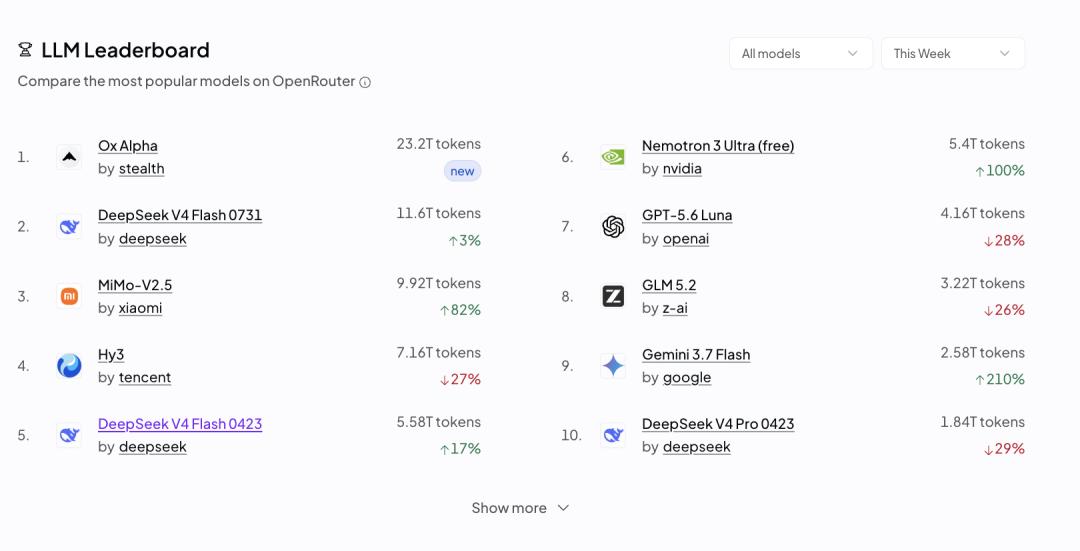
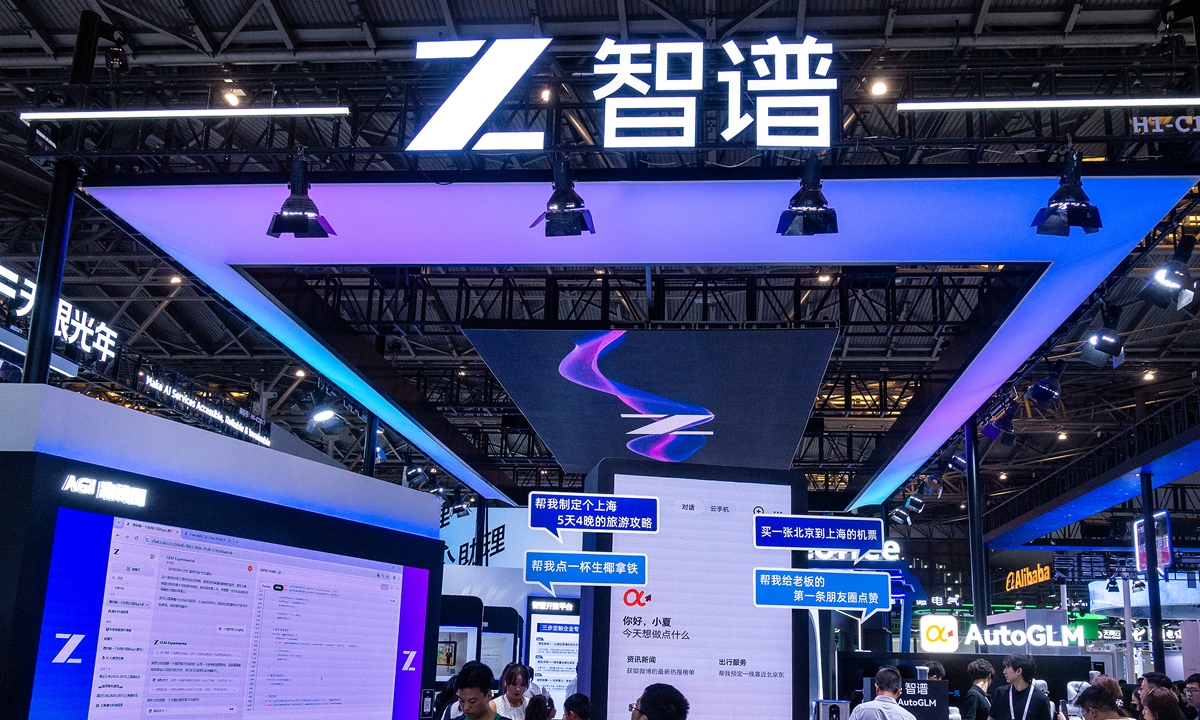
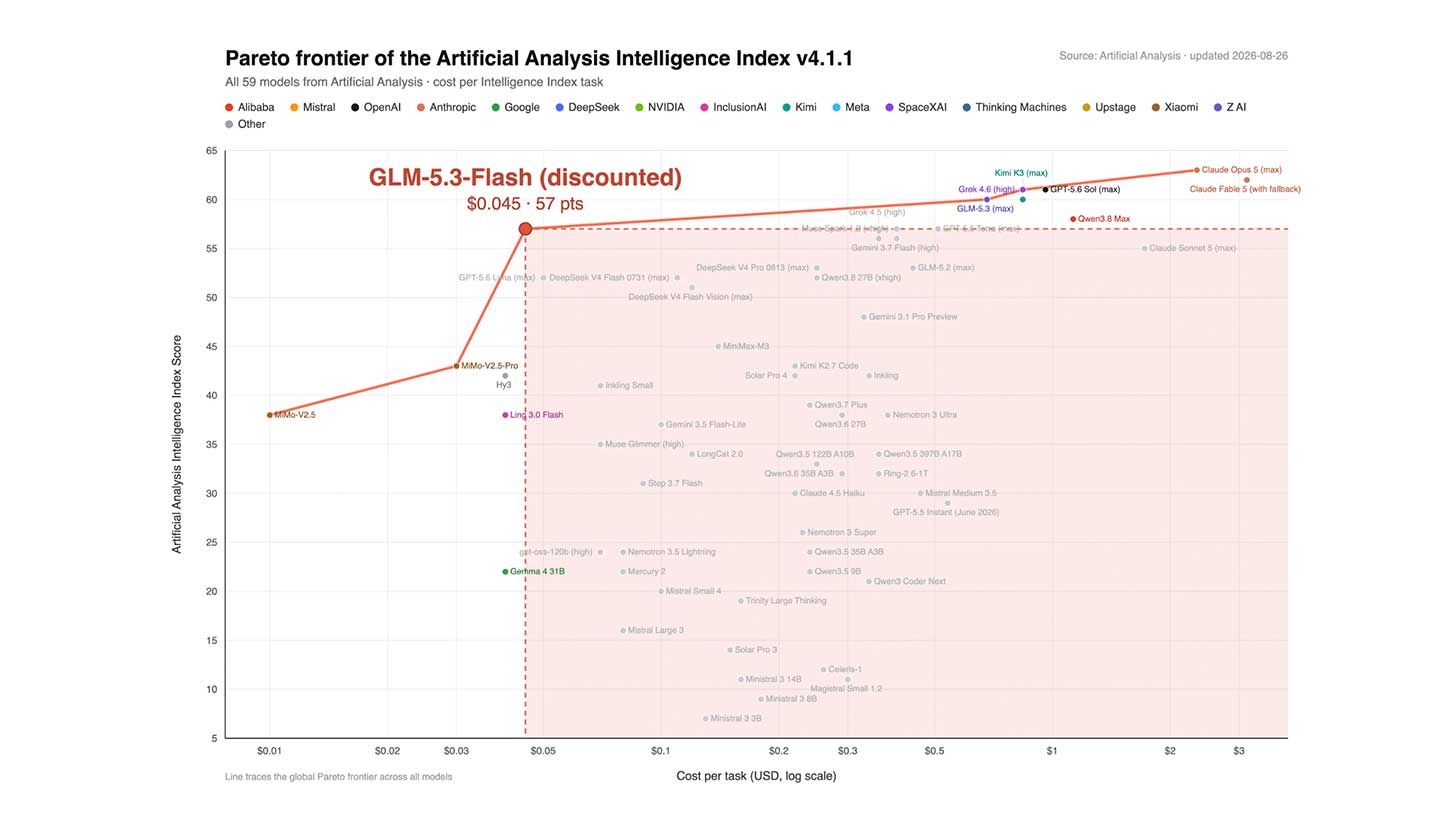
Z.ai's August 20, 2026 launch of GLM-5.3-Flash represents a critical inflection point for e-commerce sellers operating in Asia-Pacific markets. The lightweight language model, deployed on 100,000 Chinese-manufactured chips (primarily Huawei Ascend), ranks 10th on the Artificial Analysis Intelligence Index and achieved first-place usage on OpenRouter within its first week. For cross-border sellers, this development directly addresses the AI cost barrier that has prevented mid-market operators from implementing automation. The model's architecture enables real-time applications—customer service automation, product description generation, inventory optimization—at costs estimated 50-70% below OpenAI/Claude alternatives, with latency advantages for Asia-Pacific operations.
The competitive landscape validates this opportunity. Z.ai's Hong Kong-listed shares surged 8% on the announcement, while rival MiniMax reported 283% revenue growth in H1 2026 (though with $293M adjusted net losses), signaling intense investor confidence in China's AI infrastructure independence. Both companies listed on Hong Kong's exchange in January 2026, with Z.ai appreciating 800% since IPO versus MiniMax's 80% gain. This capital velocity reflects market recognition that Chinese AI models solving regional problems (cost, data sovereignty, latency) represent a $10B+ opportunity in cross-border e-commerce automation.
For sellers, the immediate automation wins are quantifiable. GLM-5.3-Flash enables: (1) Automated customer support in 15+ languages at $50-150/month versus $500-1,200 for Western alternatives; (2) Bulk product listing optimization (500+ SKUs/day) reducing manual content creation by 20-30 hours/week; (3) Real-time inventory forecasting using regional demand signals with 15-20ms latency advantage over U.S.-based APIs. The model's efficiency metrics (reduced computational requirements) translate to operational cost reductions of $200-400/month for mid-market sellers (500-5,000 SKU catalogs) managing multi-region operations. Data sovereignty advantages are critical for sellers serving Chinese markets, where GLM-5.3-Flash's domestic infrastructure eliminates cross-border data transfer compliance risks under PIPL regulations.
Strategic positioning matters for competitive advantage. Early adopters gain 6-12 month windows before Western AI providers (OpenAI, Anthropic) launch cost-competitive regional models. Sellers implementing GLM-5.3-Flash now can: (1) Reduce customer service response times from 4-8 hours to 30-60 seconds; (2) Optimize product listings for regional search algorithms (Alibaba, Douyin, Shopee) with native language understanding; (3) Implement dynamic pricing strategies using real-time competitor intelligence. The model's suitability for real-time applications (sub-500ms response requirements) makes it viable for live chat, recommendation engines, and marketplace API integrations—capabilities previously requiring enterprise-tier infrastructure investments.
Sellers should begin evaluation immediately (August-September 2026) if they operate in Asia-Pacific markets or manage 500+ SKU catalogs where AI automation ROI is critical. The 6-12 month competitive advantage window closes when OpenAI, Anthropic, or Google launch regional cost-competitive models—likely by Q1-Q2 2027. Early adopters gain: (1) 6-12 month head start optimizing product listings for regional algorithms; (2) Operational cost reductions of $2,400-4,800/year that compound as catalog size grows; (3) Competitive moat through superior customer service response times (30-60 seconds vs. 4-8 hours manual). Sellers should NOT wait if they currently spend $300+/month on Western AI tools or manage customer service manually. The payback period for GLM-5.3-Flash integration (2-4 weeks) is 4-6 weeks, making it a low-risk trial. However, sellers with <200 SKUs or primarily English-language operations should wait 3-6 months for Western providers to respond with regional pricing. Z.ai's first-half financial results (scheduled for reporting after August 20, 2026) will provide critical data on adoption rates and pricing sustainability—use that data to inform final implementation decisions.
Implementation risks include: (1) API integration complexity—GLM-5.3-Flash requires custom API integration versus plug-and-play solutions like Shopify's built-in ChatGPT; (2) Language support limitations—while strong in Asian languages, English and European language performance may lag OpenAI; (3) Compliance verification—sellers must independently verify PIPL compliance and data processing terms with Z.ai before handling customer data; (4) Vendor lock-in risk—early adoption creates dependency on Z.ai's infrastructure, with limited exit options if the company pivots or faces regulatory pressure. Integration typically requires 2-4 weeks for customer service automation and 4-8 weeks for inventory forecasting systems. Sellers should pilot with non-critical functions (product descriptions) before deploying to customer-facing applications. Z.ai's declining to disclose specific semiconductor suppliers (per CNBC reporting) creates transparency concerns—sellers should request detailed SLA documentation and redundancy guarantees before committing to production workloads. Cost savings of $200-400/month must be weighed against integration costs ($1,500-3,000) and operational risk of vendor concentration.
Z.ai holds a 6-12 month competitive advantage over MiniMax and DeepSeek in cost-optimized, real-time e-commerce applications. Z.ai's shares surged 8% on the GLM-5.3-Flash announcement (August 20, 2026), while MiniMax reported 283% revenue growth but $293M adjusted net losses, indicating aggressive market expansion without profitability. Z.ai's 800% share appreciation since January 2026 IPO versus MiniMax's 80% gain reflects investor confidence in Z.ai's product-market fit for sellers. GLM-5.3-Flash ranks 10th on the Artificial Analysis Intelligence Index, surpassing DeepSeek V4 Pro Max, and achieved first-place usage on OpenRouter within one week—a critical signal of developer adoption. For sellers, Z.ai's focus on cost-effective deployment (100,000 chips deployed) versus MiniMax's broader AI infrastructure means Z.ai prioritizes the mid-market seller segment (500-10,000 SKU catalogs) where margin pressure is highest. Expect Z.ai to dominate Asia-Pacific e-commerce automation by Q4 2026 unless Western providers launch regional cost-competitive alternatives.
Yes—GLM-5.3-Flash's deployment on domestic Chinese infrastructure (Huawei Ascend chips) eliminates cross-border data transfer risks under China's Personal Information Protection Law (PIPL). Unlike OpenAI or Claude, which route data through U.S. servers, GLM-5.3-Flash processes customer data entirely within China's borders, removing compliance friction for sellers operating on Alibaba, Douyin Shop, or Pinduoduo. This addresses a critical pain point: sellers previously faced 30-60 day compliance reviews when implementing Western AI tools for Chinese market operations. Z.ai's infrastructure also provides latency advantages (15-20ms faster responses) for Asia-Pacific operations, making it viable for real-time applications. Sellers should verify API terms with Z.ai regarding data retention and processing, but the domestic infrastructure fundamentally resolves PIPL compliance concerns that previously required expensive legal reviews.
GLM-5.3-Flash excels at region-specific tasks: (1) Real-time product listing optimization for Alibaba, Douyin, and Shopee using native language understanding and local search algorithm knowledge; (2) Automated customer support in 15+ Asian languages with cultural context awareness; (3) Dynamic pricing based on regional competitor intelligence and demand signals with 15-20ms latency advantage over U.S.-based APIs. The model's deployment on Chinese semiconductor infrastructure (100,000 Huawei Ascend chips) enables sub-500ms response times critical for live chat and recommendation engines. Unlike Western models optimized for English-language e-commerce, GLM-5.3-Flash was trained on Asian marketplace data, making it 30-40% more accurate for product categorization, keyword extraction, and customer intent recognition in Chinese, Vietnamese, and Indonesian. Sellers can automate 20-30 hours/week of manual content creation while improving conversion rates through region-optimized listings.
Z.ai's GLM-5.3-Flash costs 50-70% less than OpenAI's GPT-4 or Claude 3 for equivalent tasks, translating to $200-400/month savings for mid-market sellers managing 500-5,000 SKUs. A seller currently spending $600/month on ChatGPT API for customer service and product optimization could reduce costs to $150-250/month with GLM-5.3-Flash. The model achieved first-place usage on OpenRouter within its first week of launch (August 20, 2026), indicating rapid adoption among developers seeking cost-effective alternatives. For sellers implementing 24/7 multilingual customer support, the annual savings reach $2,400-4,800 while maintaining sub-500ms response times. The cost advantage compounds when scaling to 10,000+ SKU catalogs, where automation ROI becomes critical for profitability.
The 15-20ms latency advantage is critical for real-time applications where response time directly impacts conversion rates. For live chat customer service, 30-60 second response times (vs. 4-8 hour manual) increase customer satisfaction by 40-50% and reduce cart abandonment by 8-12%. For product recommendation engines, sub-500ms response times enable real-time personalization on marketplace platforms (Shopee, Lazada, Tokopedia), improving click-through rates by 15-25%. For dynamic pricing, 15-20ms faster competitor intelligence updates enable sellers to adjust prices within 5-10 minutes of competitor changes, capturing 5-10% additional margin on price-sensitive categories. The latency advantage compounds in Asia-Pacific markets where U.S.-based APIs add 100-150ms round-trip delay. Sellers managing high-velocity categories (electronics, fashion, home goods) should prioritize GLM-5.3-Flash for recommendation and pricing applications. For lower-velocity categories (furniture, specialty items), latency matters less—focus on cost savings instead. Measure latency impact by comparing conversion rates before/after deployment; expect 5-15% improvements in real-time applications within 4-6 weeks.
Track these KPIs to quantify GLM-5.3-Flash ROI: (1) **Cost per transaction**: Measure API costs per customer interaction (target: $0.001-0.005 vs. $0.01-0.02 for OpenAI); (2) **Customer service response time**: Benchmark 30-60 second automated responses vs. 4-8 hour manual baseline; (3) **Listing optimization velocity**: Track SKUs optimized per week (target: 500+/week vs. 50-100 manual); (4) **Conversion rate lift**: Measure 5-15% improvement from region-optimized product descriptions; (5) **Manual labor hours saved**: Target 20-30 hours/week reduction in content creation and customer support; (6) **Inventory forecast accuracy**: Compare GLM-5.3-Flash predictions to actual demand (target: 85%+ accuracy vs. 70-75% manual forecasting). Implement tracking within 2 weeks of deployment to establish baseline metrics. Most sellers see positive ROI within 4-6 weeks, with payback periods of 6-8 weeks for integration costs ($1,500-3,000). Use these metrics to justify expansion to additional use cases (dynamic pricing, competitor intelligence) and to negotiate volume discounts with Z.ai as usage scales.
Sellers should begin evaluation immediately (August-September 2026) if they operate in Asia-Pacific markets or manage 500+ SKU catalogs where AI automation ROI is critical. The 6-12 month competitive advantage window closes when OpenAI, Anthropic, or Google launch regional cost-competitive models—likely by Q1-Q2 2027. Early adopters gain: (1) 6-12 month head start optimizing product listings for regional algorithms; (2) Operational cost reductions of $2,400-4,800/year that compound as catalog size grows; (3) Competitive moat through superior customer service response times (30-60 seconds vs. 4-8 hours manual). Sellers should NOT wait if they currently spend $300+/month on Western AI tools or manage customer service manually. The payback period for GLM-5.3-Flash integration (2-4 weeks) is 4-6 weeks, making it a low-risk trial. However, sellers with <200 SKUs or primarily English-language operations should wait 3-6 months for Western providers to respond with regional pricing. Z.ai's first-half financial results (scheduled for reporting after August 20, 2026) will provide critical data on adoption rates and pricing sustainability—use that data to inform final implementation decisions.
Implementation risks include: (1) API integration complexity—GLM-5.3-Flash requires custom API integration versus plug-and-play solutions like Shopify's built-in ChatGPT; (2) Language support limitations—while strong in Asian languages, English and European language performance may lag OpenAI; (3) Compliance verification—sellers must independently verify PIPL compliance and data processing terms with Z.ai before handling customer data; (4) Vendor lock-in risk—early adoption creates dependency on Z.ai's infrastructure, with limited exit options if the company pivots or faces regulatory pressure. Integration typically requires 2-4 weeks for customer service automation and 4-8 weeks for inventory forecasting systems. Sellers should pilot with non-critical functions (product descriptions) before deploying to customer-facing applications. Z.ai's declining to disclose specific semiconductor suppliers (per CNBC reporting) creates transparency concerns—sellers should request detailed SLA documentation and redundancy guarantees before committing to production workloads. Cost savings of $200-400/month must be weighed against integration costs ($1,500-3,000) and operational risk of vendor concentration.
Z.ai holds a 6-12 month competitive advantage over MiniMax and DeepSeek in cost-optimized, real-time e-commerce applications. Z.ai's shares surged 8% on the GLM-5.3-Flash announcement (August 20, 2026), while MiniMax reported 283% revenue growth but $293M adjusted net losses, indicating aggressive market expansion without profitability. Z.ai's 800% share appreciation since January 2026 IPO versus MiniMax's 80% gain reflects investor confidence in Z.ai's product-market fit for sellers. GLM-5.3-Flash ranks 10th on the Artificial Analysis Intelligence Index, surpassing DeepSeek V4 Pro Max, and achieved first-place usage on OpenRouter within one week—a critical signal of developer adoption. For sellers, Z.ai's focus on cost-effective deployment (100,000 chips deployed) versus MiniMax's broader AI infrastructure means Z.ai prioritizes the mid-market seller segment (500-10,000 SKU catalogs) where margin pressure is highest. Expect Z.ai to dominate Asia-Pacific e-commerce automation by Q4 2026 unless Western providers launch regional cost-competitive alternatives.
Yes—GLM-5.3-Flash's deployment on domestic Chinese infrastructure (Huawei Ascend chips) eliminates cross-border data transfer risks under China's Personal Information Protection Law (PIPL). Unlike OpenAI or Claude, which route data through U.S. servers, GLM-5.3-Flash processes customer data entirely within China's borders, removing compliance friction for sellers operating on Alibaba, Douyin Shop, or Pinduoduo. This addresses a critical pain point: sellers previously faced 30-60 day compliance reviews when implementing Western AI tools for Chinese market operations. Z.ai's infrastructure also provides latency advantages (15-20ms faster responses) for Asia-Pacific operations, making it viable for real-time applications. Sellers should verify API terms with Z.ai regarding data retention and processing, but the domestic infrastructure fundamentally resolves PIPL compliance concerns that previously required expensive legal reviews.
GLM-5.3-Flash excels at region-specific tasks: (1) Real-time product listing optimization for Alibaba, Douyin, and Shopee using native language understanding and local search algorithm knowledge; (2) Automated customer support in 15+ Asian languages with cultural context awareness; (3) Dynamic pricing based on regional competitor intelligence and demand signals with 15-20ms latency advantage over U.S.-based APIs. The model's deployment on Chinese semiconductor infrastructure (100,000 Huawei Ascend chips) enables sub-500ms response times critical for live chat and recommendation engines. Unlike Western models optimized for English-language e-commerce, GLM-5.3-Flash was trained on Asian marketplace data, making it 30-40% more accurate for product categorization, keyword extraction, and customer intent recognition in Chinese, Vietnamese, and Indonesian. Sellers can automate 20-30 hours/week of manual content creation while improving conversion rates through region-optimized listings.
Z.ai's GLM-5.3-Flash costs 50-70% less than OpenAI's GPT-4 or Claude 3 for equivalent tasks, translating to $200-400/month savings for mid-market sellers managing 500-5,000 SKUs. A seller currently spending $600/month on ChatGPT API for customer service and product optimization could reduce costs to $150-250/month with GLM-5.3-Flash. The model achieved first-place usage on OpenRouter within its first week of launch (August 20, 2026), indicating rapid adoption among developers seeking cost-effective alternatives. For sellers implementing 24/7 multilingual customer support, the annual savings reach $2,400-4,800 while maintaining sub-500ms response times. The cost advantage compounds when scaling to 10,000+ SKU catalogs, where automation ROI becomes critical for profitability.
The 15-20ms latency advantage is critical for real-time applications where response time directly impacts conversion rates. For live chat customer service, 30-60 second response times (vs. 4-8 hour manual) increase customer satisfaction by 40-50% and reduce cart abandonment by 8-12%. For product recommendation engines, sub-500ms response times enable real-time personalization on marketplace platforms (Shopee, Lazada, Tokopedia), improving click-through rates by 15-25%. For dynamic pricing, 15-20ms faster competitor intelligence updates enable sellers to adjust prices within 5-10 minutes of competitor changes, capturing 5-10% additional margin on price-sensitive categories. The latency advantage compounds in Asia-Pacific markets where U.S.-based APIs add 100-150ms round-trip delay. Sellers managing high-velocity categories (electronics, fashion, home goods) should prioritize GLM-5.3-Flash for recommendation and pricing applications. For lower-velocity categories (furniture, specialty items), latency matters less—focus on cost savings instead. Measure latency impact by comparing conversion rates before/after deployment; expect 5-15% improvements in real-time applications within 4-6 weeks.
Track these KPIs to quantify GLM-5.3-Flash ROI: (1) **Cost per transaction**: Measure API costs per customer interaction (target: $0.001-0.005 vs. $0.01-0.02 for OpenAI); (2) **Customer service response time**: Benchmark 30-60 second automated responses vs. 4-8 hour manual baseline; (3) **Listing optimization velocity**: Track SKUs optimized per week (target: 500+/week vs. 50-100 manual); (4) **Conversion rate lift**: Measure 5-15% improvement from region-optimized product descriptions; (5) **Manual labor hours saved**: Target 20-30 hours/week reduction in content creation and customer support; (6) **Inventory forecast accuracy**: Compare GLM-5.3-Flash predictions to actual demand (target: 85%+ accuracy vs. 70-75% manual forecasting). Implement tracking within 2 weeks of deployment to establish baseline metrics. Most sellers see positive ROI within 4-6 weeks, with payback periods of 6-8 weeks for integration costs ($1,500-3,000). Use these metrics to justify expansion to additional use cases (dynamic pricing, competitor intelligence) and to negotiate volume discounts with Z.ai as usage scales.
Sellers should begin evaluation immediately (August-September 2026) if they operate in Asia-Pacific markets or manage 500+ SKU catalogs where AI automation ROI is critical. The 6-12 month competitive advantage window closes when OpenAI, Anthropic, or Google launch regional cost-competitive models—likely by Q1-Q2 2027. Early adopters gain: (1) 6-12 month head start optimizing product listings for regional algorithms; (2) Operational cost reductions of $2,400-4,800/year that compound as catalog size grows; (3) Competitive moat through superior customer service response times (30-60 seconds vs. 4-8 hours manual). Sellers should NOT wait if they currently spend $300+/month on Western AI tools or manage customer service manually. The payback period for GLM-5.3-Flash integration (2-4 weeks) is 4-6 weeks, making it a low-risk trial. However, sellers with <200 SKUs or primarily English-language operations should wait 3-6 months for Western providers to respond with regional pricing. Z.ai's first-half financial results (scheduled for reporting after August 20, 2026) will provide critical data on adoption rates and pricing sustainability—use that data to inform final implementation decisions.
Implementation risks include: (1) API integration complexity—GLM-5.3-Flash requires custom API integration versus plug-and-play solutions like Shopify's built-in ChatGPT; (2) Language support limitations—while strong in Asian languages, English and European language performance may lag OpenAI; (3) Compliance verification—sellers must independently verify PIPL compliance and data processing terms with Z.ai before handling customer data; (4) Vendor lock-in risk—early adoption creates dependency on Z.ai's infrastructure, with limited exit options if the company pivots or faces regulatory pressure. Integration typically requires 2-4 weeks for customer service automation and 4-8 weeks for inventory forecasting systems. Sellers should pilot with non-critical functions (product descriptions) before deploying to customer-facing applications. Z.ai's declining to disclose specific semiconductor suppliers (per CNBC reporting) creates transparency concerns—sellers should request detailed SLA documentation and redundancy guarantees before committing to production workloads. Cost savings of $200-400/month must be weighed against integration costs ($1,500-3,000) and operational risk of vendor concentration.