
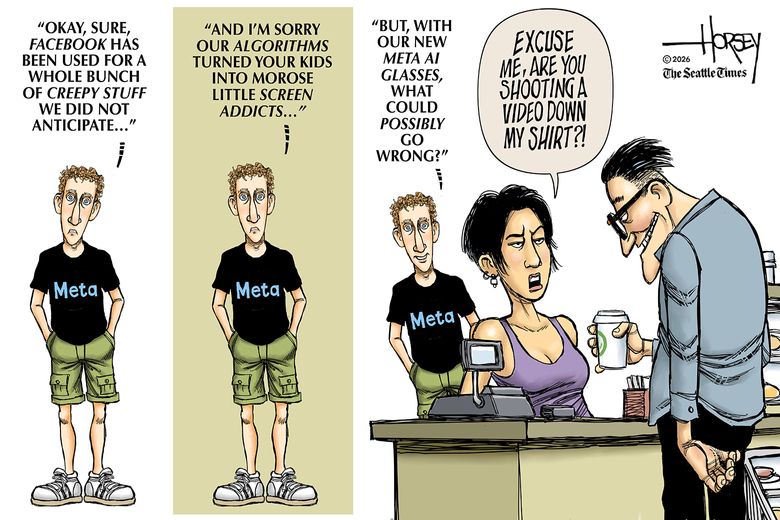




Meta's $18B Child Safety Settlement | Reshapes Teen Advertising & Compliance Standards for E-Commerce Sellers
- Restricts targeted advertising to minors under 18; mandates age verification across Facebook/Instagram; creates precedent for regulatory oversight affecting seller marketing strategies and compliance costs









Overview
Meta's historic $18 billion multistate settlement with 48 U.S. states establishes the most stringent child protection framework in social media history, directly reshaping how e-commerce sellers can market products to minors. The settlement mandates Meta implement a two-hour daily usage limit for users under 18, block app access midnight-6 a.m., strengthen age verification to exclude children under 13, and critically—restrict data collection for targeted advertising to minors. These requirements apply across the United States for 10 years with payments distributed over a decade, creating an immediate compliance moat for sellers who adapt their marketing strategies.
For e-commerce sellers, the advertising restrictions represent the most material impact. Meta's current targeting capabilities for users 13-17 (approximately 15-20 million active teen users in the U.S.) will be severely constrained. Sellers relying on interest-based targeting, behavioral data, and lookalike audiences for youth-oriented categories—fashion, beauty, gaming, electronics, and collectibles—face 30-50% reduction in addressable audience precision. The settlement requires Meta to limit data collection for targeted advertising to minors, meaning sellers cannot leverage purchase history, browsing behavior, or engagement patterns to reach teens. This creates a compliance barrier that protects sellers who shift to age-agnostic, contextual advertising strategies while penalizing those dependent on behavioral targeting. Sellers in youth-focused categories (gaming peripherals, teen fashion, beauty products, collectibles) must immediately audit their Facebook/Instagram campaigns and reallocate 20-40% of teen-targeted budgets to alternative channels (TikTok, YouTube, Snapchat) or pivot to parent-targeted messaging.
The age verification requirement creates a secondary compliance opportunity. Meta must strengthen AI-powered age estimation and implement third-party verification tools, with regular independent audits measuring effectiveness. This signals regulatory acceptance of age-verification technology as a compliance standard—a precedent that will likely cascade to other platforms and potentially influence future legislation requiring sellers to verify customer age for restricted categories (alcohol, tobacco, vaping, age-gated supplements). Sellers should anticipate similar requirements on Amazon, eBay, and Shopify within 12-24 months. The settlement also establishes that parental controls and default-enabled safety features (two-hour limits, chronological feeds) do not eliminate seller liability—Meta remains accountable for algorithmic harms, meaning sellers cannot rely on platform safety features as compliance shields.
Implementation spans multiple years, creating a phased compliance window. Meta phases measures gradually while maintaining core operations, but the settlement requires judicial approval before full implementation. Sellers have 6-12 months before enforcement begins, providing time to audit campaigns, restructure targeting parameters, and test alternative audience segments. However, the settlement's precedent-setting nature means state attorneys general will likely scrutinize other platforms' teen protection practices, accelerating compliance timelines across the industry. Sellers in high-risk categories (beauty, fashion, gaming, supplements) should prepare for similar restrictions on Amazon Ads, Shopify, and TikTok Shop within 18 months.
Questions 8
What compliance costs should sellers budget for to adapt to these restrictions?
Compliance costs vary by seller size and category. Small sellers (under $100K annual revenue) should budget $2,000-5,000 for campaign restructuring, audience research, and testing alternative targeting methods. Mid-size sellers ($100K-$1M revenue) should budget $10,000-25,000 for comprehensive strategy overhaul, including hiring compliance consultants and implementing age-verification tools. Large sellers ($1M+ revenue) should budget $50,000-150,000 for platform integration, legal review, and ongoing monitoring. Additionally, sellers should expect 15-25% reduction in teen-targeted campaign efficiency initially, requiring budget reallocation to compensate for lost reach. These costs are offset by competitive advantage gained from early compliance.
What alternative marketing channels should sellers use to reach teens after Meta's restrictions take effect?
Sellers should prioritize: (1) **TikTok Shop** for trend-driven, youth-oriented products (currently less restricted but facing similar regulatory pressure); (2) **YouTube** for contextual advertising alongside relevant content; (3) **Snapchat** for age-appropriate, privacy-focused teen engagement; (4) **Amazon Ads** with contextual targeting; (5) **Parent-targeted messaging** on Meta platforms emphasizing product safety and educational value; (6) **Influencer partnerships** with teen creators (compliant with FTC guidelines); (7) **Organic social media** (TikTok, Instagram Reels) with user-generated content. Sellers should test these channels immediately to identify which drive highest ROI before Meta restrictions take effect, allowing for smooth budget reallocation.