
:focal(1440x809:1441x810)/https://tf-cmsv2-smithsonianmag-media.s3.amazonaws.com/filer_public/9a/05/9a055f42-d8ff-45d1-87ef-585c80235bd3/marine-ecology-killer-3.jpg)


Unexpected Alliances Beneath the Waves: How Marine Predators Rewrite Ecological Collaboration Rules
- Groundbreaking research reveals sophisticated inter-species hunting strategies challenging traditional marine ecosystem understanding


Overview
Marine ecosystem dynamics are undergoing a radical reimagining through an unprecedented scientific discovery that challenges long-held assumptions about predator interactions. Researchers led by Sarah Fortune have uncovered a remarkable collaborative hunting strategy between Pacific white-sided dolphins and Northern Resident orcas that fundamentally disrupts our understanding of marine species relationships.
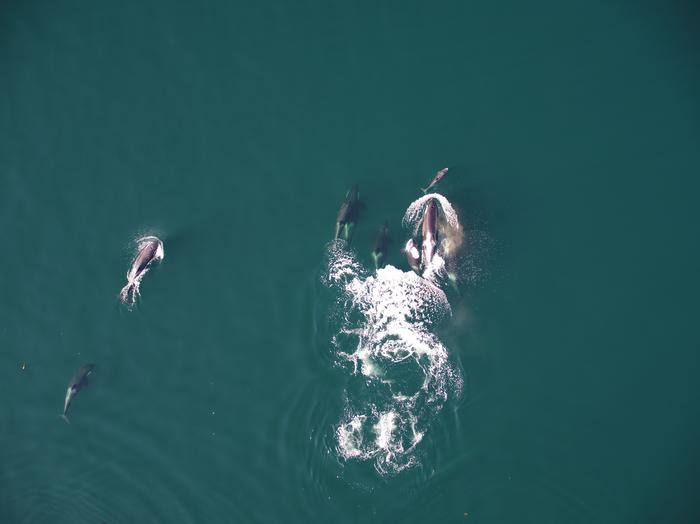
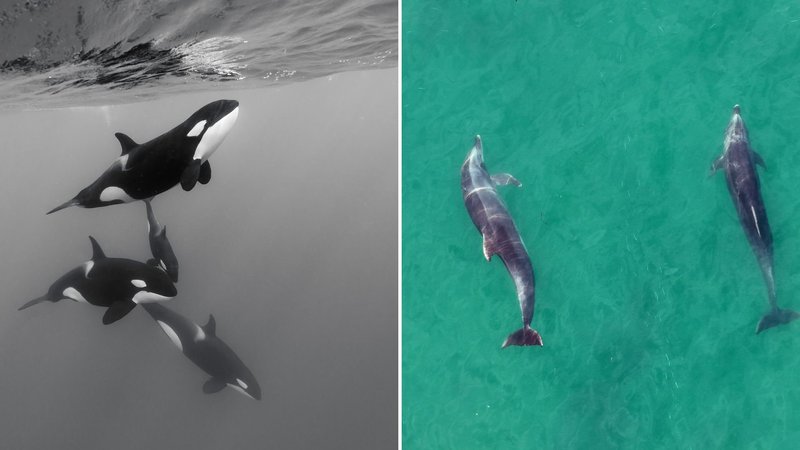
Cooperative Hunting as a Strategic Breakthrough: The study, conducted off the British Columbia coast, documented 258 interaction instances revealing a nuanced partnership that goes far beyond simple opportunistic feeding. By using drone and underwater footage with suction-tagged cameras, scientists captured a sophisticated ecological collaboration where dolphins and orcas actively coordinate salmon hunting strategies. The orcas leverage dolphins as acoustic scouts, expanding their echolocation capabilities while simultaneously conserving energy—a breakthrough in understanding marine predator intelligence.
Evolutionary Adaptation in Action: What makes this discovery particularly compelling is the mutually beneficial nature of the interaction. Dolphins gain protection from other predatory orca pods, while orcas enhance their hunting efficiency through expanded acoustic detection. This isn't just a chance encounter, but a strategically evolved cooperative mechanism that challenges traditional views of marine species as purely competitive entities.
The research upends previous scientific paradigms by demonstrating that cooperation can emerge between traditionally antagonistic marine species. Notably, the dolphins aren't passive participants but active hunting partners, indicating a far more sophisticated interspecies relationship than previously documented. This discovery suggests that marine ecosystems are complex, dynamic networks of interaction rather than simple predator-prey hierarchies.
Strategic Implications: For ecological research, this breakthrough demands a fundamental reevaluation of how we understand marine species interactions. Researchers must now consider collaborative strategies as a potential evolutionary adaptation, opening new avenues for studying marine ecosystem dynamics. The findings underscore the importance of advanced technological observation methods in revealing hidden ecological complexities that traditional research approaches might miss.
Questions 3
What does this research suggest about marine ecosystem dynamics?
The study challenges traditional predator-prey models by demonstrating that marine species can develop sophisticated, cooperative hunting strategies. It suggests ecosystems are more complex, dynamic networks of interaction rather than simple competitive hierarchies.
What technological methods enabled this groundbreaking research?
Researchers used advanced technologies including drone footage, underwater cameras with suction tags, and hydrophones to capture 258 interaction instances, providing unprecedented insights into marine mammal behavior that traditional observation methods could not reveal.