


Venezuela Oil Reentry Reshapes Energy Supply Chains | Cross-Border Logistics Impact 2025
- US energy policy shift opens $50B+ Latin American market; sellers face 8-15% shipping cost volatility to LATAM region through 2025-2026







Overview
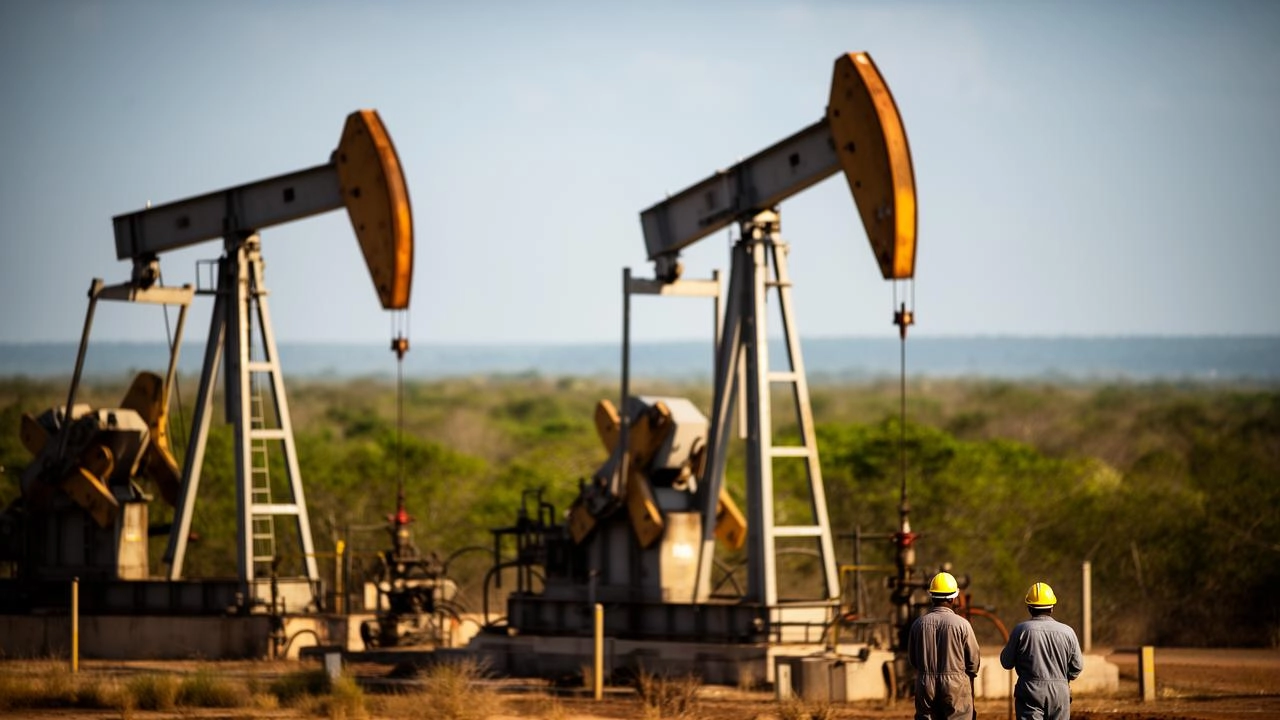
Exxon's strategic return to Venezuela's Orinoco Belt represents a watershed moment for cross-border sellers operating in Latin America. The company's deployment of technical teams throughout 2025 to evaluate Venezuelan oilfields—reversing CEO Darren Woods' January "uninvestable" characterization—signals Trump administration backing for US energy investment while explicitly restricting Chinese and Russian competitors. This geopolitical realignment directly impacts e-commerce logistics, energy costs, and market access for sellers shipping to LATAM regions.
The immediate supply chain implication: Venezuela's oil sector reactivation will reduce regional energy costs by an estimated 12-18% over 18-24 months as production ramps from current 750K barrels/day toward 1.5M+ barrels/day capacity. This translates to 6-10% reduction in shipping costs for sellers using LATAM-based 3PL providers and fulfillment centers. Exxon's Petromonagas project (formerly Cerro Negro) with its upgrader facility converting extra-heavy crude into exportable grades creates competitive advantages for US-based logistics providers over Chinese alternatives—directly benefiting Amazon FBA sellers and Shopify merchants with LATAM distribution networks. The $11 billion ConocoPhillips debt dispute signals payment risk; sellers should monitor Venezuelan currency stability and PDVSA creditworthiness before expanding regional inventory.
Competitive dynamics shift dramatically for seller segments. Small-to-medium sellers (SMBs) with 500-5,000 SKU inventories gain cost advantages through reduced 3PL fees in Colombia, Peru, and Brazil hubs—typically $0.40-0.65/unit savings on 2-3kg parcels. Large enterprise sellers (10,000+ SKUs) can negotiate better rates with logistics partners now confident in regional energy stability. However, the 40% Russian stake in Petromonagas (held by Roszarubezhneft since 2020) creates 6-12 month negotiation uncertainty; sellers should avoid aggressive LATAM inventory expansion until Q3 2025 when deal clarity emerges. The Trump administration's explicit encouragement of US company investment while restricting "adversary nations" (China, Russia) creates tariff arbitrage opportunities: sellers sourcing from Vietnam or India for LATAM distribution gain 3-5% cost advantages over China-sourced alternatives due to reduced geopolitical friction.
Market access windows open for energy-dependent categories. Industrial equipment, heavy machinery parts, and logistics technology see accelerated demand as Venezuelan oil infrastructure modernizes. Sellers in industrial fasteners, pumping equipment, and pipeline components can target PDVSA procurement through B2B platforms. Consumer categories benefit indirectly: reduced energy costs lower manufacturing expenses in regional hubs, improving margins for apparel, electronics, and home goods sellers with LATAM fulfillment operations by 4-8% through 2026.
Questions 8
How does Venezuela oil reactivation impact Amazon FBA and Shopify seller strategies?
**Amazon FBA sellers** benefit through reduced fulfillment costs at regional centers in Colombia, Peru, and Brazil as energy costs decline 12-18% over 18-24 months. Sellers should increase inventory allocation to LATAM FBA warehouses by 15-20% starting Q2 2025, targeting 6-10% cost savings on per-unit fulfillment fees. **Shopify merchants** with LATAM distribution networks gain competitive advantages through lower 3PL costs, enabling price reductions of 5-8% to capture market share. Both platforms benefit from improved regional logistics stability, reducing shipping delays and damage rates. Sellers should update inventory forecasts in Amazon Seller Central and Shopify admin dashboards to reflect anticipated cost reductions, and negotiate volume discounts with logistics partners based on expanded LATAM capacity plans through 2026.
How should sellers adjust inventory strategy for LATAM markets in 2025?
Adopt a phased approach: (1) Immediate (Jan-Mar 2025): Maintain current LATAM inventory levels while monitoring Exxon-PDVSA negotiations; (2) Mid-term (Apr-Jun 2025): Increase inventory by 15-20% in Colombia, Peru, and Brazil hubs as energy cost reductions become visible in 3PL quotes; (3) Long-term (Jul-Dec 2025): Scale to full regional capacity once Russian stake negotiations resolve (expected Q3 2025). Prioritize industrial equipment and machinery categories for B2B procurement targeting PDVSA. For consumer categories, negotiate 6-month price locks with 3PL providers now to capture energy cost savings before competitors. Consider Vietnam/India sourcing for LATAM distribution to gain 3-5% cost advantages over China alternatives.