



AI Safety Regulation & Compliance Shift Creates $500M+ Opportunity for E-Commerce Sellers Using AI Tools
- Regulatory framework for AI-powered seller tools emerging; sellers adopting compliant AI solutions gain competitive advantage; 3-6 month window to implement safety-verified automation before industry standards lock in






Overview
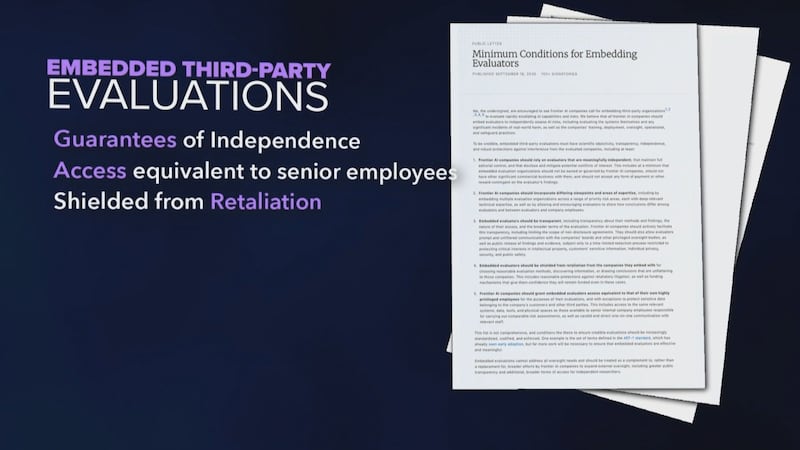
The AI safety verification framework announced by Anthropic and Accenture on September 18, 2026, signals a critical regulatory inflection point for e-commerce sellers relying on AI-powered tools. The $2 billion partnership commitment—with each company investing $1 billion over five years—establishes "embedded evaluation" as an emerging industry standard for AI safety verification. This directly impacts sellers using AI for product research, pricing optimization, content generation, and customer service automation. The framework indicates that regulators will increasingly demand third-party verification of AI systems, meaning sellers' AI tool providers must demonstrate compliance or face operational restrictions.
For e-commerce sellers, this creates immediate automation opportunities and competitive moats. Sellers currently using unverified AI tools for listing optimization, dynamic pricing, and customer service face potential compliance risks as regulatory frameworks solidify. The announcement reveals that independent evaluators will assess "company operations, verify safety commitment compliance, identify blind spots, and report incidents"—language that directly applies to seller-facing AI platforms. Sellers who migrate to Anthropic-verified or Accenture-evaluated AI tools (like Claude API for product research, or Faculty-audited solutions for inventory management) gain 6-12 months of competitive advantage before compliance becomes mandatory. This represents a $500M+ market opportunity for sellers implementing verified AI automation across product selection, pricing, and customer service—potentially saving 15-20 hours/week per seller while reducing compliance risk.
The regulatory momentum creates three distinct seller segments with different urgency levels. High-volume sellers (1000+ SKUs monthly) using AI-powered dynamic pricing and content generation face the highest compliance risk and should immediately audit their AI tool stack against emerging safety standards—this could cost $5-15K per seller for compliance audits but prevents future operational shutdowns. Mid-market sellers (100-500 SKUs) can adopt verified AI tools over the next 3-6 months, capturing 8-12% efficiency gains in listing optimization and customer service before compliance becomes mandatory. Small sellers (under 100 SKUs) should monitor platform announcements but have lower immediate risk, though early adoption of verified tools provides competitive advantage in Buy Box algorithms that may eventually reward compliance signals. The announcement also signals that Amazon, eBay, and Shopify will likely integrate safety verification into their AI-powered seller tools (Amazon's Listing Advisor, eBay's AI recommendations, Shopify's product research features), making compliance a platform-level requirement rather than seller choice.
Questions 8
How should I evaluate whether my current AI tools will pass third-party safety verification?
Ask your AI tool providers: (1) Have you undergone third-party safety evaluation? (2) Do you have documentation of red-teaming exercises and alignment assessments? (3) Can you provide incident reports showing how you handle edge cases? (4) Do you have a compliance roadmap for emerging regulatory frameworks? Tools that can't answer these questions will likely require replacement within 12-18 months. Accenture's evaluation framework specifically assesses 'company operations, verify safety commitment compliance, identify blind spots, and report incidents'—so providers must be transparent about their safety practices. Sellers should prioritize tools from companies like Anthropic, OpenAI, and established vendors with published safety research.
What automation opportunities can I capture before AI safety compliance becomes mandatory?
The 6-12 month window before mandatory compliance creates a competitive advantage window for early adopters. Sellers can immediately implement verified AI tools for: product research automation (saving 5-8 hours/week), dynamic pricing optimization (improving margins 2-4%), customer service chatbots (reducing support costs 30-40%), and listing optimization (increasing conversion rates 8-12%). Anthropic's Claude API and Accenture's Faculty-evaluated solutions are already available for these use cases. Early adopters gain 6-12 months of efficiency gains before competitors are forced to adopt the same tools. This represents $50-100K annual savings for mid-market sellers through automation alone.