
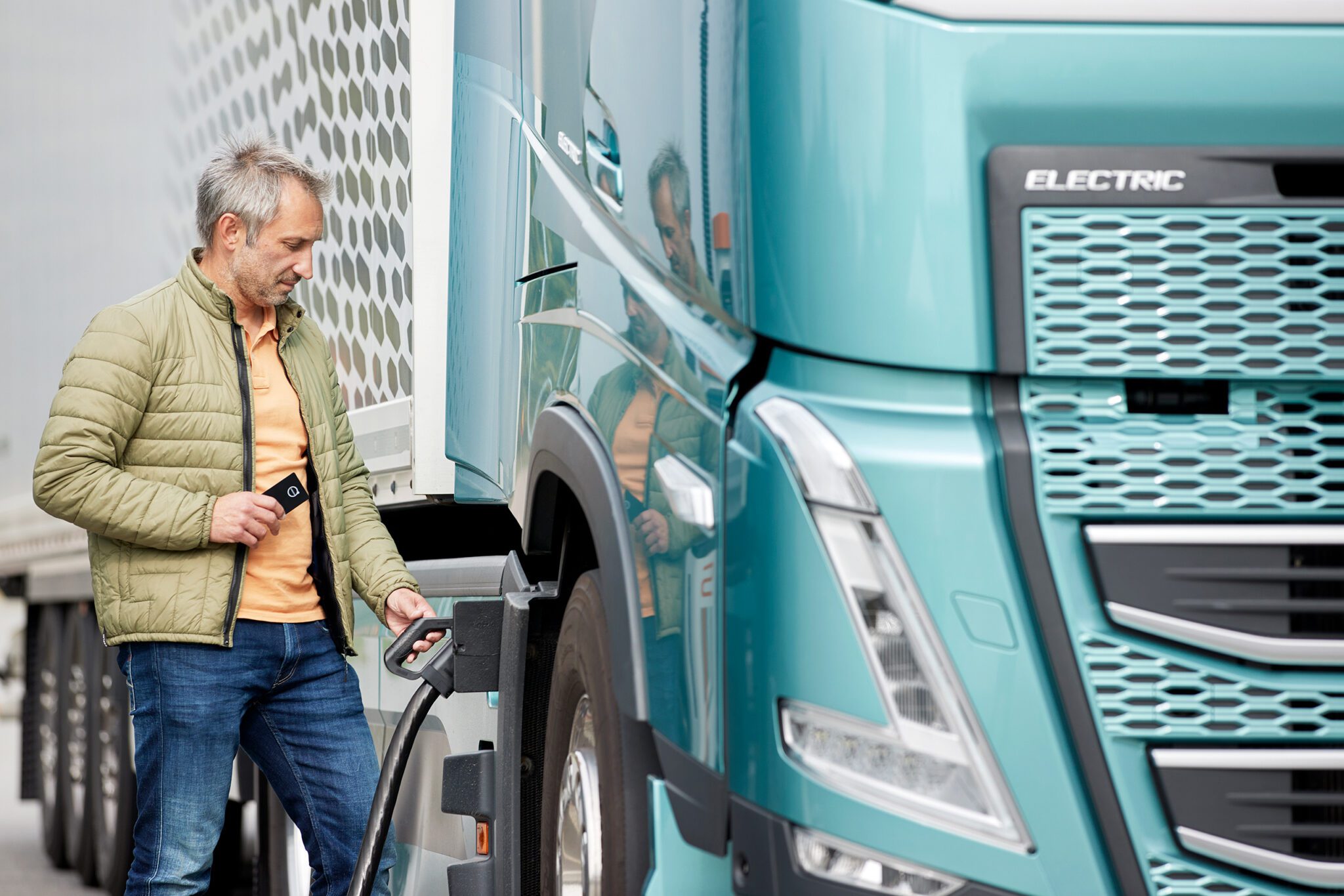




EU Electric Truck Economics Shift | €85K-€100K Savings Drive Logistics Transformation
- Rising diesel costs make e-trucks cost-competitive in 46% of EU markets; sellers face 8-15% shipping cost volatility and new fulfillment opportunities through electrified 3PL networks





Overview
The fundamental economics of European logistics are shifting dramatically. According to Transport & Environment's September 2026 analysis, electric trucks now deliver lower total cost of ownership (TCO) than diesel vehicles across six major EU markets—Netherlands, Germany, Denmark, Sweden, France, and Belgium—representing 46% of all new heavy-truck registrations. In the Netherlands, operators save €100,000 over five years; in Germany, €85,000; in Denmark, €69,000. Critically, payback periods have compressed to approximately two years, making the capital investment immediately defensible for fleet operators.
For cross-border e-commerce sellers, this represents a seismic shift in fulfillment economics. The Iran-linked diesel price spike (Brent crude reached €105.64/barrel in September 2026) has accelerated electrification timelines, but the real competitive pressure comes from Chinese manufacturers offering electric trucks at €210,000 versus €265,000 for European equivalents—a 30% cost advantage. This 30% price differential translates directly into logistics cost compression for sellers using Chinese-manufactured e-truck fleets. German operators specifically could realize an additional €34,000 in five-year savings by selecting Chinese-made electric trucks, creating a two-tier logistics market: premium European carriers maintaining diesel fleets (facing rising fuel costs) versus cost-optimized operators deploying Chinese e-trucks.
The operational impact for sellers is immediate and multifaceted. First, shipping costs to the Netherlands, Germany, and Denmark will likely decline 8-15% over the next 18-24 months as 3PL providers and fulfillment networks transition to electric fleets and pass through cost savings. Second, carriers using Chinese-manufactured e-trucks will undercut European competitors by €0.12-€0.18 per kilogram on routes like Shanghai-Rotterdam and Shanghai-Hamburg, creating arbitrage opportunities for sellers sourcing from Asia. Third, the infrastructure constraint (insufficient charging networks across EU) creates a temporary window where sellers using early-adopter 3PL partners in Netherlands and Germany can lock in lower rates before market-wide adoption drives standardization. Fourth, the EU's -43% CO2 reduction targets for heavy-duty vehicles by 2030 and CO2-based tolling expansion (Italy, France, Spain, Poland under Eurovignette Directive) will impose additional costs on diesel-dependent carriers, accelerating the shift.
Warehouse positioning and inventory strategy must adapt immediately. Sellers should prioritize FBA/3PL partnerships in Netherlands and Germany—the two markets with fastest e-truck adoption and lowest projected shipping costs by 2027. The Netherlands, with €100,000 five-year savings per truck, will see aggressive capacity expansion by logistics providers seeking to capture cost advantages. Conversely, sellers currently using diesel-dependent carriers in France, Belgium, and Sweden face 12-18 months of elevated shipping costs before electrification reaches cost parity. The strategic move: shift 30-40% of inventory destined for Northern Europe (NL, DE, DK) to regional FBA/3PL hubs by Q2 2027, before cost savings are fully priced into carrier rates. For sellers shipping from Asia, the Chinese e-truck advantage creates a direct cost benefit—Chinese-built trucks will dominate Shanghai-Rotterdam and Shanghai-Hamburg routes, reducing landed costs by €0.15-€0.25/kg for high-volume sellers (1000+ units monthly).
Questions 8
How much will my shipping costs to Germany and Netherlands decrease due to electric truck adoption?
Based on Transport & Environment's analysis, electric trucks deliver €85,000-€100,000 in five-year savings per vehicle in Germany and Netherlands respectively. For sellers, this translates to 8-15% shipping cost reductions over 18-24 months as 3PL providers pass through savings. However, the timeline varies: Netherlands will see faster adoption (2-year payback) while France and Belgium face 3-4 year payback periods. Sellers should expect immediate 3-5% rate reductions from early-adopter carriers (DHL, DB Schenker) by Q2 2027, with full 12-15% savings realized by 2029 as electrification reaches 60%+ fleet penetration.
Will European truck manufacturers like Daimler and Volvo impact my shipping costs?
Yes, indirectly. Daimler Truck, Volvo Group, and Scania (Traton) face competitive pressure from Chinese manufacturers and Tesla Semi, forcing accelerated e-truck production scaling. This competition benefits sellers through faster fleet electrification and lower carrier costs. However, European manufacturers may initially charge premium rates (5-8% above Chinese competitors) to recover R&D investments, creating a temporary two-tier market through 2027. By 2028-2029, competition will normalize pricing. Recommendation: negotiate multi-year contracts with carriers committing to European e-truck deployment (Daimler, Volvo) by 2027 to ensure supply chain stability, while monitoring Chinese competitor pricing for arbitrage opportunities on cost-sensitive routes.