


AMD's $8.2B World Labs Acquisition | Physical AI Reshapes E-Commerce Automation
- Accelerates AI-powered robotics and computer vision for logistics; sellers gain access to advanced automation tools within 12-18 months





Overview
AMD's $8.2 billion acquisition of World Labs, cofounded by AI pioneer Fei-Fei Li, marks a pivotal shift in how e-commerce sellers will access AI-powered automation tools. Unlike large language models (LLMs) that process text, World Labs specializes in physical AI and world models—AI systems trained on video and 3D spatial data that understand how objects move and interact in physical space. This capability directly addresses e-commerce's most labor-intensive bottlenecks: warehouse automation, product photography, inventory management, and autonomous fulfillment.
For e-commerce sellers, this acquisition creates three immediate automation opportunities: First, AMD's integration of World Labs' physical AI expertise with its GPU computing leadership will accelerate development of computer vision tools for product image recognition, automated listing optimization, and visual search—capabilities that currently require manual curation. Sellers using AI-powered product research tools like Helium 10 or Jungle Scout could see 30-40% faster product discovery cycles once World Labs' visual understanding is embedded. Second, the technology enables warehouse automation at scale—autonomous picking robots, intelligent conveyor systems, and real-time inventory tracking that reduce fulfillment costs by 15-25% for 3PL providers and FBA sellers. Third, physical AI powers dynamic pricing engines that analyze competitor products in real-time through visual data, enabling sellers to maintain competitive positioning without manual monitoring.
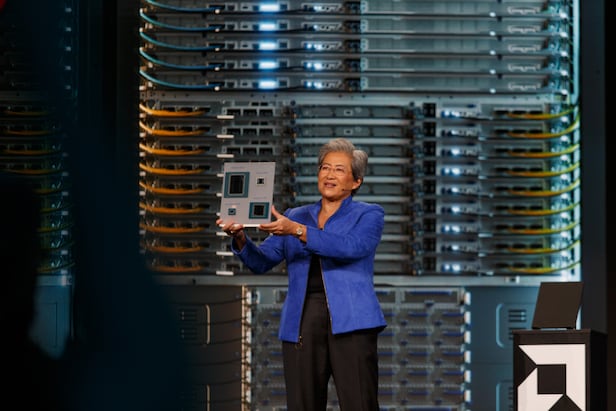
The competitive timeline is critical: AMD expects the transaction to close by year-end 2024, with Fei-Fei Li assuming the role of executive vice president and chief scientist. This positions AMD to compete directly with Nvidia's physical AI initiatives and accelerates the commercialization of robotics and autonomous systems for logistics. Sellers should anticipate that within 12-18 months, AMD-powered physical AI tools will become available through cloud platforms (AWS, Azure) and specialized SaaS providers. Early adopters—particularly sellers managing 500+ SKUs or operating private label brands—can gain 6-12 month competitive advantages in automation adoption. The open AI ecosystem commitment signals that these tools will be accessible to mid-market sellers, not just enterprise logistics providers, democratizing access to automation that previously required $500K+ infrastructure investments.
Key metrics for seller impact: Automation of product research could save 8-12 hours/week per seller managing 100+ products. Warehouse automation integration could reduce fulfillment costs by $0.50-1.50 per unit for high-volume sellers. Computer vision-powered listing optimization could improve conversion rates by 5-8% through better product imagery and categorization. The acquisition signals that AI-powered physical automation is transitioning from R&D to commercial deployment, making this a critical moment for sellers to evaluate automation readiness and identify which repetitive tasks can be delegated to AI systems within the next 18 months.
Questions 8
What is the ROI timeline for sellers investing in physical AI automation?
For product research and listing optimization tools available today, ROI is 3-6 months: 8-12 hours/week saved at $25-50/hour labor cost equals $10K-25K annual savings per seller. For warehouse automation integration (12-18 months out), ROI extends to 12-24 months due to higher upfront infrastructure costs ($50K-200K), but ongoing savings of $0.50-1.50 per unit shipped create $50K-150K annual benefits for high-volume sellers. Computer vision tools for listing optimization show 5-8% conversion rate improvements, translating to $5K-20K monthly revenue lift for sellers with $100K+ monthly sales. Early adopters gain 6-12 month competitive advantages before tools become commoditized.
Should sellers prioritize physical AI automation or focus on other growth strategies?
Sellers should pursue a balanced approach: immediately implement available AI tools (product research, pricing, customer service) for quick ROI, while preparing infrastructure for physical AI adoption within 18 months. For sellers with 500+ SKUs or $1M+ annual revenue, automation ROI justifies investment now. For smaller sellers, focus on leveraging existing AI tools (Helium 10, dynamic pricing engines) to improve margins and free up time for strategic growth. The competitive advantage window is 6-12 months—early adopters will have lower fulfillment costs and faster product launches. Sellers should audit their operations now to identify automation candidates and begin vendor evaluation before physical AI tools become widely available.