


Diesel Export Ban & Red-Dyed Fuel Tax Relief | Critical Supply Chain Cost Impact for Cross-Border Sellers
- Potential 10-15% freight cost increases in affected regions; immediate logistics diversification required for sellers managing international supply chains










Overview
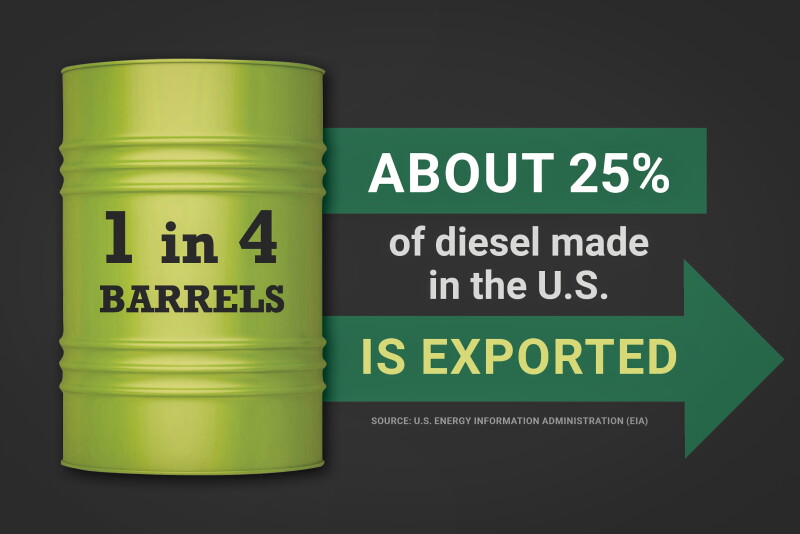
The Trump administration is weighing two competing diesel fuel policies that would fundamentally reshape logistics costs for cross-border e-commerce sellers globally. According to September 2026 reports, President Trump has proposed either a partial or full ban on U.S. diesel exports—a policy that would "tighten global supply" of diesel fuel and create cascading effects across international commerce. Simultaneously, the White House is exploring regulatory relief to expand red-dyed diesel sales (currently tax-exempt agricultural fuel) as an alternative approach, with highway diesel carrying a federal tax of 24.4 cents per gallon versus red-dyed diesel's 0.1-cent charge.
For cross-border e-commerce sellers, a diesel export ban represents an immediate operational crisis. Industry analysts warn that restricting U.S. diesel exports would increase freight costs by 10-15% in affected regions, directly compressing profit margins for logistics-dependent businesses. Sellers relying on fuel-dependent transportation—particularly those managing just-in-time inventory systems across multiple countries—face supply constraints that could increase delivery times and disrupt fulfillment operations. Countries dependent on U.S. diesel imports (including major e-commerce hubs in Europe, Asia, and Latin America) would experience acute supply shortages, forcing sellers to absorb higher 3PL provider costs or face competitive disadvantages.
The policy uncertainty creates a critical timing window for strategic action. The diesel export ban proposal reflects political rather than economic rationale, timed ahead of November midterm elections, creating ambiguity about implementation likelihood and duration. However, the red-dyed diesel tax relief alternative—which Energy Secretary Chris Wright is negotiating with major refiners through voluntary commitments—could provide partial relief if implemented. Texas, Alabama, Louisiana, and Nebraska have already issued state-level declarations expanding dyed diesel access, signaling that some logistics relief may emerge through regional channels even if federal policy remains uncertain.
Sellers must immediately assess their fuel cost exposure and diversify logistics strategies. The 10-15% freight cost increase would translate to $200-500 monthly increases for mid-sized sellers (1,000+ monthly units) and $1,000-3,000+ for large-scale operations. Retaliatory trade measures from affected countries could trigger additional tariff escalations on e-commerce goods, compounding margin compression. Sellers should monitor policy developments through Energy Department announcements, establish relationships with multiple 3PL providers in different regions, and consider fuel hedging strategies or inventory pre-positioning in lower-cost logistics zones before any export ban takes effect.
Questions 8
Which regions and seller segments face the highest logistics cost risk?
Sellers with international operations managing complex supply chains across multiple regions face the highest risk, particularly those shipping to or from Europe, Asia-Pacific, and Latin America—regions heavily dependent on U.S. diesel imports. Mid-sized sellers (1,000-10,000 monthly units) and large-scale operations (10,000+ units) relying on fuel-dependent 3PL providers are most vulnerable, as their high shipping volumes amplify the 10-15% cost increase impact. Categories with thin margins (electronics, apparel, home goods) and sellers using air freight or expedited shipping face disproportionate margin compression. Conversely, sellers with regional fulfillment centers already positioned in low-cost logistics zones (Mexico, Canada, Southeast Asia) may gain competitive advantages if competitors face supply constraints.
When could a diesel export ban or red-dyed fuel policy take effect?
The diesel export ban proposal was floated in September 2026 ahead of November midterm elections, suggesting political rather than economic rationale. The timing indicates implementation uncertainty—the policy may be introduced as a campaign measure but face industry opposition and potential reversal depending on election outcomes. The red-dyed diesel tax relief alternative is being negotiated through voluntary commitments with major refiners by Energy Secretary Chris Wright, potentially offering faster implementation than legislative action. Several states (Texas, Alabama, Louisiana, Nebraska) have already issued independent declarations expanding dyed diesel access, signaling that regional relief may emerge before federal policy stabilizes. Sellers should monitor Energy Department announcements and state-level policy changes weekly, with contingency plans ready for implementation within 30-90 days.