


OpenAI AI Marketplace & Pages Launch | Critical Infrastructure Shift for E-Commerce Sellers
- OpenAI consolidates AI services into curated marketplace; enterprise AI spending projected to grow from $17B (2025) to $71B (2030); sellers must evaluate vendor lock-in risks and automation opportunities

















Overview
OpenAI is establishing itself as the central infrastructure provider for AI services through two major initiatives: an AI App Store marketplace and Pages, a collaborative productivity suite. This represents a fundamental shift in how e-commerce sellers will access critical automation tools for inventory management, customer service, pricing optimization, and market analysis. The AI App Store will function as a curated ecosystem with baseline safety requirements, security protocols, and ethical guidelines—similar to Apple's App Store model. Simultaneously, Pages (available to ChatGPT Pro, Business, and Enterprise customers) transforms ChatGPT from an individual assistant into a collaborative workspace with document editing, slides, spreadsheets, and embedded AI assistance. Gartner projects enterprise AI assistant spending will grow from $17 billion in 2025 to $71 billion by 2030, indicating massive market expansion.
For cross-border e-commerce sellers, this consolidation creates both immediate automation opportunities and strategic risks. Sellers currently using fragmented AI tools (separate solutions for product research, pricing, customer service, content generation) can now consolidate through OpenAI's ecosystem, potentially reducing tool sprawl and integration complexity. However, this centralization introduces vendor lock-in concerns—sellers become dependent on OpenAI's pricing models, API availability, and compliance requirements. The mandatory safety certifications and compliance standards for listed applications could create barriers for smaller AI tool developers, reducing competitive alternatives. Sellers should immediately audit their current AI tool stack: identify which tasks (product listing optimization, customer inquiry responses, dynamic pricing, competitor analysis) could migrate to OpenAI's marketplace, calculate current monthly spend across multiple tools, and assess integration capabilities with existing e-commerce platforms (Amazon Seller Central, Shopify, eBay).
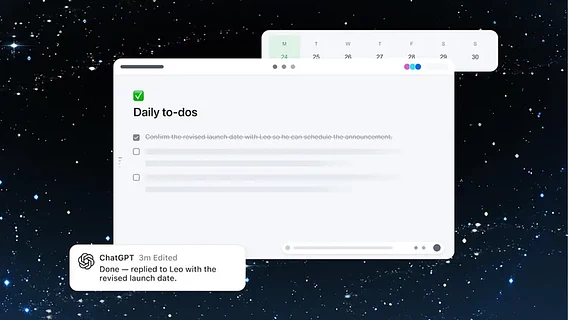
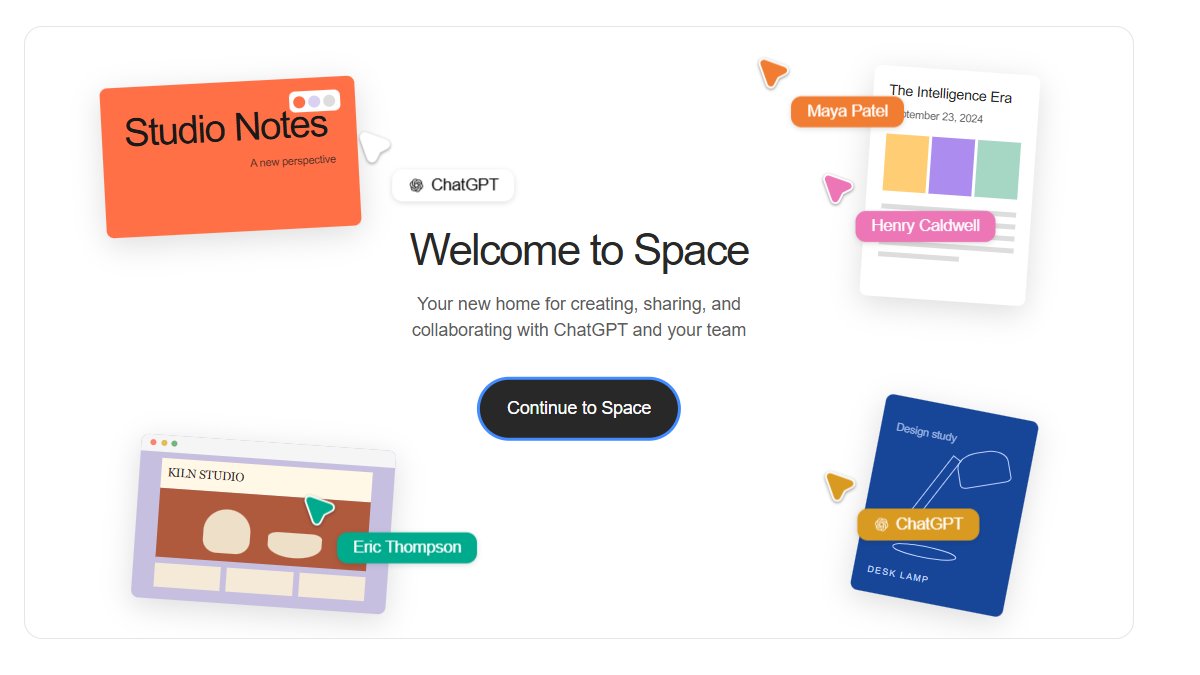
The productivity suite launch directly impacts seller operations through team collaboration efficiency. Pages' block-based design (mirroring Notion) with floating toolbars, commenting capabilities, and embedded AI assistance enables teams to collaboratively manage product catalogs, create marketing content, and coordinate inventory strategies within a single interface. This reduces context-switching between Microsoft 365, Google Workspace, and specialized e-commerce tools. However, adoption barriers remain high—teams require commitment to migrate existing workflows, shared documents, and established processes. Competitors are advancing similarly: Anthropic integrated rich text editing into Claude, while Microsoft's Copilot overhaul enables Office document creation. The strategic question for sellers: should they consolidate around OpenAI's ecosystem (betting on rapid feature development and integration), maintain multi-tool strategies (preserving flexibility but increasing complexity), or wait for market consolidation to clarify winners?
Immediate automation wins for sellers: (1) Product research automation—use OpenAI's marketplace to find vetted tools for competitor analysis, trend identification, and keyword research, reducing manual research time by 8-12 hours weekly; (2) Customer service automation—integrate ChatGPT-based customer inquiry responses with Pages for team collaboration on response templates, reducing support ticket resolution time by 30-40%; (3) Content generation at scale—leverage Pages' embedded AI assistance to generate product descriptions, marketing copy, and listing variations, cutting content creation time from 2-3 hours per product to 20-30 minutes; (4) Dynamic pricing analysis—consolidate pricing tools through OpenAI's marketplace to monitor competitor prices, calculate optimal margins, and adjust listings automatically, improving margin capture by 2-4%. The time savings translate to 15-20 hours weekly for mid-sized seller teams (5-10 people), equivalent to 0.5-1 FTE cost reduction or reallocation to higher-value activities like strategy and market expansion.
Questions 8
How does OpenAI's marketplace compare to Microsoft 365 and Google Workspace for sellers?
OpenAI's Pages directly competes with Microsoft 365, Google Workspace, and Notion by transforming ChatGPT into a collaborative workspace. Unlike Microsoft and Google, OpenAI integrates AI assistance directly into document creation and editing, enabling sellers to generate content, analyze data, and collaborate simultaneously. However, displacement remains challenging because incumbents have entrenched user bases, established workflows, and years of shared content. Sellers should evaluate based on specific needs: if AI-powered content generation and analysis are priorities, Pages offers advantages; if integration with existing Microsoft/Google ecosystems is critical, staying with current tools may be more practical. The decision depends on team size, current tool investment, and AI automation priorities.
What vendor lock-in risks should sellers consider with OpenAI's AI App Store?
Consolidating AI tools through OpenAI's marketplace creates several lock-in risks: (1) Pricing dependency—OpenAI controls pricing for marketplace tools and API access, with potential fee increases as adoption grows; (2) Integration lock-in—sellers' workflows become dependent on OpenAI's APIs and integrations with e-commerce platforms; (3) Compliance requirements—mandatory safety certifications and ethical guidelines could change, requiring tool updates or replacement; (4) Competitive alternatives—reduced competition in the marketplace could limit innovation and increase costs. Sellers should maintain multi-tool strategies for critical functions, negotiate long-term pricing agreements, and regularly audit alternative solutions. Document all integrations and data flows to enable migration if needed.