


Boeing 737 Max Software Certification Failures | Aerospace Supply Chain Risk for E-Commerce Logistics
- FAA increases oversight on U14.2 software (2028 deadline); airlines reject certified upgrades; reveals critical compliance-vs-safety tensions affecting aerospace supply chain and cross-border logistics infrastructure





Overview
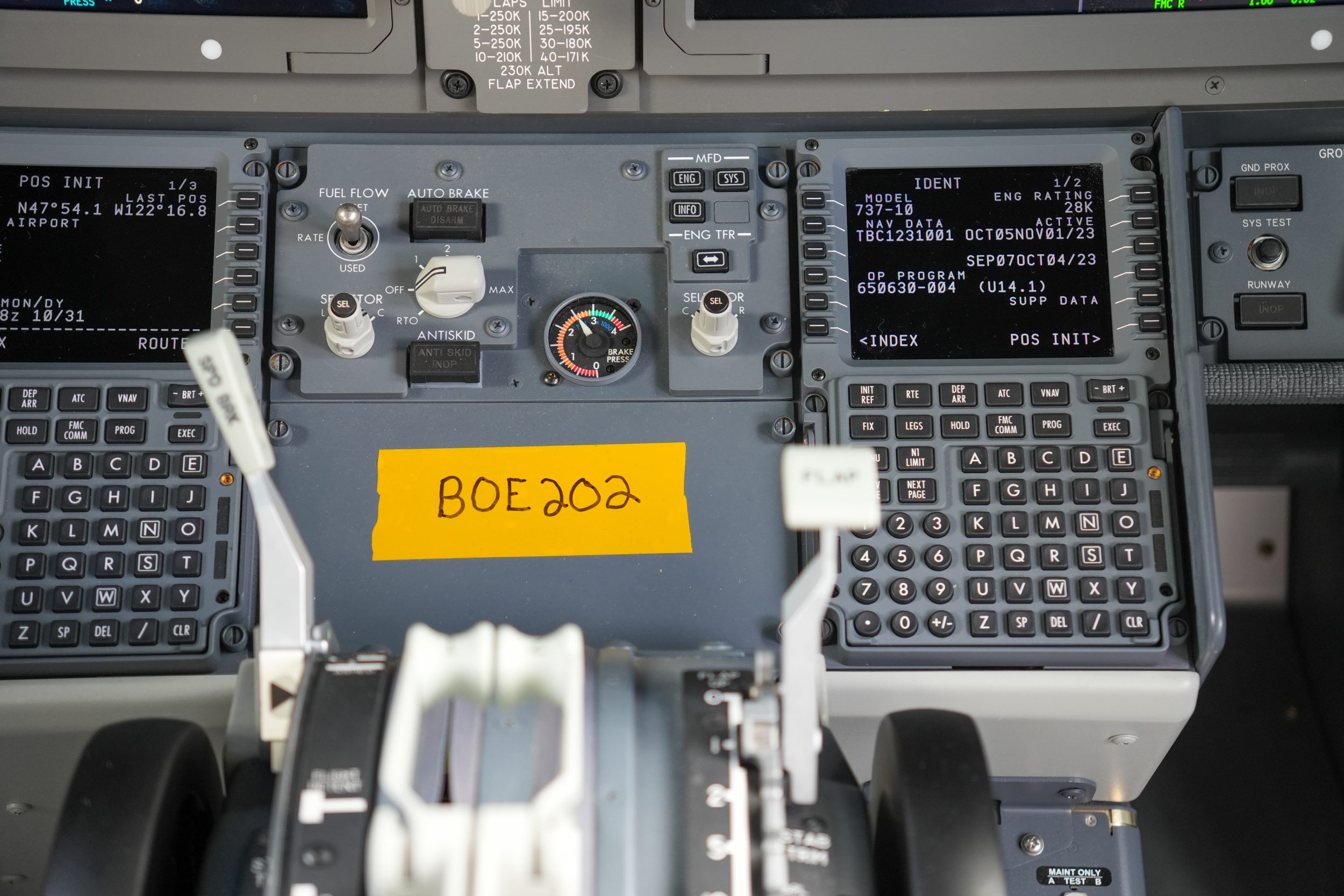
The Boeing 737 Max software certification crisis reveals a fundamental breakdown in regulatory compliance frameworks that directly impacts e-commerce logistics infrastructure. U.S. airlines including United and Southwest have deliberately rejected FAA-certified software versions (U14 and U14.1) for years, actively rolling back to 2017-era U13 software despite official approval. This rejection stems from persistent technical glitches ranging from capability losses to crew distractions during critical flight phases—anomalies that persisted through the FAA's certification process. The November 2024 WestJet vertical navigation (VNAV) glitch discovery and the 2022 Pittsburgh incident (United 737 Max 9 landing on wrong runway due to flight management computer display resets) demonstrate that certified software contains undetected safety flaws. The FAA's response—significantly increasing oversight of the next version (U14.2, expected 2028) while current operators continue avoiding upgrades—signals regulatory failure to catch defects before certification.
For e-commerce sellers, this crisis has three critical implications. First, compliance certification no longer guarantees product safety or market acceptance—airlines are rejecting certified software, establishing precedent that sellers can legally refuse "approved" systems if they detect operational failures. This creates a compliance moat opportunity: sellers who implement redundant testing protocols beyond regulatory minimums can market products as "beyond-certified" quality, differentiating from competitors relying solely on official approvals. Second, aerospace supply chain disruption directly impacts cross-border logistics. Airlines delaying fleet modernization due to software concerns extends aircraft lifecycles, reducing pressure for new aircraft orders and impacting Boeing's supply chain (GE Aerospace, component manufacturers). Reduced aerospace manufacturing activity decreases demand for specialized logistics equipment, potentially lowering freight costs for e-commerce sellers using air cargo. Third, regulatory enforcement intensity is increasing asymmetrically—the FAA's heightened U14.2 oversight suggests future regulations will impose higher compliance burdens on manufacturers while allowing operators discretion to reject certified products. This pattern will likely spread to other industries: sellers should expect regulators to increase pre-certification testing requirements (raising compliance costs 15-25%) while simultaneously allowing end-users to opt out of certified upgrades (reducing forced compliance penalties).
The broader signal: certification approval is becoming decoupled from market adoption. Airlines' willingness to publicly reject FAA-certified software despite regulatory approval indicates that regulatory bodies can no longer force compliance through certification alone. For e-commerce sellers, this means compliance strategies must now account for customer acceptance risk—regulatory approval is necessary but insufficient for market success. Sellers in regulated categories (electronics, medical devices, automotive parts) should prepare for a two-tier compliance environment: meeting regulatory minimums for legal operation, while simultaneously implementing customer-facing quality assurance to overcome market skepticism of certified products.
Questions 8
What is the timeline for Boeing 737 Max software compliance changes affecting logistics?
The FAA's corrective action review board determined the November 2024 VNAV bug did not represent a safety risk, but current 737 Max 8 and 9 operators continue avoiding upgrades to newer versions despite certification approval. The next software version (U14.2) is expected in 2028 with significantly increased FAA oversight. For e-commerce sellers, this means 3-4 years of continued aircraft fleet uncertainty—airlines will likely maintain older software versions through 2028, delaying fleet modernization and potentially constraining air cargo capacity. Sellers should monitor FAA announcements regarding U14.2 certification (expected 2027-2028) as a potential inflection point for fleet upgrades and logistics capacity changes.
How does the 2022 Pittsburgh incident (United 737 Max 9 wrong runway landing) relate to compliance risk?
The National Transportation Safety Board identified a dual reset of flight management computer displays as a contributing factor that distracted the crew during final approach—a fault traced to refinements in the earth model introduced with U14 software. This incident demonstrates that certified software can introduce subtle defects that only manifest under specific operational conditions (missed landing approaches, crew workload stress). For e-commerce sellers, this signals that regulatory testing may not capture edge-case failures. Sellers should implement scenario-based testing that simulates high-stress operational conditions, not just standard compliance test cases. This approach identifies defects that regulatory testing misses, enabling sellers to market products as 'operationally validated' beyond certification requirements.