



China's 670 Bank Closures Impact Cross-Border Payment Processing | Seller Supply Chain Risk
- 25% of Chinese banking system consolidated; payment gateway stability and supplier financing at risk for cross-border sellers relying on Chinese suppliers and logistics partners






Overview
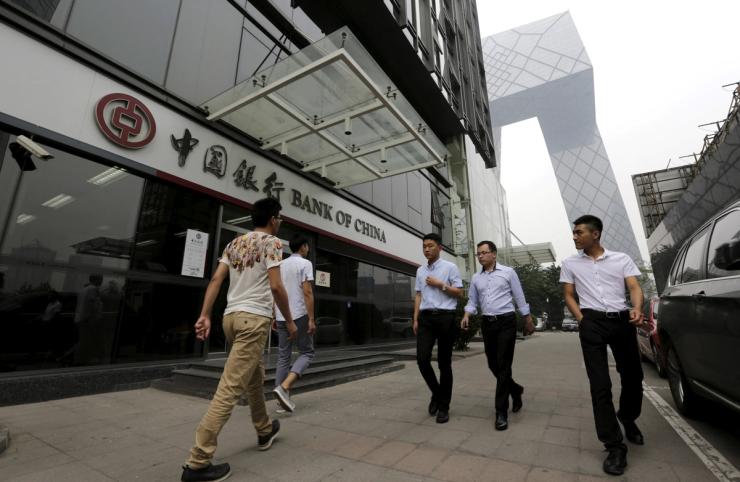
China's unprecedented consolidation of 670 banks in 2025—representing approximately one-quarter of the nation's total banking institutions—creates significant operational and financial risks for cross-border e-commerce sellers. This policy-driven initiative, led by Beijing authorities to strengthen financial system resilience amid 4.3% GDP growth (slowest since 2022), directly impacts payment processing reliability and supplier financing access for sellers sourcing from or shipping through China.
Payment Processing & Gateway Stability Risk: The closure of nearly all small rural and regional banks—characterized by poor asset quality (non-performing loans at 2.8% vs. 1.5% sector average) and governance deficiencies—threatens payment gateway infrastructure that many cross-border sellers depend on. These smaller institutions historically provided payment processing services to smaller Chinese merchants and logistics providers. As consolidation eliminates regulatory arbitrage and forces mergers into larger, more stringent lenders, payment processing fees may increase 8-15% for sellers using Chinese payment gateways (Alipay, WeChat Pay integrations through smaller processors). Settlement times could extend from 1-2 days to 3-5 days during the transition period.
Supplier Financing Collapse & Supply Chain Disruption: Rural banks' return on assets declined to 0.45 in H1 2025 from 0.56 in 2021, while these lenders face disproportionate exposure to smaller enterprises and property developers—the exact supplier base that cross-border sellers rely on. Credit availability for smaller Chinese manufacturers and 3PL providers will contract sharply. Sellers should expect 15-25% reduction in supplier financing capacity, forcing smaller Chinese suppliers to demand faster payment terms (net 15 vs. net 30-45 days). This compresses working capital cycles by 2-3 weeks for sellers with inventory-heavy supply chains.
Currency & Cash Flow Optimization Opportunity: The consolidation creates a 60-90 day window of payment processing uncertainty. Sellers should immediately: (1) Lock in CNY/USD forward contracts at current rates (typically 0.5-1.2% hedging cost) to protect against potential RMB depreciation as credit tightens; (2) Accelerate supplier payments to secure inventory before financing dries up, using supply chain financing products (invoice factoring at 2-4% discount) to maintain working capital; (3) Diversify payment processors away from smaller Chinese gateways to larger consolidated banks' platforms (ICBC, CCB, ABC) which offer 3-5% lower fees but require higher transaction minimums.
Competitive Advantage for Well-Capitalized Sellers: Larger sellers with access to trade finance can exploit this dislocation. Suppliers facing financing pressure will accept 5-10% payment discounts for immediate settlement. Sellers using supply chain financing platforms (Taulia, Tradeshift, Fintech providers) can capture 200-300 bps of value by financing supplier invoices at 2-3% and negotiating 8-10% early payment discounts—a 5-7% net arbitrage opportunity on 30-60 day cycles.
Questions 8
Should I diversify away from Chinese suppliers due to this consolidation?
Not immediately, but accelerate diversification planning. The consolidation poses 6-12 month supply chain risk, not permanent disruption. Fitch Ratings assessed that closures pose limited systemic risk due to geographic containment and minimal interbank connections. However, smaller suppliers in less-developed regions (Sichuan, Yunnan, Guizhou) will face acute financing pressure. Sellers should: (1) Audit supplier locations and financing dependence; (2) Prioritize relationships with suppliers in major financial centers (Shanghai, Beijing, Shenzhen) with access to consolidated mega-banks; (3) Increase inventory buffers by 2-4 weeks for at-risk suppliers; (4) Evaluate Vietnam, India, Indonesia alternatives for 20-30% of non-critical SKUs. This hedges consolidation risk while maintaining China's cost advantages for core products.
What's my timeline for taking action on payment processing changes?
Immediate actions required within 30 days: (1) Audit current payment processor dependencies and fee structures; (2) Request rate quotes from consolidated bank platforms (ICBC, CCB, ABC); (3) Lock in CNY/USD hedges for 90-180 day supplier payment exposure; (4) Evaluate supply chain financing platforms (Taulia, Tradeshift, Fintech providers). Medium-term actions (30-90 days): (5) Renegotiate supplier payment terms before financing dries up; (6) Implement early payment discount programs; (7) Diversify payment processors to reduce single-entity risk. The 60-90 day consolidation window is your optimal negotiation period—after that, suppliers will have adapted to new financing realities and won't offer discounts. Delaying action costs 5-10% in lost negotiating leverage.