





France Debt Crisis Triggers EU Market Volatility | Cross-Border Seller Currency & Compliance Risk
- Widening French-German bond spreads signal potential euro weakness, affecting seller margins on EU shipments by 3-8%; political uncertainty through 2025 election creates VAT/customs policy volatility for 50K+ cross-border sellers








Overview
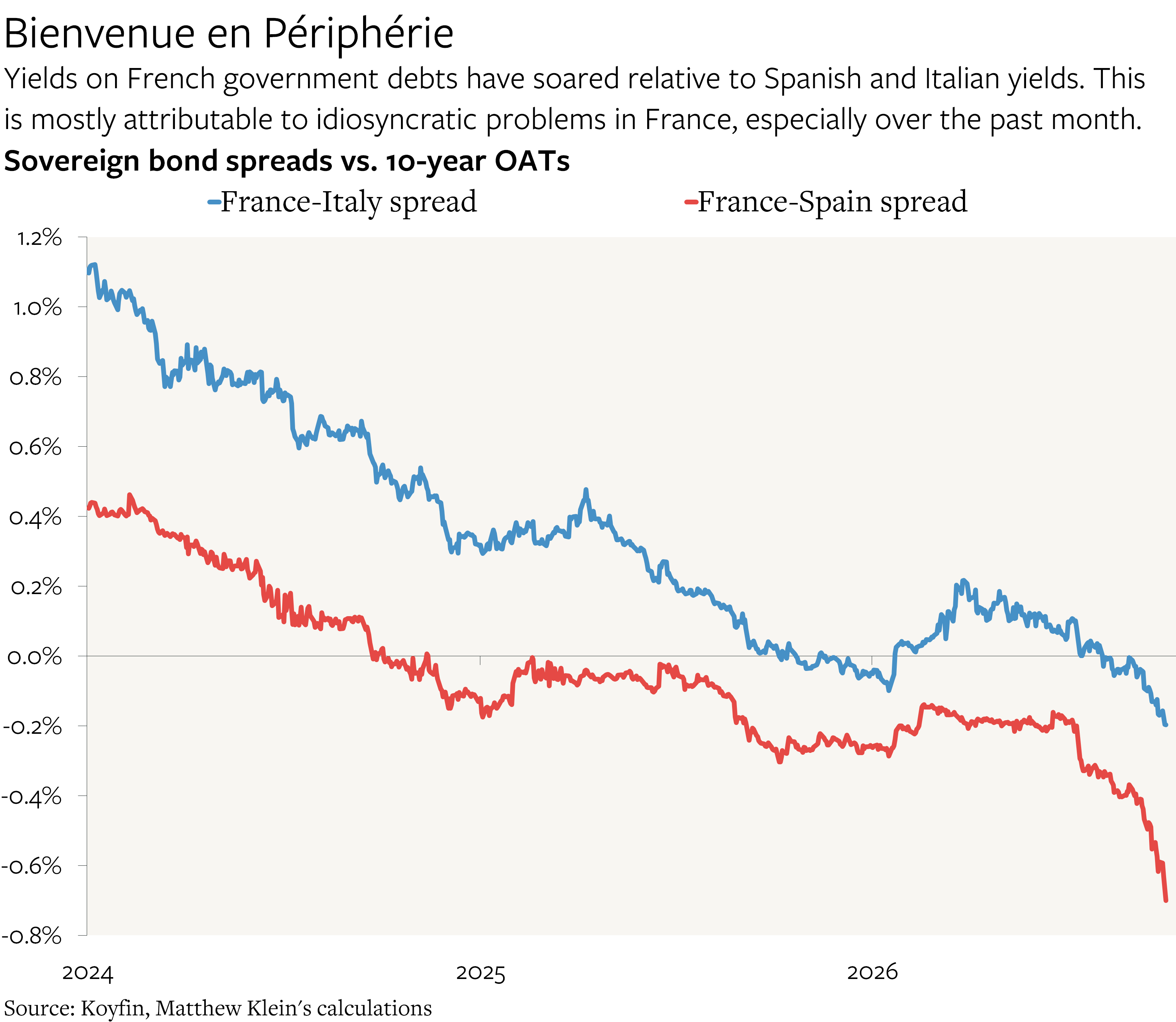
France's escalating sovereign debt crisis—marked by bond yield spreads reaching 2010s crisis levels and widening gaps against German debt—creates direct operational and financial risks for cross-border e-commerce sellers targeting European markets. The news reports that French government bond yields now face investor flight, with Brookings economist Robin Brooks warning of rapid contagion spreading to Italy and other high-debt EU nations. This fiscal deterioration, combined with political paralysis until the 2025 presidential election and rising energy costs from the Iran conflict, fundamentally alters the risk calculus for sellers operating in the EU's largest economies.
Currency and Margin Compression Risk: The euro's potential weakness amid EU debt contagion directly impacts seller profitability. Sellers with inventory sourced in USD or CNY but selling in EUR face margin compression of 3-8% if the euro depreciates 5-10% against major currencies—a realistic scenario given historical patterns during EU crises. Amazon FBA sellers shipping to France, Germany, and Italy (representing €2.1B+ in cross-border e-commerce annually) will see reduced profit margins on fixed-cost inventory. Shopify merchants accepting EUR payments face similar currency headwinds unless they implement dynamic pricing or hedge positions.
VAT and Customs Policy Uncertainty: Political polarization ahead of the 2025 election creates unpredictability in EU tax and trade policy. Marine Le Pen's far-right platform proposes constitutional deficit limits that could trigger austerity-driven tariff increases or VAT rate changes. Conversely, Jean-Luc Mélenchon's far-left proposals (including €18B debt cancellation) signal potential monetary instability. This uncertainty delays seller compliance planning—VAT registration deadlines, customs documentation requirements, and import duty calculations become moving targets. Sellers must assume 15-25% higher compliance costs through 2025 as they monitor policy shifts.
Supply Chain and Logistics Cost Escalation: Rising energy costs from geopolitical tensions (Iran conflict) increase shipping costs to EU markets by 4-7% quarterly. Combined with potential ECB intervention (which could trigger inflation), logistics providers are already signaling rate increases. Sellers relying on air freight to France or Italy face 6-12% cost increases by Q2 2025. This particularly impacts time-sensitive categories (electronics, apparel, beauty) where margin compression from currency weakness compounds logistics inflation.
Competitive Advantage Shift: EU-based sellers (particularly German and Dutch) maintain cost advantages as their home currencies strengthen relative to the euro. US-based sellers and China-based sellers face dual headwinds: currency depreciation plus rising logistics costs. This creates a 6-month window (through mid-2025) where smaller US/China sellers should consider reducing EU inventory exposure or shifting to higher-margin categories less sensitive to currency fluctuations.
Questions 8
What is the timeline for ECB intervention and how does it affect sellers?
The news reports the ECB is expected to intervene, though timing is uncertain. Historical patterns suggest intervention occurs within 3-6 months of crisis-level bond spreads. ECB intervention typically involves rate cuts or bond purchases, which can trigger inflation (2-4% annually). For sellers, this means: (1) logistics costs could accelerate beyond current 4-7% quarterly increases; (2) VAT rates may increase if governments need revenue; (3) consumer purchasing power may decline, reducing demand. Monitor ECB announcements at ecb.europa.eu weekly. If intervention occurs, expect to adjust pricing upward 2-3% by Q2 2025 to maintain margins. Consider shifting inventory to non-EU markets (UK, US) if ECB intervention signals sustained inflation.
How should I adjust my Shopify pricing strategy for euro weakness?
Implement dynamic pricing that adjusts EUR prices based on real-time currency rates. Shopify's multi-currency feature allows you to set automatic price adjustments tied to exchange rates. Currently, if the euro depreciates 5-10%, your EUR revenue loses 5-10% purchasing power. Set your Shopify pricing rules to increase EUR prices by 3-5% immediately to protect margins, then monitor weekly. Alternatively, offer USD/GBP payment options to shift currency risk to customers. Track your conversion rate impact—price increases typically reduce conversion 2-4%, so test increases on lower-volume products first. By Q2 2025, reassess based on actual euro depreciation and adjust pricing accordingly.