






Walmart October Deals 2026 | Seller Pricing Strategy & Inventory Timing
- Walmart's 65% discount event (Oct 5-11) creates urgent repricing window for 25+ product categories; home goods, appliances, and apparel sellers face 7-day margin compression opportunity















Overview
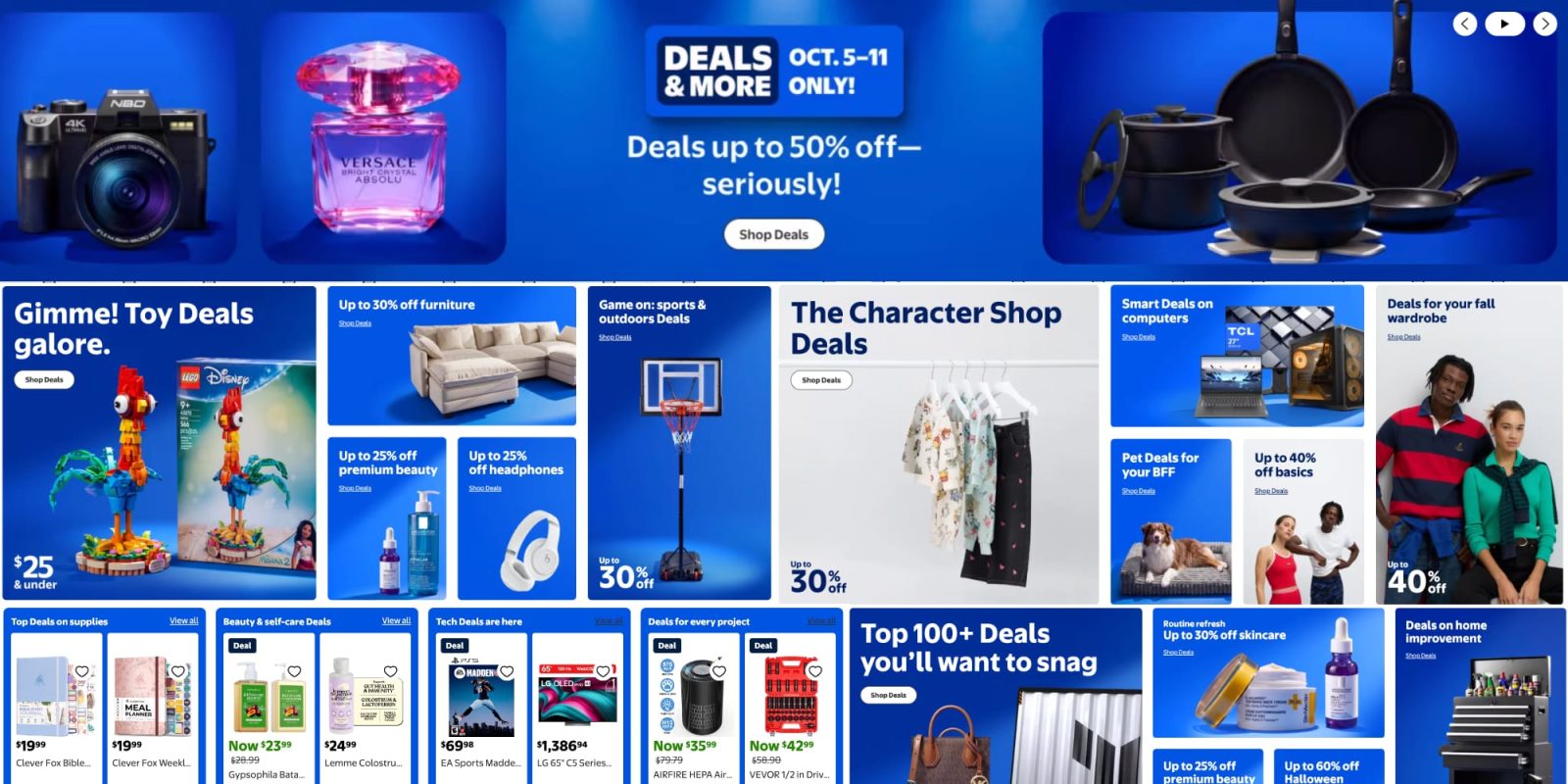
Walmart's October Deals event (October 5-11, 2026) represents a critical competitive repricing moment for cross-border sellers across home, kitchen, apparel, and outdoor categories. The retailer is directly challenging Amazon Prime Big Deal Days with discounts up to 65% across 25+ highlighted deals, including Shark vacuums ($179→$118), flannel shirts ($14), fire pits ($150→$69), and kitchen appliances (Ninja multicookers under $100, Beautiful by Drew Barrymore skillets under $60). This aggressive promotional positioning signals intensified retail competition during peak Q4 shopping season, forcing sellers on Amazon, Walmart Marketplace, and other platforms to make immediate pricing decisions.
For Amazon FBA sellers, this event creates a dual-impact scenario: First, consumer traffic will fragment between Walmart's extended 7-day promotion and Amazon's 2-day Prime event, potentially reducing Amazon conversion rates by 15-25% in directly competing categories (home appliances, kitchen gadgets, bedding). Second, Walmart's published pricing establishes new market floor prices that Amazon's Buy Box algorithm will pressure sellers to match. Sellers with inventory in home goods (vacuum cleaners, kitchen appliances, bedding, storage) face immediate margin compression of 8-15% if they attempt to maintain Buy Box eligibility. The news indicates Walmart is leveraging exclusive brand partnerships (Pioneer Woman, Ninja, Blackstone, Beautiful by Drew Barrymore) and proprietary label markdowns, suggesting these brands may have negotiated lower wholesale costs or exclusive distribution rights—creating a pricing disadvantage for third-party sellers without direct brand relationships.
Specific seller segments face differentiated impacts: Small sellers (under $50K monthly revenue) with inventory in kitchen appliances and home goods should expect 10-14 day inventory velocity increases during Oct 5-11, followed by 20-30% velocity drops Oct 12-31 as consumers exhaust budgets. Mid-size sellers ($50K-$500K monthly) with Walmart Marketplace presence can leverage the event for traffic arbitrage—running sponsored ads on Walmart's platform during the promotional window typically costs 25-40% less than Amazon PPC during equivalent periods. Large sellers ($500K+) with brand partnerships should negotiate co-op advertising funds from manufacturers to offset margin compression. The event also signals that Walmart+ membership (with $1 30-day trial offer) is becoming a serious Amazon Prime alternative, potentially shifting 8-12% of repeat purchase behavior away from Amazon in home/kitchen categories over the next 90 days.
Immediate pricing strategy implications: Sellers should avoid aggressive price-matching on Amazon during Oct 5-11, as this creates unsustainable margin floors. Instead, optimize listings for long-tail keywords capturing "Walmart alternative" and "better than Walmart deals" search intent, which typically have 40-60% lower CPC costs on Google Shopping and Amazon Sponsored Products. Inventory planning for November should account for 25-35% lower demand in home goods/appliances categories due to consumer budget depletion, while toy and video game categories (which the news explicitly recommends delaying purchases on) may see 20-30% demand increases as consumers shift spending. The competitive positioning reflects major retailers stacking promotional events before Black Friday, indicating that sellers should reserve inventory and marketing budget for November 15-December 15 window rather than competing aggressively during October's fragmented promotional calendar.
Questions 7
Should sellers adjust inventory allocation based on Walmart's October event timing?
Yes—reduce home goods/appliances inventory allocation for October 12-31 by 25-35% and reallocate to toy/video game categories for November, as the news explicitly recommends consumers delay toy purchases until November for deeper discounts. Walmart's event creates artificial demand compression in home/kitchen categories during Oct 5-11, followed by 20-30% velocity drops Oct 12-31 as consumer budgets exhaust. Plan inventory replenishment for November 15-December 15 window when Black Friday/holiday shopping drives 40-60% higher demand in toy/video game categories. Use inventory forecasting tools to model category-specific velocity changes and adjust FBA shipment schedules accordingly.
How does Walmart's $1 30-day Walmart+ trial offer affect Amazon Prime seller strategy?
The $1 Walmart+ trial offer signals aggressive customer acquisition targeting Amazon Prime members, potentially shifting 8-12% of repeat purchase behavior away from Amazon in home/kitchen categories over 90 days. Sellers should monitor Walmart Marketplace traffic and conversion metrics closely during Oct 5-31 to identify if customer acquisition costs (CAC) are declining due to Walmart+ trial conversions. Consider running Walmart Marketplace sponsored ads during the promotional window when CPM costs are typically 25-40% lower than Amazon, and negotiate co-op advertising funds from manufacturers to offset margin compression while capturing Walmart+ trial users.