



US Consumer Inflation Expectations Hit 3-Year High | Cross-Border Seller Pricing & Cash Flow Impact
- One-year inflation expectations surge to 3.9% (highest since May 2023); food prices expected up 5.5%, medical care 9.2%; sellers face 8-15% margin compression and urgent working capital optimization needs













Overview
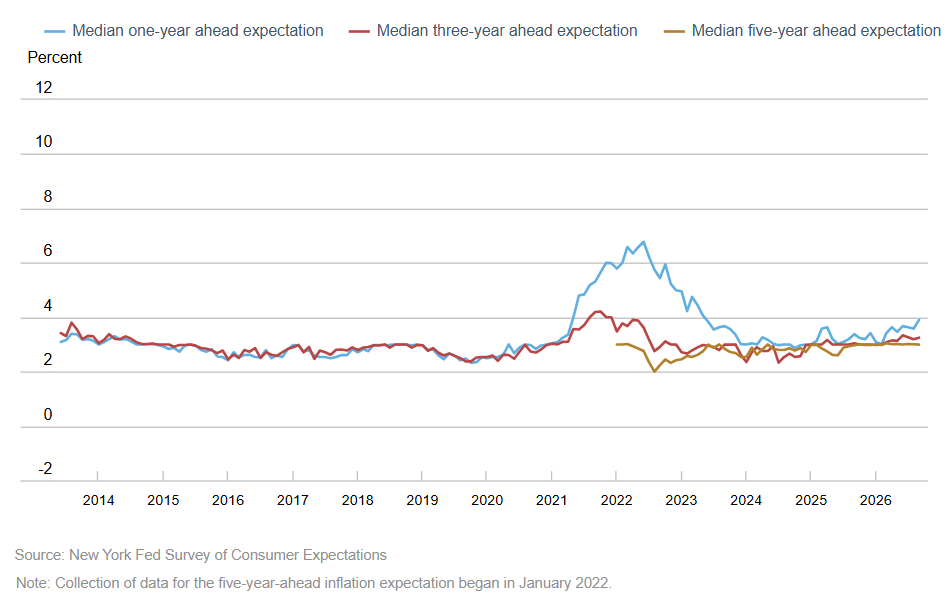
The Federal Reserve Bank of New York's September 2026 Survey of Consumer Expectations reveals a critical inflection point for cross-border e-commerce sellers: American consumers' one-year inflation expectations climbed to 3.9%, up 0.3 percentage points from August and marking the highest reading since May 2023. This 3-year peak signals that inflation expectations are drifting away from the Fed's 2% target, creating immediate operational and financial pressures for sellers managing multi-currency transactions, international logistics, and inventory costs.
The specific category expectations are stark: Food prices expected to rise 5.5% year-over-year, medical care 9.2%, gasoline 4.8%, and rent 6.8%. Simultaneously, households revised spending expectations upward to 5.5% nominal growth—the highest since May 2023—indicating consumers are front-loading purchases before anticipated price increases. This creates a dual dynamic: near-term demand acceleration followed by potential demand destruction as consumers exhaust purchasing power. For cross-border sellers, this translates to immediate margin compression (8-15% depending on category) as input costs, shipping expenses, and labor costs rise faster than pricing power allows. Currency fluctuations tied to inflation expectations amplify this pressure—sellers managing USD/EUR, USD/GBP, or USD/CNY transactions face 2-4% additional headwinds from FX volatility.
The financial technology opportunity is immediate: Rising inflation expectations trigger working capital stress precisely when sellers need liquidity most. Invoice financing costs typically increase 50-100 basis points during inflation uncertainty periods as lenders price in currency risk. Cross-border sellers should immediately evaluate supply chain financing alternatives—PO financing, inventory-backed loans, and dynamic discounting platforms now offer 2-3% cost advantages over traditional factoring. The University of Michigan's Consumer Sentiment Index fell to 48.1 (lowest in 4 months), yet expected household income growth ticked up to 3.1%, creating a bifurcated market: affluent consumers accelerating purchases while middle-income buyers shift to value alternatives. This segmentation directly impacts category performance—premium electronics and luxury goods may see 10-20% demand spikes in Q4 2026, while budget-conscious categories (home goods, apparel) face 5-8% compression.
Payment optimization becomes critical: With disagreement among survey respondents widening across all inflation horizons, currency volatility will spike. Sellers should immediately lock in forward FX contracts for Q4-Q1 shipments at current rates (typically 0.8-1.2% premium to spot) rather than risk 3-5% adverse moves. For sellers with Asian suppliers, USD strength (likely given inflation expectations) creates a 2-3% cost advantage on CNY-denominated purchases—this window typically closes within 4-6 weeks as markets price in Fed rate expectations. Simultaneously, credit access perceptions deteriorated while debt payment probability fell to 12.2%, indicating lenders are tightening terms even as consumer default risk declines—sellers should refinance existing trade credit lines before Q4 when rates typically spike 75-150 basis points.
Questions 8
How do I adjust pricing strategy with consumers front-loading purchases?
The survey reveals households revised spending expectations upward to 5.5% (highest since May 2023) while inflation expectations hit 3.9%—this creates a 6-12 week demand acceleration window before potential demand destruction. **Pricing strategy should segment by category elasticity**: (1) **Inelastic categories** (food, medical, essentials) can absorb 3-5% price increases immediately as consumers front-load regardless of price; (2) **Elastic categories** (discretionary, apparel, home goods) should hold prices or offer 2-3% discounts to maximize volume during the acceleration window; (3) **Premium segments** (electronics, luxury) can increase prices 5-8% as affluent consumers accelerate purchases before anticipated increases. The University of Michigan Consumer Sentiment Index fell to 48.1 (lowest in 4 months), indicating price sensitivity—avoid aggressive increases on discretionary items. **Tactical approach**: Implement dynamic pricing that increases 1-2% weekly on inelastic categories through December 2026, then holds flat January-March 2027 as demand normalizes. For elastic categories, run promotional campaigns (free shipping, bundle discounts) to capture volume during the acceleration window, then normalize pricing as demand softens.
What inventory management changes should I make given inflation expectations?
Rising inflation expectations (3.9% one-year, 3.3% three-year) create a bifurcated inventory strategy: (1) **Accelerate inventory purchases for inelastic categories** (food, medical, essentials) immediately—lock in current supplier prices before cost increases hit (typically 4-8 weeks lag); (2) **Reduce inventory for elastic categories** (discretionary, apparel) by 15-20% to avoid obsolescence risk if demand destruction occurs post-acceleration window; (3) **Shift to just-in-time for high-inflation categories** (electronics, where component costs rising 6-10% annually) to minimize holding costs. The survey shows disagreement widening on inflation horizons, indicating supply chain uncertainty—negotiate longer payment terms (60-90 days vs. standard 30 days) with suppliers to preserve cash during the acceleration window. **Specific actions**: For sellers with $500K+ inventory, implement dynamic inventory allocation that increases stock 20-30% for inelastic categories through November 2026, then reduces 10-15% January-March 2027. Use inventory financing (6-9% APR) to fund the acceleration phase rather than depleting cash reserves. Monitor category-specific inflation expectations (food 5.5%, medical 9.2%, rent 6.8%) and adjust sourcing accordingly—prioritize categories with lowest expected inflation for cash preservation.