




Inflation Expectations Hit 3.9% | E-Commerce Sellers Face Price-Sensitive Q4 2026
- Federal Reserve survey shows 5.5% spending growth but only 3.1% income growth; 51.8% of consumers have less than 3 months savings, forcing sellers to pivot from margin expansion to volume retention strategies











Overview
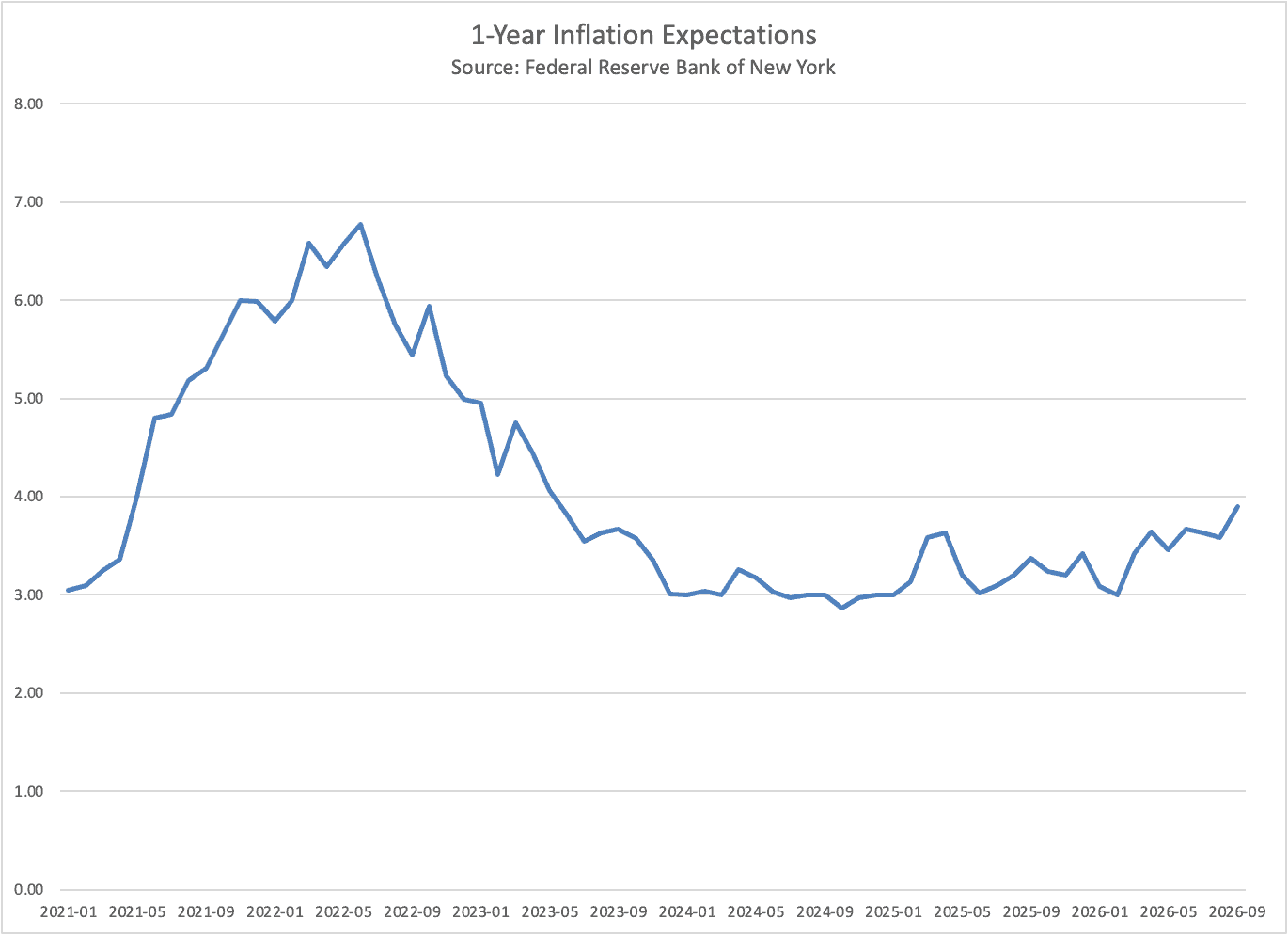
The Federal Reserve Bank of New York's September 2026 Survey of Consumer Expectations (released October 7) reveals a critical divergence for e-commerce sellers: median year-ahead inflation expectations surged to 3.9%—the highest since May 2023—while expected household spending growth climbed to 5.5%, but income growth lagged at only 3.1%. This 2.4-percentage-point gap between spending and income expectations signals that nominal dollar increases will NOT translate to volume growth or margin expansion.
The financial resilience crisis is the real story for sellers. PYMNTS Intelligence's Consumer Expectations Index dropped to 54.1 in September (down from prior months), with the Macroeconomic and Buying Climate subindex falling 2.2 points to 45.0. Most critically, 51.8% of consumers report savings lasting three months or less without income—a 12-month low—while only 15.1% say savings would sustain them beyond one year. This means the majority of your customer base is operating paycheck-to-paycheck, making them hypersensitive to price increases and far more selective about discretionary purchases.
For e-commerce sellers, this creates a bifurcated market opportunity. Essential categories show resilience: consumers expect food prices to rise 5.5%, gasoline 4.8%, rent 6.8%, college education 7.5%, and medical care 9.2%—yet demand for these categories persists because they're non-negotiable. Sellers in groceries, health/wellness, and budget-friendly home goods should expect sustained volume despite inflation. However, discretionary categories (fashion, electronics, home décor) face severe headwinds. The 5.5% spending growth is purely nominal—driven by inflation expectations, not increased purchasing power. Actual unit sales will likely contract 2-4% as consumers trade down to lower price points and reduce basket sizes.
Job security metrics provide a counterintuitive signal: probability of job loss fell to 13.5% (lowest since December 2024), suggesting employment stability. However, job mobility declined to 46.9%, indicating workers are staying put rather than seeking higher-paying roles. This means wage growth will remain subdued, reinforcing the income-spending gap. For Q4 2026 and 2027 planning, sellers must abandon margin-focused strategies and instead compete on value, bundle offerings, and payment flexibility (installment plans, subscription models). Inventory should shift toward essential categories and lower price points, with aggressive promotional calendars to drive volume in discretionary categories.
Questions 8
How should sellers adjust pricing strategy when consumers expect 3.9% inflation?
With median inflation expectations at 3.9% (highest since May 2023), sellers face a pricing paradox: raising prices 3-4% aligns with consumer expectations but risks losing price-sensitive customers to competitors. The optimal strategy is selective price increases (2-3% on essentials, hold on discretionary) combined with value bundling, tiered product offerings, and promotional depth. Avoid across-the-board price hikes; instead, use dynamic pricing by category. Monitor competitor pricing weekly and emphasize value messaging ('same quality, better price') rather than premium positioning. Consider subscription models to lock in customer loyalty despite price sensitivity.
What inventory risks should sellers monitor given the spending-income gap?
The 2.4-percentage-point gap between spending (5.5%) and income (3.1%) growth creates inventory risk: nominal sales may appear strong while unit volumes contract 2-4%. Sellers should reduce inventory depth in discretionary categories and increase turnover velocity. The PYMNTS Macroeconomic subindex dropped 2.2 points to 45.0, signaling weakening buying climate. Implement weekly inventory reviews, reduce SKU count in slow-moving categories, and increase safety stock in fast-moving essentials. Expect higher markdown rates in Q4 2026 and plan for 15-20% deeper discounts than historical averages to clear discretionary inventory.