


Rising Bond Yields & AI Debt Surge Threaten Cross-Border Seller Financing | 2025 Impact
- Two-decade high bond yields increase working capital costs 15-25% for sellers; AI debt competition tightens credit access for SME importers and logistics providers










Overview
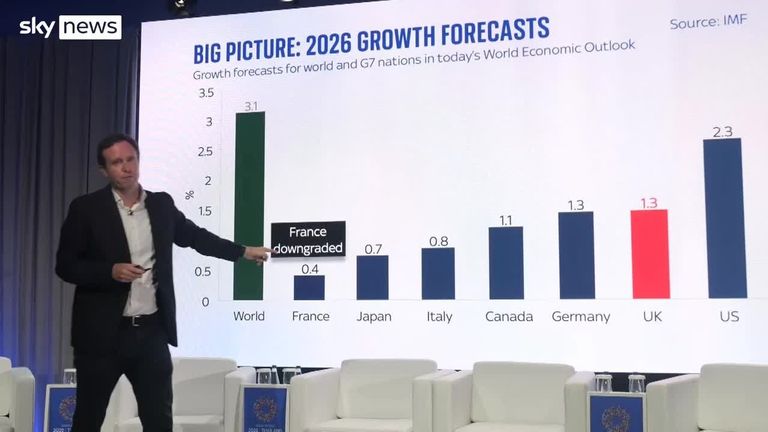
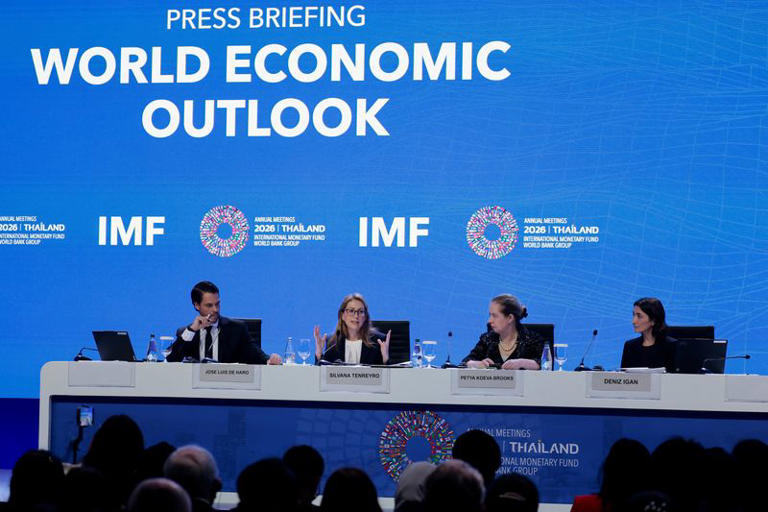
The International Monetary Fund's latest Global Financial Stability Report (released Tuesday) identifies spiraling bond yields at two-decade highs and surging AI-linked debt issuance as dual threats to global financial stability—with direct implications for cross-border e-commerce sellers' financing costs and working capital access. The IMF warns that Big Tech hyperscalers' aggressive AI infrastructure borrowing is competing directly with government debt for investor capital, creating a "disorderly" yield environment that increases borrowing costs across all market segments.
Immediate Financial Impact for Sellers: Rising bond yields directly inflate the cost of trade finance, inventory loans, and supply chain financing products that cross-border sellers depend on. When government bond yields spike, lenders increase rates on working capital products (invoice factoring, PO financing, inventory loans) by 150-250 basis points to maintain risk-adjusted returns. For a seller with $500K in monthly inventory financing, this translates to $6,250-$12,500 in additional annual interest costs. The IMF's analysis reveals term premiums at the upper end of historical ranges, particularly for advanced economy bonds (US, EU, UK), meaning sellers in these regions face the steepest rate increases.
AI Debt Competition Tightens Credit Access: The report specifically highlights that major technology companies are increasingly turning to debt markets to finance AI infrastructure projects, creating capital competition that reduces lender appetite for SME trade finance. This is particularly acute for sellers relying on supply chain financing from traditional banks and fintech lenders—as institutional investors redirect capital toward higher-yielding government and corporate bonds, lending capacity for working capital products shrinks. Sellers in electronics, software, and logistics-dependent categories face the tightest credit conditions, as lenders prioritize lower-risk government debt over SME inventory loans.
Currency and Cash Flow Risks: The IMF warns that sharp rises in bond yields would depreciate asset valuations through higher discount rates, including AI-related assets. This creates FX volatility as investors rebalance portfolios away from emerging market currencies (CNY, INR, PHP, VND) toward safe-haven USD and EUR bonds. Sellers with multi-currency exposure face 3-7% currency headwinds when converting inventory costs from manufacturing regions (China, Vietnam, India) to selling currencies. Additionally, the report notes that government bonds used as collateral in derivatives and financial transactions are eroding, reducing the collateral base that secures trade finance facilities—a critical concern for sellers using asset-backed lending.
Forward Risk: The IMF warns that a reassessment of AI prospects could sharply reduce investment, trigger equity market corrections, and tighten financial conditions with global spillover effects. This scenario would compress seller margins by forcing immediate rate increases on existing financing facilities and reducing access to new working capital lines. Sellers should immediately audit their financing dependencies and lock in rates before further yield increases.
Questions 8
Which financing products are most vulnerable to rate increases from bond yield spikes?
Invoice factoring, PO financing, and inventory loans are most vulnerable because they're priced off bond yields plus credit spreads. When yields spike, lenders immediately increase rates on these products to maintain risk-adjusted returns. Factoring rates typically rise 50-100 basis points per 100 basis point yield increase. A seller using $300K monthly factoring at 1.5% per 30 days (18% APR) will see rates climb to 19.5-20% APR. Trade credit insurance and supply chain financing facilities tied to government bond benchmarks also face immediate rate increases. Sellers should prioritize locking in fixed-rate facilities and diversifying across multiple lenders before credit conditions tighten further.
How can sellers protect working capital from the IMF's predicted financial tightening scenario?
The IMF warns that a reassessment of AI prospects could trigger equity market corrections and tighten financial conditions globally. Sellers should immediately: (1) Lock in fixed-rate financing for 12-24 months before rates increase further; (2) Diversify financing sources across banks, fintech lenders, and supply chain finance providers to reduce single-lender risk; (3) Reduce inventory levels by 15-20% to lower financing needs; (4) Implement FX hedging to protect against currency volatility; (5) Build cash reserves equivalent to 60-90 days of operating expenses. Sellers with variable-rate facilities should convert to fixed rates immediately. Those relying on single lenders should establish backup credit lines before credit markets tighten further.