


EU Kill Switch & Tariff Safeguards Reshape China Trade | Seller Strategy Update
- Rapid market exclusion mechanism threatens Chinese suppliers; chemicals/machinery tariffs effective December 2026; rare earth supply secured via green channel—creates 18-month competitive window for non-Chinese sourcing


















Overview
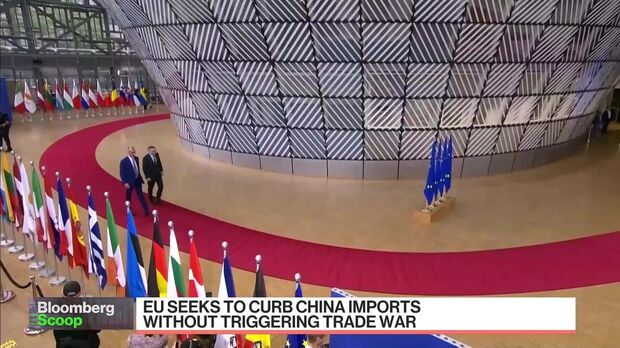
The European Union is executing a coordinated trade containment strategy against Chinese market dominance, creating immediate supply chain disruptions and 18-month strategic opportunities for cross-border sellers. On October 16, 2026, EU leaders endorsed a "kill switch" mechanism enabling rapid exclusion of Chinese firms from EU markets without procedural delays, alongside sectoral safeguard measures targeting chemicals (18% import share), industrial machinery (China's $8.6B exports vs Germany's $7B), and hybrid vehicles (350,000-unit annual cap effective December 2026).
For cross-border sellers, this creates a bifurcated market dynamic: Chinese suppliers face existential market access risk, while non-Chinese manufacturers gain 18-24 month competitive advantage windows before safeguard measures mature. Sellers sourcing from China must immediately diversify supply chains to Vietnam, India, or EU-based manufacturers to avoid sudden market exclusions. The kill switch operates without lengthy procedural delays, meaning affected sellers could lose EU market access within weeks of activation.
Specific tariff opportunities emerge in three categories: (1) Chemicals/Plastics (HS codes 2901-2930): China's 18% import share creates tariff arbitrage potential for sellers shifting to Indian or Southeast Asian suppliers—expect 8-15% tariff premiums on Chinese-origin goods by Q2 2027. (2) Industrial Machinery (HS codes 8401-8480): German machine-tool exports fell 10% while Chinese exports rose 13%, signaling tariff protection incoming—sellers can capture margin expansion by sourcing from EU manufacturers or Japan. (3) Hybrid Vehicle Components (HS codes 8704-8708): The 350,000-unit cap creates supply shortage; sellers of EV batteries, motors, and power electronics can expect 12-25% price increases for Chinese-origin components.
Rare earth supply remains stable through January 2026 via China's "green channel mechanism", but this expires when U.S.-China trade truce ends. Sellers dependent on rare earth materials for electronics (smartphones, laptops, renewable energy equipment) should lock in supply contracts by November 2025 before potential re-escalation. The mechanism streamlines licensing but doesn't guarantee long-term supply—geopolitical risk remains high post-January 2026.
Competitive advantage shifts dramatically by seller segment: Large EU-based manufacturers gain tariff protection and market share consolidation; small/medium sellers relying on Chinese dropshipping face existential risk; US-based sellers can arbitrage by sourcing from Vietnam/India and selling into EU at premium pricing before tariffs fully implement. The two-track EU strategy (enforcement + negotiation) suggests 12-18 months before kill switch activation, providing a critical window for supply chain restructuring.
Questions 8
Which seller segments gain competitive advantage from EU trade restrictions?
Competitive advantage winners: (1) **EU-based manufacturers** (tariff protection, market consolidation, 15-25% margin expansion), (2) **US sellers sourcing from Vietnam/India** (arbitrage opportunity—buy at non-tariff pricing, sell into EU at premium), (3) **Large sellers with diversified supply chains** (can absorb sourcing transition costs), (4) **Sellers highlighting non-China origin** (premium positioning as tariffs increase Chinese-product costs). Losers: (1) **Small/medium sellers relying on Chinese dropshipping** (existential risk—tariffs eliminate margin), (2) **Chinese-owned sellers in EU** (kill switch targets company ownership, not just products), (3) **Sellers with inflexible supply chains** (tariff costs compress margins 8-15%). Opportunity window: 12-18 months before kill switch activation. Small sellers should consider pivoting to Vietnam/India sourcing now to establish relationships before tariff cliff. Large sellers should consolidate market share by acquiring small competitors facing tariff pressure.
What is the timeline for EU tariff implementation and when should I lock in pricing?
Implementation timeline: **December 2026** (hybrid vehicle safeguards effective), **Q2 2027** (chemicals/machinery investigations conclude, tariffs likely activate). Lock-in pricing strategy: Negotiate long-term supply contracts with non-China suppliers by **November 2025** to secure pre-tariff pricing. For Chinese suppliers, request price locks through **March 2027** to understand true tariff impact before committing to alternative sourcing. The EU's two-track strategy (enforcement + negotiation) suggests 12-18 months before kill switch activation, but don't rely on negotiation success—assume worst case. Specifically: if you're importing $500K annually from China, secure 6-month supply contracts with Vietnam/India suppliers by November 2025 at locked pricing. This gives you 6 months to evaluate cost impact before committing to full sourcing shift. After March 2027, tariff costs will be fully transparent, and you can make permanent sourcing decisions.