
Google Connected Apps Platform | Early Seller Channel Analysis
- 50+ Connected Apps launched in Search and Gemini; sellers must watch opt-in discoverability before investing in bookings, subscriptions, and catalog integrations
Overview
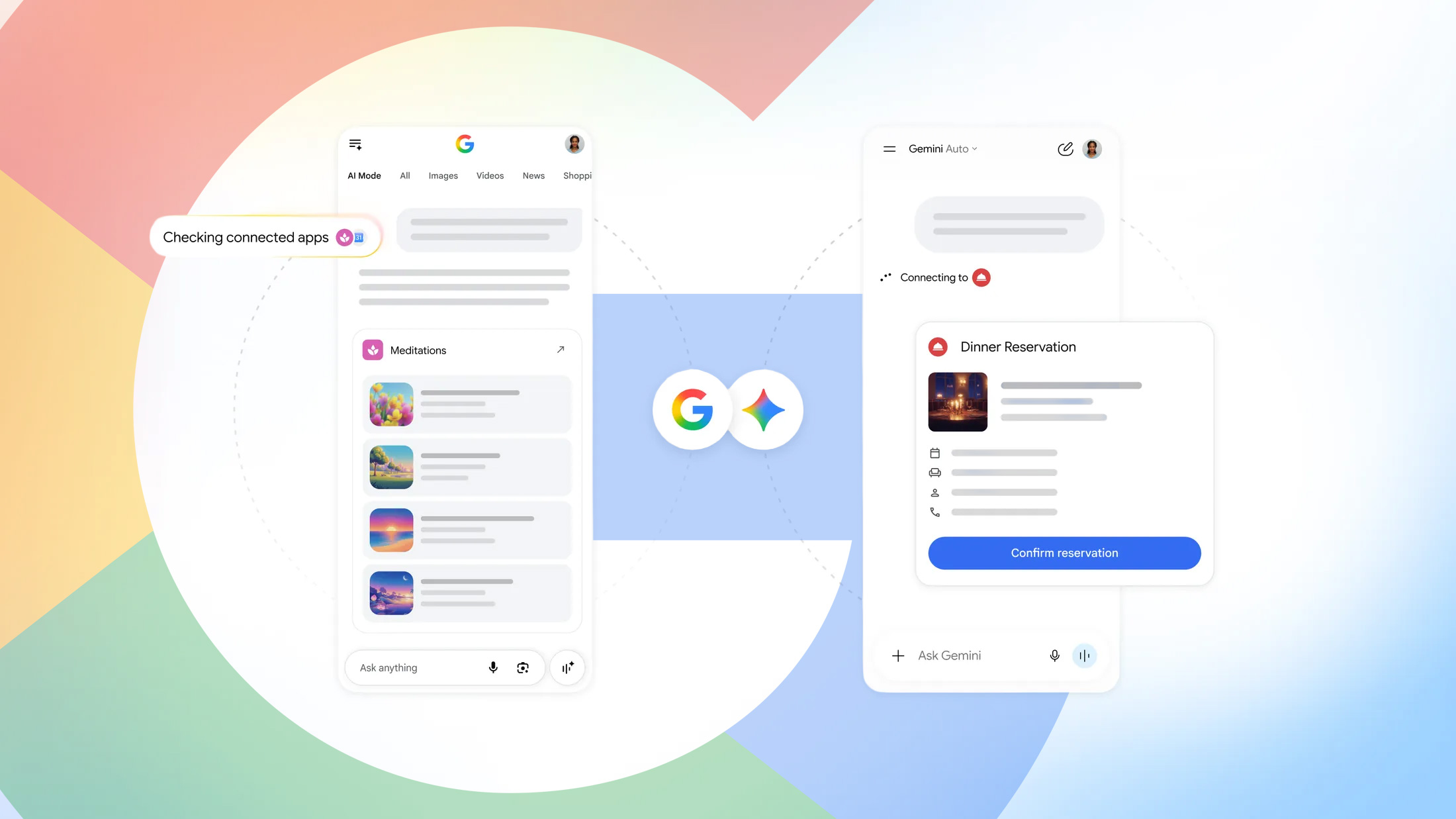
The news reports that Google has launched a preview of its Connected Apps Platform, letting developers build apps that run inside Google Search and the Gemini app, with more than 50 Connected Apps already added across productivity, event ticketing, health, and fitness. For cross-border sellers, the core finding is that this is an early-stage transaction channel whose commercial value is unquantified: Google has published no performance benchmarks or traffic data, and users must opt in through their personalized Search settings before any app appears to them.
The platform is a task-completion layer, not a listing channel. According to the announcement, developers connect via a cloud-hosted MCP (Model Context Protocol) server or Android MCP through AppFunctions APIs, then register, test, and submit through the Google Connected Console. Before review, developers choose whether an app goes live in Search, Gemini, or both. Partners Adobe, Experian, Localiza, and Peloton have Gemini integrations live, with Search rollout promised "in the coming weeks." Industry data shows that when platforms shift from retrieval to transactions, the advantage goes to sellers whose inventory, booking, and account data are machine-readable. Sellers who already maintain clean product feeds and structured data are better positioned than those relying on page copy alone.
Discoverability is the binding constraint. Apps do not surface automatically; adoption depends on user opt-in. Analyst Marie Haynes characterizes the shift as moving from information retrieval toward task completion, a view that is an opinion rather than a Google statement. Specifically for sellers, bookings, subscriptions, fitness services, and ticketing businesses have the clearest fit, while retailers with product catalogs should monitor how Google positions functional integrations against traditional organic shopping listings. The operational impact is that a seller's visibility may depend on whether an AI agent can complete an action, such as reserving, renewing, or checking stock, rather than on ranking for a keyword. This pattern is consistent with how Amazon Alexa skills and ChatGPT plugins launched: early adoption was thin, and the channels that held value were those tied to existing customer relationships.
Cross-referencing the trend. Similar agentic commerce moves across major platforms suggest that structured, API-accessible catalogs will become a prerequisite for AI-mediated purchasing. Sellers on Shopify and Amazon should expect feed quality, inventory accuracy, and real-time pricing to matter more as agents, not shoppers, compare options. Regional rollout details for EU and Asia Pacific markets have not been published, so timing for those audiences remains uncertain.
Immediate actions (0-30 days): Monitor the Google developer program page and Google's support documentation for eligibility, fees, and review criteria. Audit product feeds and structured data for accuracy on price, stock, and shipping. Strategic adjustments (1-6 months): If your business sells bookings, memberships, or event access, evaluate a pilot submission; consider allocating a small test budget (for example, under $1,000 in developer time) rather than a full build. Track referral and latency metrics once available. Risk mitigation: Avoid committing engineering budget until Google publishes fee structures and traffic benchmarks, and avoid treating Connected Apps as a replacement for Google Shopping or organic listings. Review quarterly, as the Search rollout and opt-in mechanics will determine real reach.
Questions 6
What should retailers do now to prepare for agentic shopping channels?
Retailers should audit product feeds, inventory accuracy, pricing, and structured data in Google Merchant Center and their Shopify or Amazon listings. Clean machine-readable data is a prerequisite for AI agents completing purchases or checks. Review these audits quarterly as Google publishes eligibility and performance information.
What is Google's Connected Apps Platform and how does it affect sellers?
Google's Connected Apps Platform is a preview program that lets developers build apps running directly inside Google Search and the Gemini app. The news reports more than 50 Connected Apps already added across productivity, event ticketing, health, and fitness categories. For sellers, it creates a potential transaction channel for bookings, subscriptions, and ticketing, but Google has not published traffic or conversion data, so the commercial impact remains unquantified.