

EU Canada Summit Tariff Risk | Cross-Border Sellers Act by 2026
- Tariff exposure for cross-border sellers between North America and Europe could rise if U.S. retaliation follows the summit
Overview
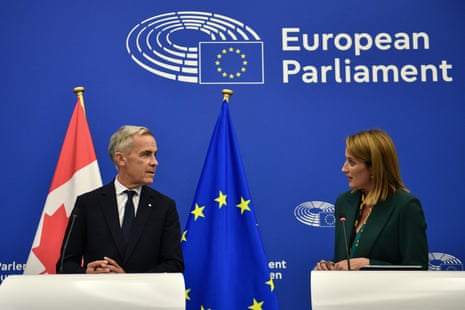
The European Union and Canada are pushing to deepen trade, defense, energy and Arctic ties at a two-day Montreal summit where Ursula von der Leyen, António Costa and Mark Carney meet on Thursday, weeks before U.S. midterm elections. The news reports that the draft joint statement, obtained by POLITICO from four EU officials and two Canadian diplomats, proposes closer cooperation on trade, defense and institutional links, while President Donald Trump has called the EU's associate membership offer for Canada laughable and threatened serious tariffs. For cross-border sellers moving goods between North America and Europe, the immediate signal is elevated tariff risk rather than an immediate duty change. Specifically for sellers, the summit itself does not alter current duty schedules, but any U.S. retaliation could hit Amazon Seller Central and Shopify-based stores selling into Canada and the EU through landed-cost shifts. The news reports that one senior EU official expects mainly symbolic outcomes, which would lower the likelihood of a U.S. response, so the scenario range runs from minimal change to sudden tariff announcements. Industry data shows that tariff shocks typically compress margins first on high-volume, low-ticket categories such as consumer electronics accessories, apparel basics and home goods, where landed cost is a large share of retail price. The operational impact falls on 3PL routing, customs documentation and duty-deferred warehousing in Canadian and EU hubs. Analysts note that midterms may delay U.S. action, but Trump keeps broad tariff authority regardless of the congressional result, so policy risk extends into 2026. Sellers should treat the joint statement, expected after the summit, as the first hard data point for scenario planning rather than as a closed issue.
Questions 6
How does this risk compare with prior trade disputes for cross-border sellers?
Past trade frictions have generally produced short-term price volatility and buyer hesitation rather than lasting demand collapse. The current situation is similar in that the trigger is political and conditional. Sellers who maintained flexible pricing and multi-region fulfillment historically recovered faster than those relying on a single corridor.
Will the EU-Canada summit change tariffs on cross-border orders in 2026?
The summit itself does not change current duty schedules, but it raises the risk of U.S. retaliation affecting North America to Europe trade. The news reports that Trump has threatened serious tariffs if the two sides align too closely. Sellers using Amazon Seller Central or Shopify Markets should model duty scenarios for Canadian and EU destinations and avoid assuming current terms will hold through 2026.