

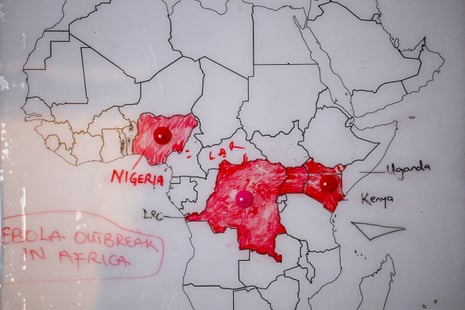



Ebola Outbreak in DRC Disrupts East Africa Shipping | Seller Risk Alert
- Reported outbreak threatens transit and fulfillment on East and West African lanes, with delays of 1-3 weeks possible for sellers in Kenya, Uganda and Nigeria corridors


Overview
The reported Ebola outbreak in the Democratic Republic of the Congo has surpassed 5,000 deaths according to a social media post citing a BBC report, with more than 10,300 confirmed cases across 8 of 26 provinces and a case fatality rate of 48.6 percent. The epicenter is reported in Ituri, described as an active conflict zone, and cases are reportedly confirmed in Kenya, Uganda and Nigeria. Sellers should treat this as a high-priority risk signal, while noting that the source is a single social media excerpt dated October 31, 2026, with 744 views at capture. Official confirmation from WHO, Africa CDC and DRC government channels is not included in the excerpt and must be verified before operational decisions.
The news reports that the post identifies the strain as Bundibugyo rather than Zaire, but this distinction is attributed to the author and not to an official health authority. For cross-border sellers, the operational exposure lies less in direct DRC consumer demand and more in transit and fulfillment risk across East and West African corridors. Industry data shows that outbreak-linked border controls, quarantine measures and carrier suspensions often lengthen customs clearance for affected lanes, and sellers shipping through Nairobi, Kampala or Lagos hubs may face delays of one to three weeks. Ituri's conflict conditions also raise the probability of last-mile disruption for any shipments routed through eastern DRC, which should be treated as effectively unserviceable until verified.
Specifically for sellers, the product categories most sensitive to such disruption include health and hygiene items, personal protective equipment, and essential household goods, where demand can spike sharply while supply lanes tighten. Similar historical outbreaks have driven demand for masks, gloves, sanitizers and thermometers, though platforms such as Amazon and Shopify-based storefronts often restrict or require documentation for medical-adjacent listings. The operational impact is therefore twofold: higher risk of stranded inventory in affected corridors and potential policy-driven listing or compliance reviews. Looking at platform data, sellers should expect tighter scrutiny of health-claim listings during public health emergencies.
This indicates that the main risk is logistics and compliance rather than immediate demand collapse. Sellers using 3PL providers serving Kenya, Uganda or Nigeria should confirm carrier status and buffer lead times by roughly 2-3 weeks, while avoiding new inventory commitments into Ituri-linked routes until official guidance is available.
Questions 4
How can sellers verify Ebola outbreak figures before changing logistics plans?
The reported figures of more than 5,000 deaths and 10,300 confirmed cases come from a single social media post citing a BBC report, dated October 31, 2026. Sellers should cross-check against WHO AFRO, Africa CDC and DRC government releases before acting. Confirm any suspension of cargo flights or border crossings directly with carriers and customs brokers. Document all verification steps to support insurance or contractual claims.
What is the cost impact of rerouting shipments away from affected East African lanes?
Rerouting typically adds freight cost and transit time, and sellers may see increases in the range of 10-25 percent on affected lanes, depending on carrier and mode. Holding inventory in alternative fulfillment hubs can add storage fees and carrying cost. These estimates are based on general industry patterns rather than the news excerpt. Compare expected delay costs against rerouting fees before making changes, and prioritize high-margin SKUs for continued shipping.